Dam Removal Europe publishes its 2020-2030 strategy

The goal that unites the Dam Removal Europe Partner (ERN is a co-founding member) since 5 years is the removal of obstacles in rivers, for free and living rivers. The movement, thanks to these partners with a rich diversity of skills from engineering and policy, conservation and field biology, to science, has grown rapidly and is now well established within European nature conservation.

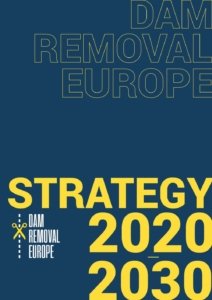
As the Dam Removal Europe coalition expands and looks to the future, the team has created a strategy document outlining past, current and future goals for the upcoming decade. The mission aims to scale up the dam removal movement to all European countries and to help free Europe’s rivers from more than 100,000 obsolete and out-of -use barriers.

We know the benefits of dam removal (significant positive environmental impacts, cost effectiveness, support for job creation, etc.) and we want more people across Europe to know and choose this option for river restoration.

See our strategic report 2020 – 2030 which describes how we will increase our efforts and achieve our new goals.


More info see our DAM REMOVAL EUROPE page.


Poutès Dam on the Allier river : Deconstruction ongoing !

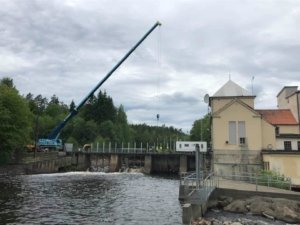
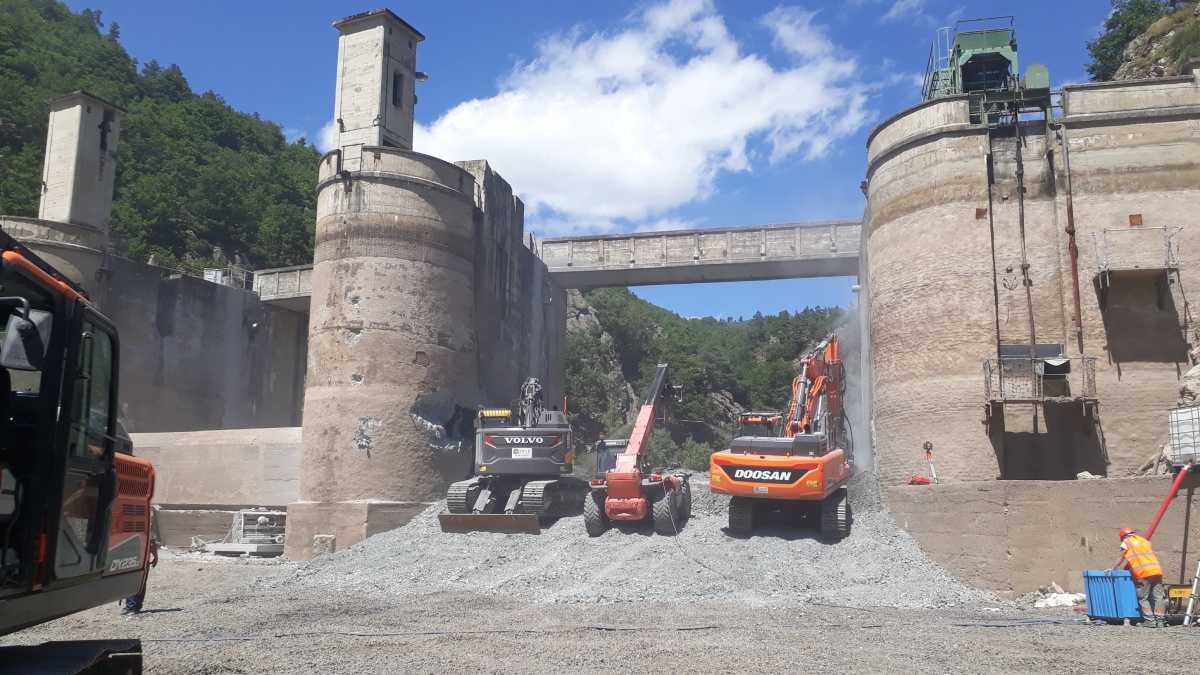
Remember, at the end of August 2019 the 3 sluice gates of the Poutès dam had been removed. This year the work program becomes even more interesting! The construction site was re-installed at the end of May and since July 1st you can see the machines attacking the civil engineering of the dam !

Weir partial removal on the right bank – July 2020 © EDF

This year, the 3 weirs and the 2 piers will be lowered and the footbridge removed. A notch on the left bank will be created and will allow the circulation of water, fish and sediments without hindrance until the summer of 2021 ! The devices for upstream and downstream migration will start to be modified to correspond to the new coasts and standards of the dam (digging under the elevator in particular).

All the details in the video below

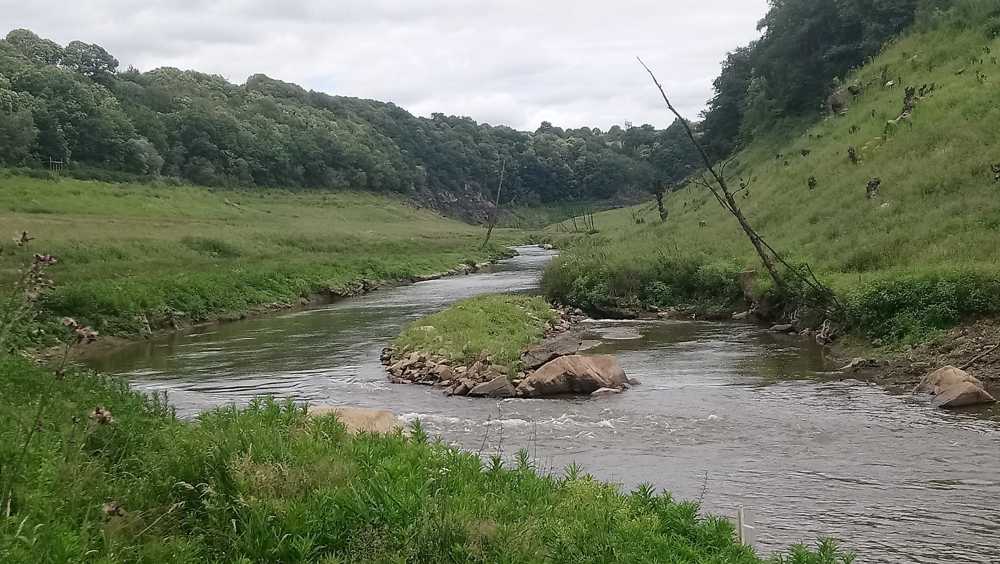
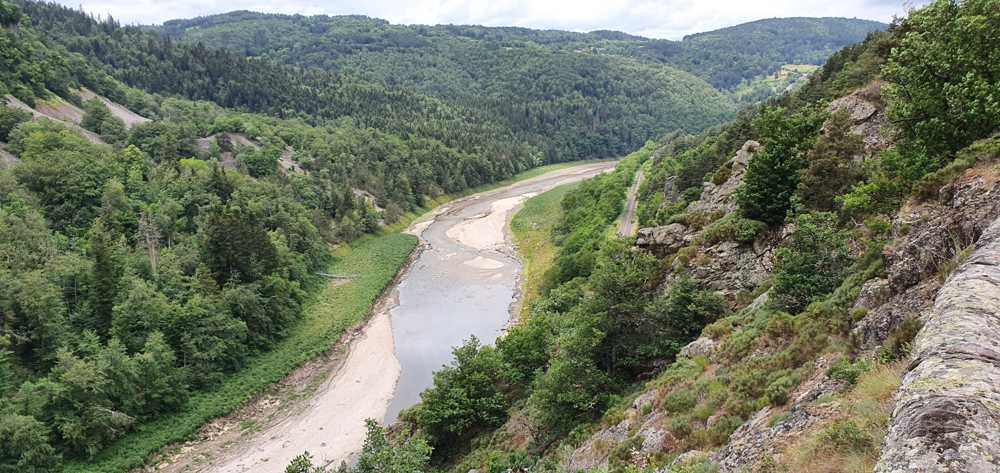
The Allier has already recovered its natural profile, as shown by the photo taken in the old reservoir after the emptying.

Upstream of the Poutès dam (inside old reservoir), 11th of June, the Allier regains its natural character for ever © SOS Loire Vivante – ERN

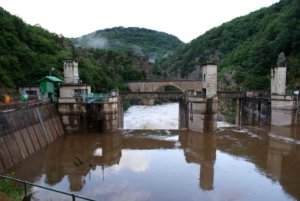
On the 12 of June, a major flood occurred on the Allier (400m3/s at Poutès against 16m 3/s for the module), it crossed the dam without constraint. The warning systems of the Cristal network were effective. The works were suspended and the platform created to work at the foot of the Poutès dam could be evacuated in time without affecting the equipment or the men!

The June 12 flood passes the Poutes dam without constraint © EDF

More info on Poutes dedicated page

EU water law will NOT be changed, confirms European Commission

In a landmark day for Europe’s rivers, lakes and wetlands, the European Commission has announced, 22nd of June,  that the EU’s strong water legislation — the EU Water Framework Directive (WFD) — will not be changed. We welcome this excellent news after more than two years of fitness check.

In a statement to POLITICO, the EU’s Commissioner for Environment, Ocean and Fisheries, Virginijus Sinkevičius, confirmed the need to focus on supporting implementation and enforcement “without changing the directive”.The message from the Commission is clear: the WFD is an essential piece of EU environmental legislation and is here to stay in its current form.

The European Commission must now work with all stakeholders to speed up implementation and ensure that the WFD objectives are achieved by 2027 at the latest. Gaps in implementation, highlighted by the evaluation, will need to be addressed while putting in place the European “Green Deal”.

Below Press release from Living Rivers Europe coaltion 

In a landmark day for Europe’s rivers, lakes and wetlands, the European Commission has announced that the EU’s strong water legislation — the EU Water Framework Directive (WFD) — will not be changed.

In a statement to POLITICO, the EU’s Commissioner for Environment, Ocean and Fisheries, Virginijus Sinkevičius, confirmed the need to focus on supporting implementation and enforcement “without changing the directive”.The message from the Commission is clear: the WFD is an essential piece of EU environmental legislation and is here to stay in its current form.

The decision comes six months after the law was concluded to be “fit-for-purpose”, following a thorough two-year evaluation. Over the course of this process, more than 375,000 citizens demanded that the law be kept in its current form and better implemented by their governments.

The Commission’s decision is welcomed by WWF, EEB, the European Anglers Alliance, European Rivers Network and Wetlands International, who together form the Living Rivers Europe coalition and led the #ProtectWater campaign to safeguard the WFD.

The WFD is one of the EU’s most ambitious and holistic pieces of environmental legislation, setting the target of having 100% of the EU’s freshwater ecosystems in good health by 2027 at the very latest [1], up from just 40% currently [2]. The EU must meet this target in order to preserve its water resources and ensure Europe can adapt to climate change. But implementation from Member States has been weak and political will to make the law work in practice low. There has also been much pressure to weaken the legislation, including from industry lobby groups.

Ester Asin, Director of WWF’s European Policy Office, said:

“Good legislation is not something to be tampered with. The EU needs the Water Framework Directive to safeguard its water supply, halt and reverse biodiversity loss and tackle climate change. We congratulate the Commission for standing by the strong evidence, taking the views of EU citizens on board, and following up on the ambitions of the European Green Deal and EU Biodiversity Strategy. But with 2027 right around the corner, better implementation needs to start right now. We look forward to working with the Commission on ensuring the law works not just on paper but in practice to bring life back to our rivers at last.”

With this announcement, it is clear that there can be no further delays from Member States. The European Commission must now work with all relevant stakeholders to fast-track implementation and ensure that the WFD’s objectives are reached by 2027 at the very latest. Member States will need to pull out all the stops in the next cycle of River Basin Management Plans (RBMPs).

Since the launch of the fitness check, the WFD has received public support from hundreds of thousands of EU citizens and scientists. The critical role of the WFD in halting the decline in freshwater biodiversity was highlighted in a letter from close to 6,000 scientists, which was sent to the Commission at the end of last year. The WFD also has the public support of a group of businesses, who have urged the Commission and EU Member States to preserve this groundbreaking law in its current form.

Roberto Epple, President of ERN France, said :

“This is a great victory after two years of evaluation of the directive, a success of the #protectwater campaign led by the Living Rivers Europe coalition, of which ERN is a member, and supported by thousands of citizens and hundreds of NGOs. France made no mistake when it asked in March 2020 that the Directive should not be modified. Having taken this step, we must now focus on accelerating efforts to restore and protect our freshwater ecosystems. The current context, the covid19 crisis , repeated droughts, etc., but also the European green deal, the EU biodiversity strategy no longer leaves us with a choice, all the players, including industry, must respond now and be equal to the challenges to be met to make water protection a reality.”

Sergiy Moroz, Policy Manager for Water and Biodiversity at the EEB, said:

“The coronavirus crisis has highlighted the importance of healthy ecosystems as an insurance against pandemics, in addition to the countless other benefits that healthy, resilient water environments provide. By giving the EU’s groundbreaking water legislation the final sign-off, the European Commission and Member States can now get on with the job at hand: Bringing our rivers, lakes and groundwater aquifers to ecological health by 2027 at the latest. The gaps in the implementation of this law that the two-year evaluation highlighted will need to be addressed while putting in place the European Green Deal.”

Steven Weiss, Associate Professor at the Institute of Zoology, Karl-Franzens University of Graz and signatory of the letter from scientists, said

“As one of nearly 6,000 scientists who signed a letter of support to the Water Framework Directive, I am delighted to see that the European Commission has taken on board the views of the scientific community. Freshwater species are currently the most vulnerable in Europe. Full implementation of the Water Framework Directive is vital in reversing this trend, and in protecting the diversity of life and processes that freshwater ecosystems support.”

ENDS

Contact:
Sophie Bauer
Communications Officer (Freshwater)
WWF European Policy Office
sbauer@wwf.eu 
+32 471 05 25 11

References:

[1] The original deadline for meeting this final objective was 2015, and was missed by a long shot. With 60% of EU waters still not healthy, the European Commission and Member States need to pull out all the stops to boost implementation and meet the final 2027 deadline.

[2] The latest data from the European Environment Agency shows that 60% of EU fresh waters are currently not healthy and fail to meet the WFD’s standards (EEA, European waters — Assessment of status and pressures 2018)

Notes to the editor:

European Commission stands strong in the face of pressure to weaken the EU’s water legislation:

  • Since the launch of the European Commission’s evaluation, the Water Framework Directive has been under significant pressure from business lobby groups, who have been pushing for a weakening of the legislation. Many of these groups represent sectors which exert huge pressure on freshwater ecosystems, including the hydropower industry and industrial agriculture.
  • In March this year, the lobby organisation BusinessEurope attempted to influence an exchange of views on the follow-up to the directive’s evaluation taking place at the Environment Council, calling for less stringent water protection requirements. A majority of Member States expressed their support for the fitness check conclusions on the Water Framework Directive ahead of/on the day of this meeting. Several – including France, Austria, Denmark and Greece – stated that the WFD needs to be maintained in its current form.

What we need now:

  • The European Commission must now work with Member States and all relevant stakeholders to fast-track implementation and ensure that the WFD’s objectives are reached by 2027 at the very latest. Concretely, we will be looking out for the following implementation gaps to be tackled:

On dam removal:

  • In the past, Member States’ River Basin Management Plans (RBMPs) have missed the opportunity to improve river health by tackling hydromorphological pressures (changes to the physical shape and/or flow of a water body), including through dam removal. Dam removal has large economic benefits, in terms of job creation, and is cost-efficient when compared to the costs of maintaining obsolete dams, and increases resilience to extreme weather events.
  • Whilst the EU’s Biodiversity Strategy includes the concrete commitment to restore 25,000 km of free-flowing rivers (including through dam removal), it is neither clear from this nor from the Recovery Package how the Commission will financially support this target. Dedicated funding is needed to turn this commitment into a reality, and the Natural Capital and Circular Economy Initiative proposed under the Recovery Package could be an opportunity for this. Freeing up money for this initiative is a win-win, helping meet the Biodiversity Strategy’s targets and the objectives of the WFD.

On drought:

  • Drought management strategies need to be developed as part of Member States’ River Basin Management Plans and as a preventative response to climate change, rather than solely as an emergency response when droughts have already hit. Water management is not an isolated issue and must be tackled holistically, as required under the WFD.

On financing:

  • The European Commission’s WFD implementation report and fitness check conclusions highlighted lack of funding as a significant obstacle to the law’s implementation. If Member States were to fully implement cost recovery under the WFD, they would not be depriving themselves from a source of revenue. Moreover, they would ensure that the costs of implementing the measures were not solely borne by consumers, while at the same time incentivising good practices.

On hydropower:

  • The pressure of hydropower dams on Europe’s rivers is immense, with more than 20,000 existing plants and more than 8,000 additional ones on the cards. With the costs of solar and wind plummeting, the EU must invest in these renewable options rather than giving the green light to more hydropower plants, and invest in the refurbishment of existing hydropower plants.
AMBER webinar on the 29th of June : register

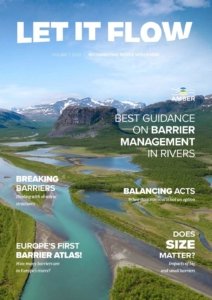
On the 29th of June from 10:00 to 13:40, will take place the AMBER (Adaptive Management of Barriers in European Rivers) final webinar on Zoom plateforme. Over 800 confirmed attendees to date. The AMBER project unveils Europe’s first map of river barriers and what that means for the state of our rivers.

This webinar will include presentations from both the AMBER and FIThydro projects with 12 speakers from around Europe who will discuss river fragmentation and better ways to manage and mitigate barrier impacts. The programme is structured around facilitated discussions on three pressing topics: 1) the need to reconnect rivers; 2) the innovations, the tools and solutions available for better barrier management and 3) the applications, a framework for reconnecting Europe’s rivers.

full program

 register online  to attend

more infos on AMBER

Do you know the crowdfunding platform for dam removal?

Dam Removal Europe and WWF Netherlands launched just two years ago a crowdfunding platform for dam removal in Europe.

Since 2018, seven projects on the Danube, in Lithuania and the UK have been completed thanks to this fundraising.
The possibilities to submit a project (see conditions) and to participate financially are still open.
The current campaign is taking place in Ukraine for three dams in the Carpathians. 40% of the objective has been reached (out of the 31 000€)!  Participate in fundraising. More info on the project and donate : https://crowdfunding.wnf.nl/project/three-dams-in-ukraine.

How far will the hydroelectic equipment of weirs in the Loire – Allier basin go?

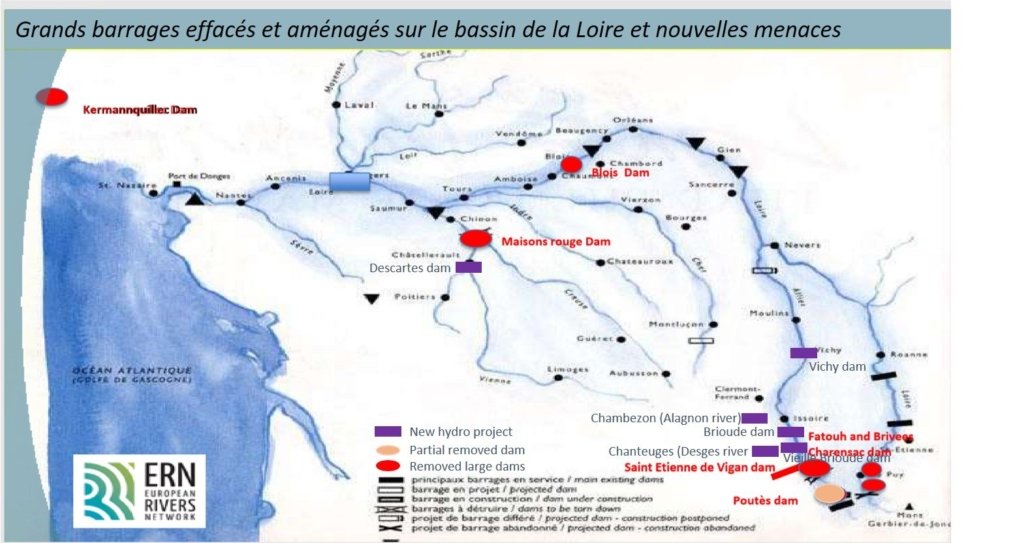
The Loire-Allier basin is one of the main migration routes for wild Atlantic salmon. NGOs have been working for more than 30 years to protect and restore ecological continuity on this axis. Several successes have been achieved. Large dams have been removed (e.g. Maison-Rouge, Saint-Etienne-de-vigan), the Poutès dam is being completely restructured (partial removal) to reduce its impacts on upstream and downstream migration. Wild Atlantic salmon were saved in extremis on this axis.). (more infos)

In spite of these victories and the strong biodiversity issue in the basin, at least 6 hydropowerplants are in project on existing weirs and dams with no real uses (see map).

Some projects would worsen the ecological continuity because they would prevent the removal of the dam. There is no denying that the development of renewable energies has entered into competition with biodiversity. What about the basin vision . Who takes care of it in these projects?

To take stock of the situation, avoid certain developments, reduce impacts, compensate as a last resort, SOS Loire Vivante – ERN France and several basin associations will lead in the coming months a series of Webinars and debates which will hopefully lead to a strategic vision for the basin conserving the interests of biodiversity and the river. Upcoming events, see the webinars page (in french only)

Big dam removed or retrofit and new threats on the Loire basin.

21 July 2020: 1000th day of the revision process of the WFD! It is time for the European Commission to conclude this debate!

ACT NOW !!

July 21 will mark the 1,000th day since the launch of the independent review of our water legislation the Water Framework Directive.

From now until the beginning of July, European citizens, through the “Protectwater” campaign, are called upon to mobilise once again with the Commission to stop an endless debate on possible changes that could weaken this unique law. Write personally, via a form to the European Commission to express to it in your own words this incomprehension and the urgent need to take a decision to protect our rivers in Europe. The form allows you to send a message from your own mailbox directly to Virginijus Sinkevičius, European Commissioner for Environment, Oceans and Fisheries, and Frans Timmermans, Executive Vice-President.

We have already shown that citizens can mobilise in numbers (375,386 to be precise! with the public consultation). Now write personal and authentic messages, whether it is a story about your river, or why you took part in the public consultation, etc.

more infos

Sélune: the work on the Vezins dam is coming to an end!

Since March, and in view of the health crisis, the Vezins works carried out by the DDTM 50 has been at a standstill. Only the central pier and the foundations remain today. With some delay, the work will resume until September so that the Sélune can finally be reopened. On the La Roche-qui-boit dam downstream, the only one remaining to date, EDF, the project manager for the site, will launch the sediment management work in June 2020. The final emptying of the reservoir is scheduled for April 2021 and the deconstruction of the dam at the end of 2021-early 2022.

>> More info on our dedicated pages

Europe unveils its Biodiversity Strategy for 2030 : by 2030, the 27 will have to have freed up 25 000 km of rivers

On Wednesday 20 May, Frans Timmermans, Executive Vice-President for the Green Deal, and Environment Commissioner Virginijus Sinkevicius unveiled the Biodiversity Strategy for 2030. Linked to the Green Deal, this strategy aims to halt the loss of terrestrial, lake and marine biodiversity.

Within this framework, strong announcements concern rivers and the restoration of ecological continuity. In 2021 the Member States will have to list the obstacles to the free movement of rivers and the restoration of flood plains. By 2030, the 27 will have to have freed up 25 000 km of rivers. The work of the NGOs, and the Dam Removal Europe coalition, to achieve these announcements has been effective.

With the Water Framework Directive (which we hope will be kept as ambitious by the European Commission despite the pressures – see our Living Rivers Europe page for more information) and now the Biodiversity Strategy and the Green Deal, all is there: the objectives, public policies and tools. So let’s get to work!

Link to the official communication of the European Commission

23 companies signed a joint business statement of support for the WFD

23 large companies taking a stand for the EU water law & calling on the EU to uphold it ! Fantastic !

We hope EU Commission will bear this in mind as it finalises its #BiodiversityStrategy.

Euractiv published the announcement of this statement made this morning. The statement is available on Coca-Cola’s website.

“DON’T WATER DOWN THE RULES (Read complet article on euractiv.com)

“Why Europe’s rules on protecting our water are working – and why we should stick with them.

There has never been a greater need for us to protect and restore our freshwater resources in Europe. […] Coca-Cola, as the world’s largest beverage producer, recognizes the need to protect freshwater resources for people, nature and business. It’s why effective water management is one of our key business priorities. […]. That’s why Coca-Cola and two of its biggest bottling partners in Europe (Coca-Cola European Partners and Coca-Cola Hellenic), along with 20 other companies who have signed a joint business statement stand with the 375,000 European citizens who have urged the European Commission – and governments across the EU – to maintain the EU’s Water Framework Directive in its current form. We want to see this Directive kept intact and fully implemented and enforced, as called for by numerous environmental groups through the #ProtectWater campaign. This EU wide law is vital.  It sets a much-needed deadline for us to protect and restore Europe’s freshwater ecosystems by 2027. […] In fact, other countries outside of Europe, including India and China, have been so inspired by the governance model provided by this Directive, they have adopted similar principles when drafting their own legislation. To maintain its credibility globally, the EU cannot and must not change the current legal requirements of the Water Framework Directive.  The rules are working and we should stick with them.