Saturday, October 24th : Participate to World Fish Migration Day!


Whether or not you are planning to organize a particular event on this occasion, you are invited to celebrate this day by attending online events organized by the World Fish Migration Foundation :


  • Attend live on facebook the meeting between all the event organizers around the world. Click here
  • Discover all the songs written for the Eurofishion, vote, and even participate in the show of the Eurofishion Fishy final from 20h to 21h30 (Central European Time). Don’t forget to book your virtual ticket, and invite whoever you want! More infos here
  • A special webinar on Africa, “Love Flows in Africa”, is scheduled on 24/10, from 10:00 am to 4:30 pm (Central European Time): to see the full program and register, please click here.


More infos about World Fish Migration Day and about World Fish Migration Foundation : click here

Colloquium “Climate Stress: Nature to the Rescue of Aquatic Environments” in Paris on October 26, 2010

On Monday, October 26, ERN will co-host the meeting “Climate stress: nature to the rescue of aquatic environments” with IPEC (Sub-Directorate for Pedagogical and Collaborative Innovation/ Ministry of Ecology, Energy, Sustainable Development and Land Use Planning) and the University of Lorraine. Accessible both in person and remotely, registration is free but compulsory.

Information, registration and program: https://catalogue.ifore.developpement-durable.gouv.fr/content/stress-climatique-la-nature-au-secours-des-milieux-aquatiques

Contact and information: Alexis Pasquet-Venzac – alexis.pasquet [at] ern.org


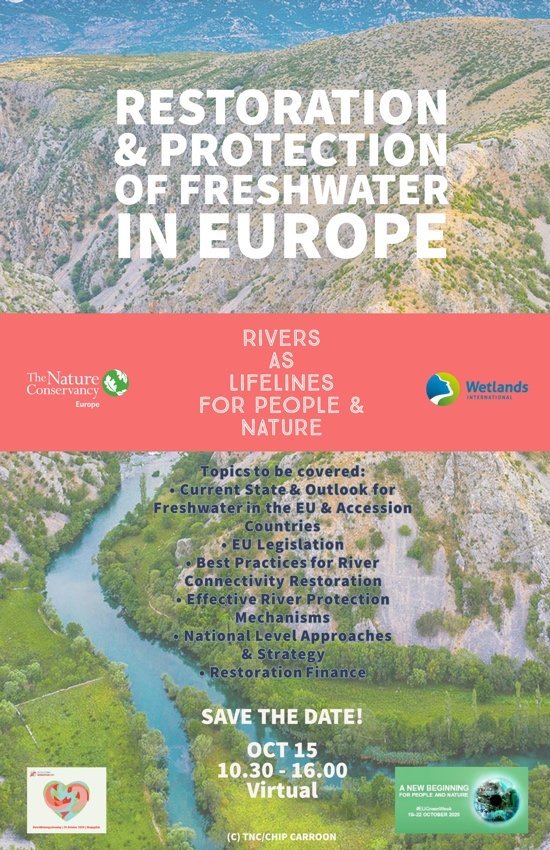
2020/10/15 : webinar on ” Restoration and Protection of fresh water in Europe”

In partnership with Wetlands international Europe, the Nature Conservancy is organizing
on the occasion of GreenWeek (environment week) and World Migratory Fish Day (October 24)
an English webinar ” Restoration and Protection of fresh water in Europe”
October 15 from 10.30 to 16.00 (French time),

>>Here is the presentation of the webinar and the link to access the programs and registration

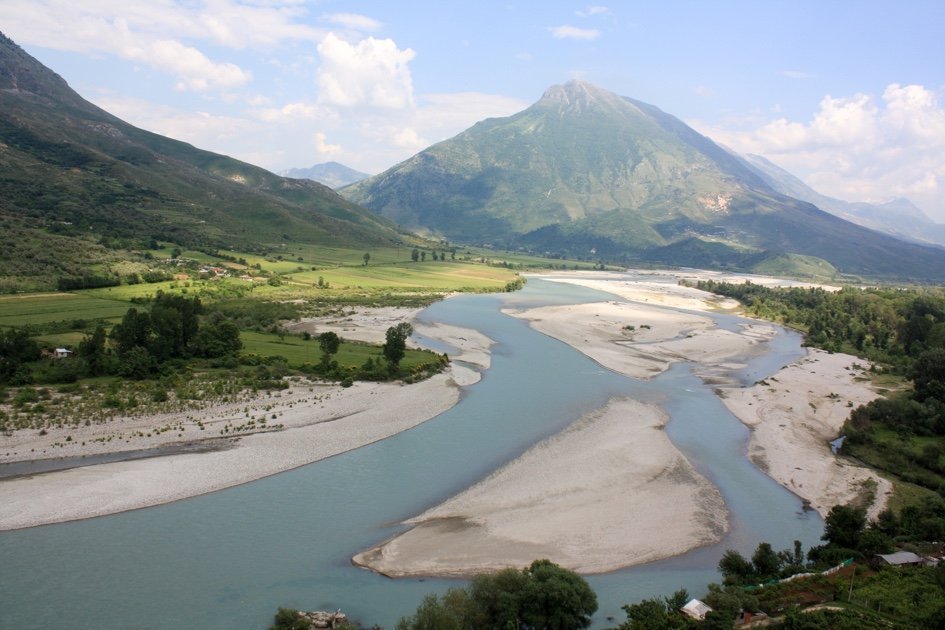
Great news for Vjosa!


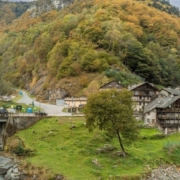
Photo : Vjosa Valley – Albania – ©R.Epple, ERN France

It is a victory for the lovers and defenders of Vjosa, in Albania. Following the declaration of Albanian President Ilir Meta, Prime Minister Edi Rama has just announced to the media that he is also in favour of the creation of a national park in Vjosa and that the Ministry of the Environment has rejected the Kalivaç dam project.

>> More information on the September 2020 newsletter, published by Balkans Rivers


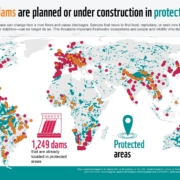
Worldwide more than 500 dams planned inside protected areas: Study

More than 500 dams planned inside protected areas: Study (source Mongabay)

by  on 5 August 2020

  • More than 500 dams are either under construction or planned within protected areas over the next two decades, according to a new study.
  • The study found that more than 1,200 large dams already exist within protected areas.
  • The authors strongly encourage governments to avoid constructing dams in or near protected areas and instead to look toward renewable energies such as wind and solar.
  • The researchers express concerns about ongoing rollbacks to environmental protections, especially amid the COVID-19 pandemic.

Hundreds of dams are planned within global protected areas, a prospect that threatens people, plants and animals that rely on the lifegiving waters of free-flowing rivers.

According to a first-of-its-kind global analysis published in the journal Conservation Letters, 509 dams, or 14% of the total currently under construction or planned for the next two decades, are set to be built in protected areas.

“The sheer number of dams that are planned within protected areas is alarming,” said Michele Thieme, lead author of the study and lead freshwater scientist at WWF. “Rivers are the lifeblood of ecosystems. Any policy that aims to conserve nature must prioritize the free flow of rivers.”

The researchers overlaid data on planned dams from the Global Dam Watch database onto maps from the World Database on Protected Areas to arrive at the number. The team also identified 1,249 large dams already in place within existing protected areas using the Global Reservoir and Dam Database (GRanD).

Worldwide, rivers aren’t what they used to be. A 2019 study revealed that two-thirds of the world’s longest rivers are no longer free-flowing. These long rivers (more than 1,000 kilometers or 621 miles long) are blocked by dams and infrastructure. This fragmentation blocks the flow of water and nutrient-carrying sediments to downstream habitats, altering ecosystems and impeding the migration and reproduction of fish and other freshwater species

read the complet article (Mongbay Website)


Great Big Jumps in many places despite Covid .

Good news. Despite the official cancellation of the Big Jumps 2020 on July 12th due to the Covid 19 epidemic, some very original events took place. We already have knowledge of Big Jumps in Belgium, Bosnia Herzegovina, France, Italy, Poland, Portugal, Spain. In a few days we will be able to publish photos and videos

DAM BUSTERS : Dam Removal Europe presents the trailer of its new film

DAM BUSTERS is the new film by Dam Removal Europe and the World Fish Migration Fundation about dam removal. Worldwide distribution, premiere expected in 2021.

Following the journey around the world of Pao Fernández Garrido, a Spanish engineer, the film sets out to meet the “river heroes”, women and men, in all continents in their passionate quest to restore rivers and ecosystems. Laura Wildman from the United States, Roberto Epple – Founding President of ERN-France, are among the film’s personalities.

France, the first country, along with the United States, to have carried out major dam removals since 1996, will be in the spotlight with the removal of the major dams on the Sélune and the partial removal of the Poutès dam on the Haut Allier.


A film from Francisco Campos Lopez, in collaboration with Magen Entertainment, LLC.

#DamRemovalEurope #DamRemovalGlobal #WorldFishMigrationDay #dam removal #RiverResotrationHeroes

Dam Removal Europe Webinar / Practitioners : recording available

You missed the July 1st the #DREpractitioners webinar. Check out the recording  on You tube.

On this occasion the participants were able to see live removal of a hydropower dam: Marieberg , Sweden and ask their questions to the project team about the removal process.

Hydropower dam: Marieberg , Sweden

This webinar was specifically geared towards practitioners and answered a variety of practical questions: What are the best methods for removing a dam? | What are some of the technical difficulties encountered when removing a dam in a protected area? | What if the dam has a high cultural heritage value? Does this affect how you remove it or how much of the barrier you can remove? | What do I have to take into consideration if there are exotic species dwelling within the river on either side of the dam? Drilling away at a dam may sound easy—what is there to understand? What is there to expect and take into consideration?

With news and presentations from the USA, UK, France, Spain and Sweden.  

more infos about Dam Removal Europe

Selune River comes alive upstream the Vezins Dam

One year after the complet emptying of the reservoir, the Selune river is already welcoming its new inhabitants. Jean-Marc Rousel from INRA tells us “1km upstream the former Vezins dam the river is breathing vigorously now, incredibly rich in habitats and many invertebrates species (stone flies, caddis flies, dragon flies…) and some fish too! In particular the Sculpin (Cottus gobio) has returned from upstream. The invasive American crayfish is also spreading from downstream… but its upcoming predator, the European eel, is waiting for its turn, below the second dam (La Roche-qui-boit), ready for ascending…”.

The Selune River, 1 km upstream from the Vezins dam © Jean-Marc Roussel – INRA

Restitution of the AMBER project: webinar video, magazine

The June 29th webinar “Smart Ways to improve connectivity river” was a great success. If you missed the event and want to watch some presentations again, you can now watch the webinar video online.

One of the main outputs of AMBER is the Pan-European Atlas of In-Stream Barriers. It contains information on 630,000 barriers including not only large dams, but also hundreds of thousands of smaller weirs, ramps, fords and culverts. However, AMBER researchers have found that more than one third of barriers are unrecorded, bringing the total to well over 1 million. Of these 1 million, over 100,000 are obsolete barriers deteriorating Europe’s rivers. This scale of river fragmentation is alarming and makes Europe the most fragmented river landscape in the world, with hardly any unfragmented, free-flowing rivers left. more : https://amber.international/our-research-finds-at-least-100000-obsolete-barriers-are-fragmenting-and-deteriorating-europes-rivers/  

To finish the 4-year AMBER project, EU-funded under the Horizon 2020 initiative, a magazine Let it flow | Reconnecting People with Rivers  was produced. Throughout this magazine, the Amber project shares results, thoughts, and ambitions for the future. Inside, is illustrated the issues of river fragmentation and restoration in Europe and abroad and what can be done to tackle these challenges.


For France, EDF (national electricity compagny)  and CNSS (National Conservatory of Wild Salmon) were partners in the project, notably to study the smolt downstream migration  the reservoir. The reconfiguration of the Poutès dam and its stakes are widely presented in the video presentation of the AMBER program (2min out of the 4.50min video). Video soon available and preview at 3h’42min’40sec of the webinar video.

Plus d’infos https://amber.international/