Allier river (France) : The work on the Poutès dam in the spotlight

The work of the New Poutès on the Allier river has recently been highlighted in the french national medias.

At first, an article, by Martine Valo, was published in the famous daily newspaper Le Monde on 25/02/2021, entitled “Le barrage de Poutès s’ouvre pour laisser filer vers l’Atlantique les saumons sauvages de l’Allier”.

>> See the article of Le Monde of 25/02/2021

It was followed closely by two reports in the television news of France 2 and TF1 of which here are the extracts:

>> Extract from the 8:00 pm news of March 04, 2021 on FR2 (3’29)

>> Extract from the 8:00 pm news of March 07, 2021 on TF1 (3’54)

See our pages for more infos on Poutes Dam

03/22/2021 Debate on Vichy dam (France): one more hydroelectric power station on a highly migratory river?

SHEMA (a subsidiary of EDF) plans to install and operate a hydroelectric power station on the Allier on the left bank of the Vichy dam-bridge. The project, still little known by the citizens, is sensitive because it will impact the Loire and Allier, a major axis of migration of the Salmon whose protection is at stake at the European level !
To give you an opinion on this project, SOS Loire Vivante-ERN, the Association Saumon Sauvage, the association Protection du Saumon, Allier Sauvage, the FRANE and other partners offer you
a webinar-debate (only in french, no translation sorry)
on March 22nd
4pm to 6pm.

Registrations are open (only in french, no translation sorry)
>>More information by clicking here

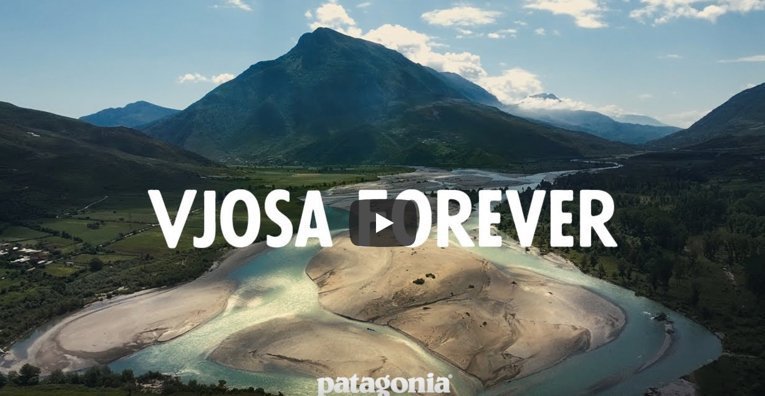
VJOSA FOREVER: Support the National Park Project

THE FUTURE OF EUROPE’S LARGEST UNSPOILT RIVER IS AT STAKE

The Vjosa, one of the last wild rivers in Europe, is in danger. Patagonia is launching a campaign to support the project to create a national park on the Vjosa, which could protect the entire river and its tributaries.

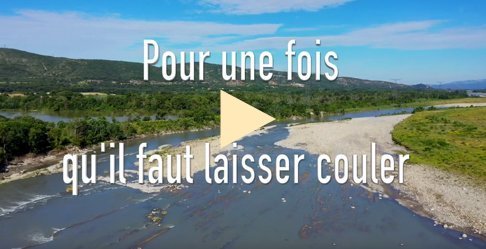
On this occasion, a 6′ short film has been released to explain the issues at stake and to mobilise the citizens of Europe to preserve this magnificent valley.

>> See the film (6′)

Hydropower in Europe : Transformation – not development (WWF Report)

European rivers are the most fragmented in the world, contributing to the rapid decline in freshwater biodiversity.
As a result, a drastic transformation of the hydropower sector is urgently needed to reduce its environmental
impact. This can be achieved through several steps: the first one is to stop building new hydropower plants which worsen the fragmentation of rivers and lead to the loss of precious habitats and species.

The second step is to lessen the environmental impact of existing plants through plant environmental refurbishment. From ecological flows to acquiring knowledge on fish migration patterns, hydropower plants can be adapted and managed in a more nature- sensitive manner, as illustrated by a case study on the Allier River in the Loire Valley, France.

The third step is the restoration of the rivers’ natural functions,
in particular continuity and habitats. The case study on the construction of a reproduction channel next to the Imatra hydropower plant in Finland, illustrates active restoration measures that should be taken to complement mitigation measures at the plant itself.

download the WWF Report :  https://www.wwf.eu/what_we_do/water/?uNewsID=2329866 


Documentary “Salmons and Men”

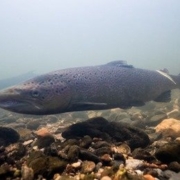
Photo : Saumon atlantique dans la rivière Allier.© Stéphane Granzotto

Directed by Stéphane Granzotto, this film was broadcast on France 3 Auvergne-Rhône-Alpes in November 2020.
This documentary is about the Atlantic Salmon (Loire Allier strain), and focuses on the journey of the species on the Allier River, a tributary of the Loire River (France). Among the obstacles presented, the Vichy dam or the Poutès dam and its redevelopment in favor of the migration of the Salmon.

Film again available in full on vimeo : To be seen here


National Geographic highlights actions to promote ecological continuity of rivers

Are we finally going to reach a broad awareness of the urgency of restoring the ecological continuity of rivers? The Amber cartography has recently highlighted a staggering number of dams of all sizes that fragment Europe’s rivers (see our news of 05/01 :More than 1 Million). The quantity of small structures and thresholds is considerable. The large dams are no longer the only ones to be pointed at! By displaying the state of degradation of rivers in the eyes of all, this atlas is a very good tool for raising public awareness of the importance of restoring ecological continuity.
In 2020, some prestigious magazines have taken up the cause, such as Nature (2020/12/17) or, in France, the newspaper Le Monde (2020/12/16).  The National Geographic magazine also takes up these figures but points out the fact that in many parts of the world actions are underway to fight against this fragmentation of rivers.  Several examples of levelling or development of dams are cited, such as the Sélune in France. Several members of the Dam Removal Europe movement are interviewed

>> Read the National Geographic article of 2020/12/17

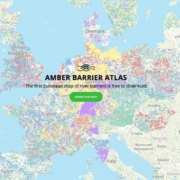
More than one million barriers fragment Europe’s rivers !

As part of the Amber project, a European atlas of dams and other obstacles was published this year. It took 4 years of census work, on 2700 km of rivers to complete this project, which is completed over time (see our news of last July 06). To date, the updated figure is staggering!  More than 1.2 million obstacles prevent the free running of our rivers and consequently their life …

A first study drawn from this database was published on 16/12/20 in the journal Nature (article to read here), signed by 20 researchers with Barbara Belletti, specialist in geomorphology at the CNRS and the University of Lyon, as main author.

 >> Discover the Atlas on line

In 2021, ERN will tell you a story in pictures…. but which one??

….the story of the restoration of ecological continuity in France, of course !

Please support our project before December 18

In 2021, our association ERN is going to realize a series of several short films, on the policy of restoration of the ecological continuity in France * : ” For free and living rivers: erase, modify and avoid ” (Project n°1)

To conduct its project, ERN has been selected among others in the framework of MobBiodiv’2020 by the Ministry of Ecological Transition and the French Office for Biodiversity (OFB).

Until December 18, citizens can vote to elect a “Coup de coeur du public” among the 47 projects.

Watch our trailer here

VOTE : Did you like it?  Just click here and vote for ERN’s project n°1 “Erase, Modify, Avoid – for living rivers” (Attention, to vote, you have to go to the very bottom of the page!). Thanks !


* Indeed, France is a leader in Europe in restoring ecological continuity in particular by erasing small and large cross-cutting structures. Since 1997, it has acquired recognized know-how through innovative policies and major projects. The period 2020-2022 will be marked by large-scale river restoration projects on an international scale: the removal of two large dams on the Sélune and the complete reconfiguration of the Poutès dam on the Haut Allier.
It is to tell and share the French experience that ERN has planned to produce a series of audiovisual modules for the general public, as well as micro-videos for social networks. Broadcasting is planned on a national and international scale.


“Prix Georges Emblanc 2020” : Four prizes awarded and seven winners rewarded !

The Georges Emblanc Awards for “River Culture, Flood Risk Prevention and Biodiversity” of the EPTB Seine Grands Lacs and ERN France aim to reward academic works carried out on rivers, natural risks and protection of aquatic environments. For this second edition, about fifteen applications have been received.

On December 9 and 10, 2020, on the occasion of the 13th edition of the National Forum of Major Risks – IRISES organized by the IdealCo network, the EPTB Seine Grands Lacs gave the Georges Emblanc prizes for its second edition in the presence of Frédéric Molossi, President of the EPTB Seine Grands Lacs, Daniel Marcovitch, Co-President of the Joint Commission on Flooding (Commission Mixte Inondation), Simon Burner, ERN France’s Director and Nicole Emblanc, wife of Georges Emblanc.

The following are the 2020 laureates

¤ Victor Bourdet for his dissertation as Landscape Designer at the School of Nature and Landscape of Blois “From Marne-la-Vallée to the future NRP: what future for the peri-urban valley of the Grand Morin ? The reconquest of a river to erase the divide between town and country”.

¤ Eric Bonnot for his Master 2 thesis “Water, Resources, Management, Planning” at the University of Lorraine “Diachronic analysis of the course of rivers and developments in flood-prone areas in the lower Moselle basin since the 19th century”.

¤ Manon Lestage for her dissertation as an architect in Bordeaux “Le rapport au fleuve dans le projet urbain. The case of the ZAC Garonne-Eiffel”.

¤ Morgane Russeil-Salvan, Lauryane Arzel, Aurore Mancip, Eugénie Pimont students  in master of journalism at the IEP of Rennes for their long-format investigation on floods and risks, and about marine submersion in french Britain and an original podcast.

By mutual agreement, Presidents MOLOSSI and EPPLE have already announced that in 2021 there will be a third edition of these prizes, which will reward the work of students who perpetuate the spirit of Georges EMBLANC, an ERN France collaborator who died in 2017, a great defender of rivers who worked all his life to make young people aware of the need to live in harmony with nature and others.

Join the global call to protect rivers !

Whether you are an individual, association, or other organization, you can join International Rivers’ call for river conservation. ERN has signed it.

To learn more, and possibly sign, click on: https://www.rivers4recovery.org