Dam Watch

In order to illustrate the issues related to dams and their negative impacts on rivers and aquatic ecosystems, but also to show some trends in renovation and in full or partial removal, we have selected some cases which we are monitoring

  • Large dams
    • the Poutès dam in France on the Wild Salmon River Allier (Loire tributary) : partial removal
    • largest removal in Europe of two large dams on the Sélune River (Normandy/France).
    • the large Mesochora dam in Greece (Acheloos River), never been flooded…
    • the Vogelgrün dam on the Rhine River (transborder France/Germany) blocking salmon.
    • the controversal Ilisu dam  (Tigris, Turkey) overflowed a UNESCO site : unfortunately, constructed
    • the Alqueva dam in Portugal (Guadiana River) the largest dam reservoire (surface) in Europe : unfortunately, constructed
    • the Yacyreta Dam in Argentina (Parana) the corruption and scandal (Worldbank droped out): unfortunately, constructed
  • Small and micro-hydro projects
    • the micro-hydropower plant project in Chanteuges, France, Desges river : low production of energy – high impact on nature
    • the equipment of the existing dam of Vichy, on the Allier river in France
    • the equipment of the existing dam of Descartes, on the river Creuse, France
    • the project of a micro power station at Ebreuil on the Sioule, a tributary of the Allier, France
    • A power station on the Auze, Loire basin, France
    • The multiplication of power plants on the Alagnon basin, a salmon river, Loire Basin, France
    • The example of the Petit Tabuc, one of the threatened alpine rivers, France
Dam Watch location

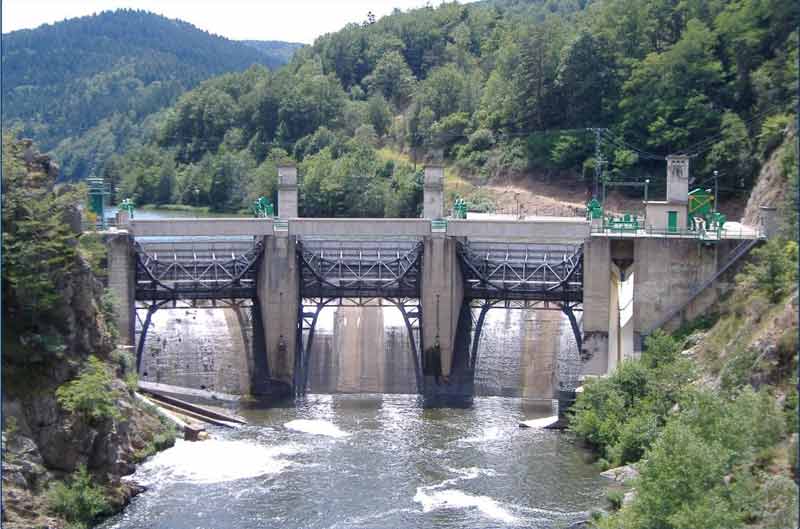
Poutès Dam

Upper Allier River in France (Loire tributary), France

A partial removal is planned. The dam’s height will be reduced from 18m to 7 m.

The new dam will be equipped with fully removable gates, a large fishpass and a device to sustain downstream migration. (Salmon). The New Poutès was inaugurated in 2022.

We highlight this case due to its technical innovation and the exemplary social engineering (collective intelligence) which has replaced a 20 year-long open conflict.

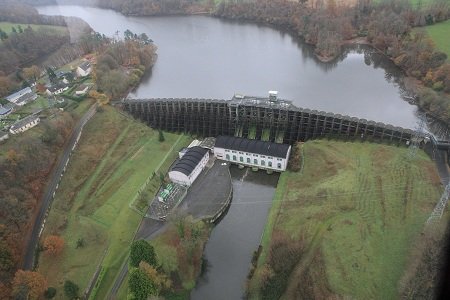
The Poutès dam, 17m hight
© EDF

New Poutès Dam, 2022
© ERN

Vézins and La-Roche-qui-Boit Dams

Sélune river, Normandy, France.

After a long campaign by Fishers and environnemental NGO’s the french government decide to remove two large dams 36m (12,6 MW/20 GWH) and 15m high respectively (1,6 MW/ 4,7 MWH) on the Sélune River (Normandy).

The official decision dams meets local opposition.  The work took place between 2019 and 2023.

These cases are interesting due to importance of the removal, the impact on salmon migration and the existence of polluted sediments in the Vézins dam reservoir and that both sites, blocking Salmon and Eel.

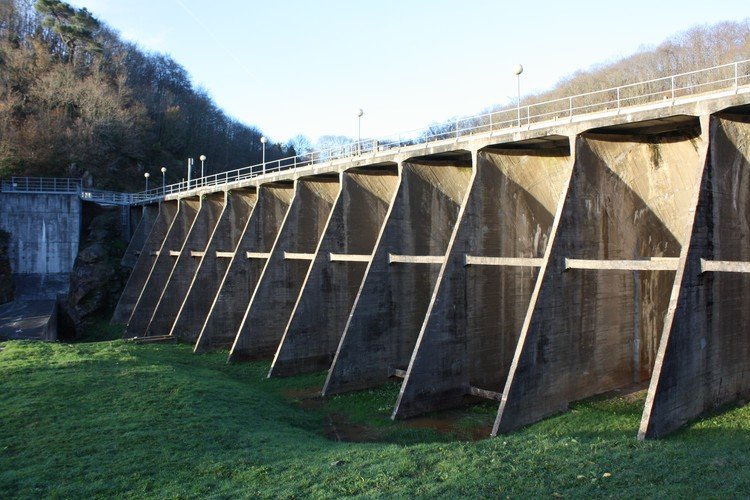
Vézins dam, 36m hight
© Eaux et Rivières de Bretagne

La Roche-qui-Boit dam, 16m hight
© ERN France, Roberto Epple

Micro-hydropower plant project in Chanteuges

Desges river, Allier tributary, France

In France and in Europe, a large number of micro-hydropower projects are emerging on the last remaining watercourses. They pose a real threat to aquatic ecosystems and their energy production is insignificant.

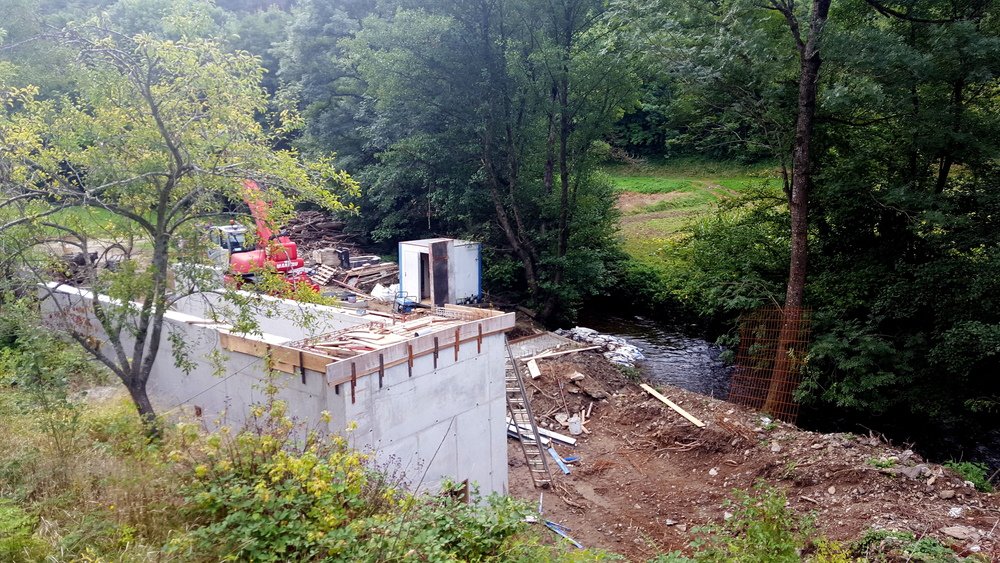
The micro-hydropower plant project in Chanteuges is one example in the Desges river, tributary of the upper Allier, just upstream from the National Conservatory of Wild Salmon.

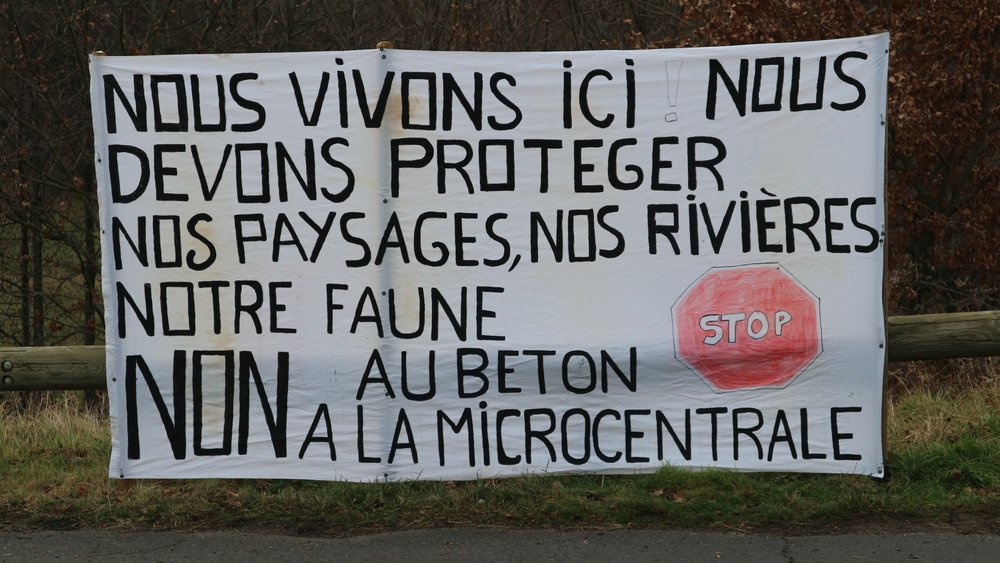
Local activists fighting the micro hydropower plant project in Chanteuges © Marie-Pierre Tiberti , 2018

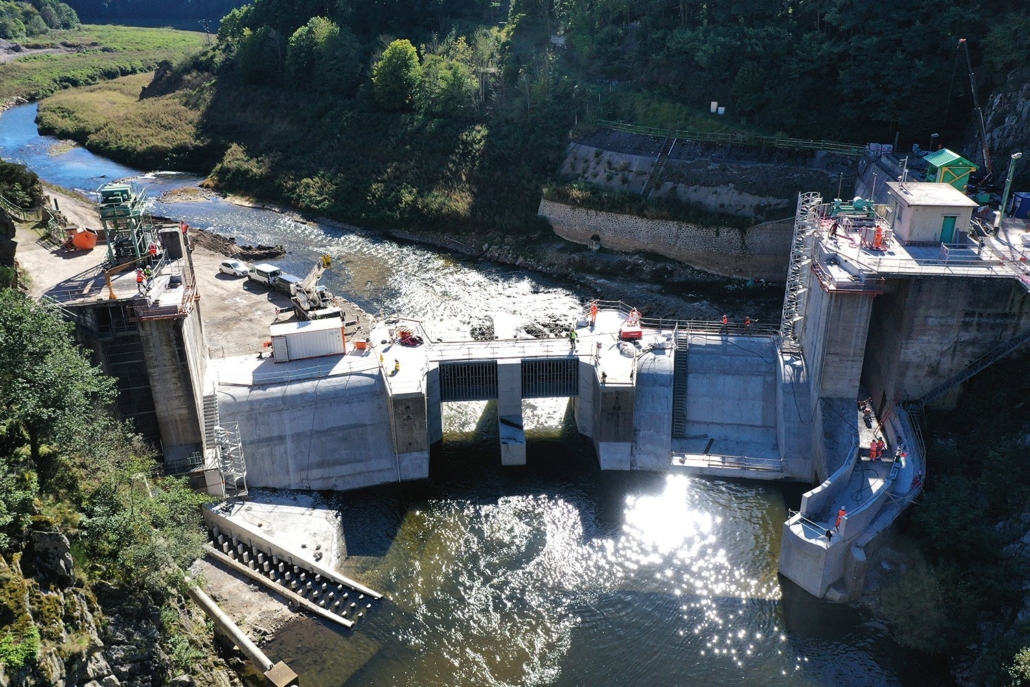
The micro hydropower plant under construction in Chanteuges 

© ERN France, 2017

Mesochora Dam

Acheloos river, Greece.

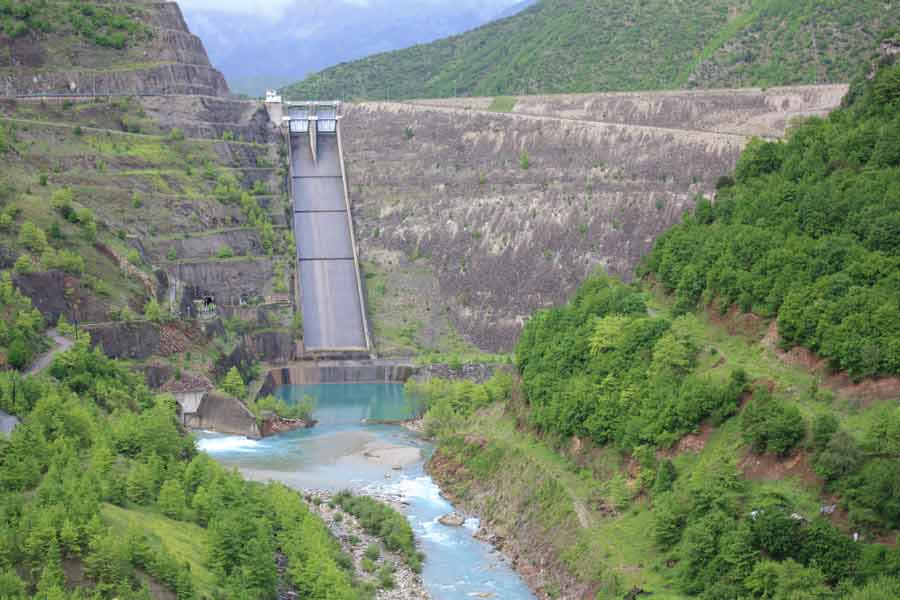
This 150m high dam was completed in 1997 but the reservoir has never been flooded because of massive opposition from a large citizens’ movement and non-conformance with the Greek constitution.

Mesochora dam
© ERN France, Roberto Epple, 2014

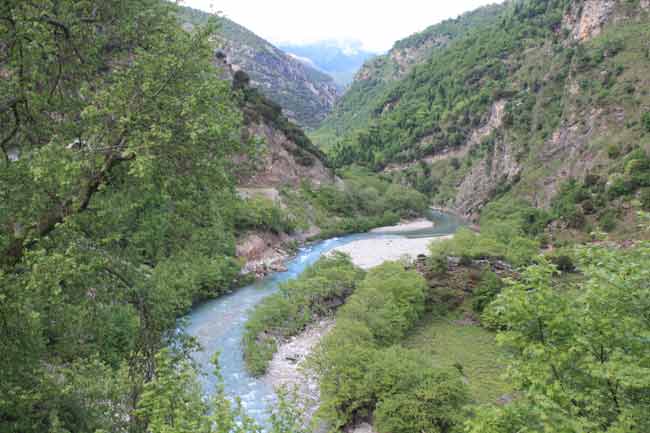
Acheloos river
© ERN France, Roberto Epple, 2014

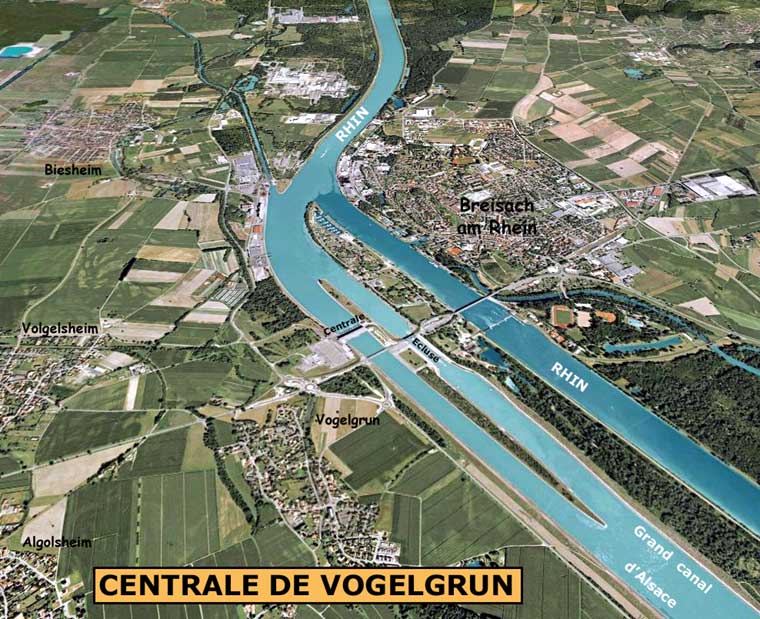
Vogelgrün Dam

Rhine river, France and Germany.

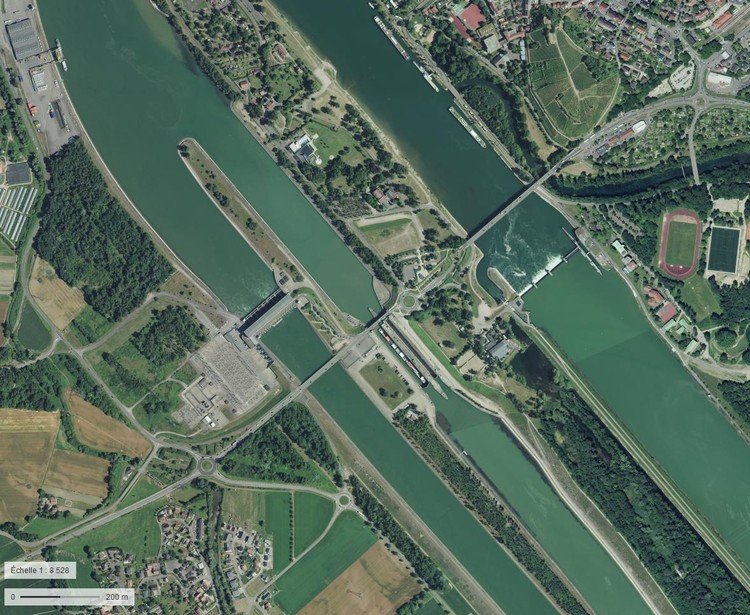
This dam is not equipped with a fish ladder and is therefore currently completely blocking migrating fish.

This complex dam configuration needs a very innovative solution. Two solutions are now under study. Work should be done before 2030.

Vogelgrün dam, aerian view
© Géoportail

Ilisu Dam, Yacyreta Dam, Alqueva Dam

Three more case-studys und work

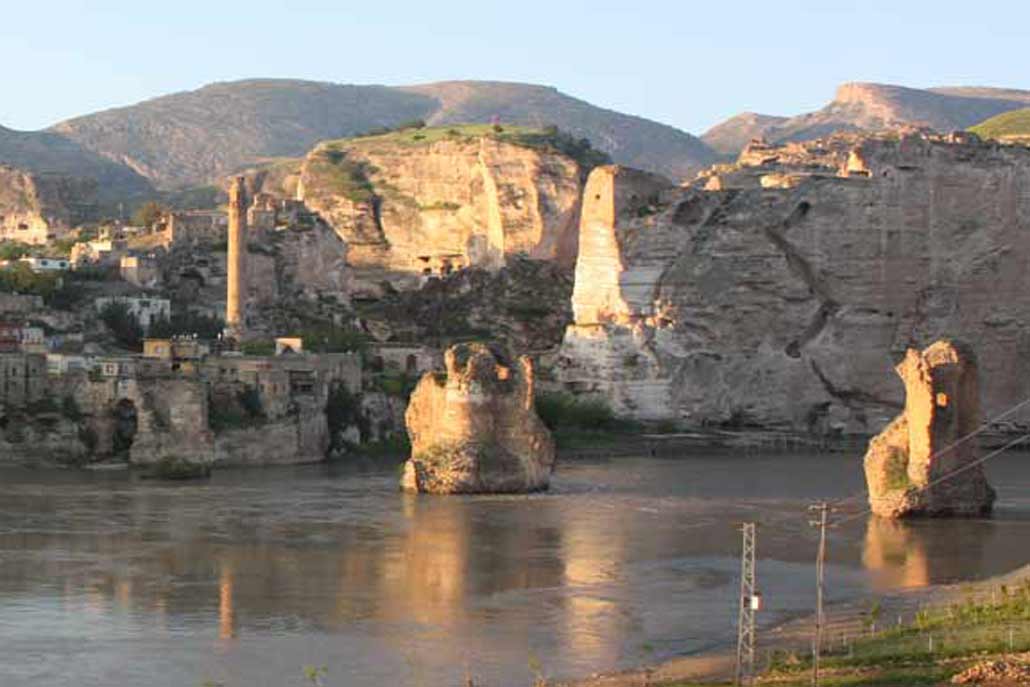
Ilisu Dam (Tigris,Turkey): Antic Hasankeyf, World Heritage in danger
© ERN France, Roberto Epple, 2011

The Ilisu hydropower project is at present the largest dam project in Turkey’s pipeline. It is located on the Tigris river in South-East Anatolia, 65 km upstream of the Syrian and Iraqi border. The project is extremely controversial for a variety of political, social, environmental, economic, and archeological reasons. It appears to violate five policy guidelines of the World Bank on 18 accounts, and core provisions of the UN Convention on the Non-Navigational Uses of Transboundary Watercourses. The works hould be completed between 2017 and 2020
The Ilısu Dam is a concrete-face rock-fill with a length of 1820 m and a height of 135 m will create a reservoir with a maximum volume of 10.4 billion m3 and a surface area of 313 km2. The Ilisu power station will have a capacity of 1,200 MW, and is expected to produce 3,800 GWh of power per year. The costs are estimated to be $ 1.52 billion (not including the financing costs).
Ilisu is part of the South-East Anatolia Project (GAP), a giant hydropower and irrigation scheme on the Euphrates and Tigris rivers in the Kurdish part of Turkey. Once the GAP is completed, its reservoirs are supposed to produce 27,300 GWh of power per year, and irrigate a land area of 17,600 km2. The GAP’s total price tag is supposed to be $ 32 billion.
This case study is not copleted yet, meanwhile you can read our dedicated page on our old website

Yacyreta Dam
(Parana River, Argentina)
© unknown – free

A part of our text is inspired by Wikipedia Infomations on Yacyreta :
Yacyretá-Apipé (or just Yacyretá, often Yaciretá) is a hydroelectric dam located on the Paraná River between Argentina and Paraguay, 83 kilometers downstream of Posadas City, next to Paraguayan city of Ayolas, and Argentine city of Ituzaingó, Corrientes Province. It was named after the Yacyretá Island (Guaraní: jasy “moon”, reta “country”), now 80% covered by the waters of the reservoir, and the Apipé islands, now completely covered.
The dam is 808 metres long and has 20 turbines with a power of
4 050 MW that can produce 19 080 GWh per annum, with maximum water flow of 55 000 Cubic metres per second.
There is a canal lock to let ships through the dam overcoming the
25 metre water difference, as well as a system to allow fish to go upstream during their reproductive season.
The project was heavily criticised before construction, as 1600 square kilometres of land were to be covered by water as reservoir to the dam, which finally eliminated the natural environment of a number of species. As a result, a lot of fish died right after the dam was filled (due to the oxygen difference in the water), and fish mortality is at high levels. The reduction of inhabitable environment has decreased the number of several species of the area. Also in danger were the Iberá Wetlands in Corrientes, through suspected underground infiltration. City floods during heavy rains have been also said to be caused by the higher level of the waters. Before flooding the reservoir, new houses had to be built for the relocation of 40 000 people who lived in the area. ( Phase 1)
Even though it was started at the end of 1983, it was not until 1994 that the dam started working, in the middle of a corruption scandal (often called “The Monument to Corruption”), and after the original budget was largely exceeded.Since 1998 all the generators are working, but the water level only reaches 76 metres over the sea level, which is 7 metres less than the original planned level of 83 metres. For this reason, the dam only generates about 60% of its planned power. While 7 meters may seem like a small difference, because the dam is located on a plain, that additional height of water would cover 500 extra square kilometres and affect the homes of 80,000 people (Phase 2)

In 2006, amid concerns about energy shortage in Argentina, President Néstor Kirchner vowed to study the feasibility of finishing the works by 2008. A few months later, the governments of Paraguay and Argentina reached an agreement to cancel Paraguay’s debt of $11,000 million, by having smaller countries supply Argentina with
8 000 GWh per year during 40 years in exchange.]
End of the Wikipedia text

The Yacyreta Dam in Argentinia (Parana River), is a symbol for corruption, an international large scale scandal (Worldbank droped out).
This case study is yet not completed, please read the dedicated page on our old  Website

Photo Hasankeyf

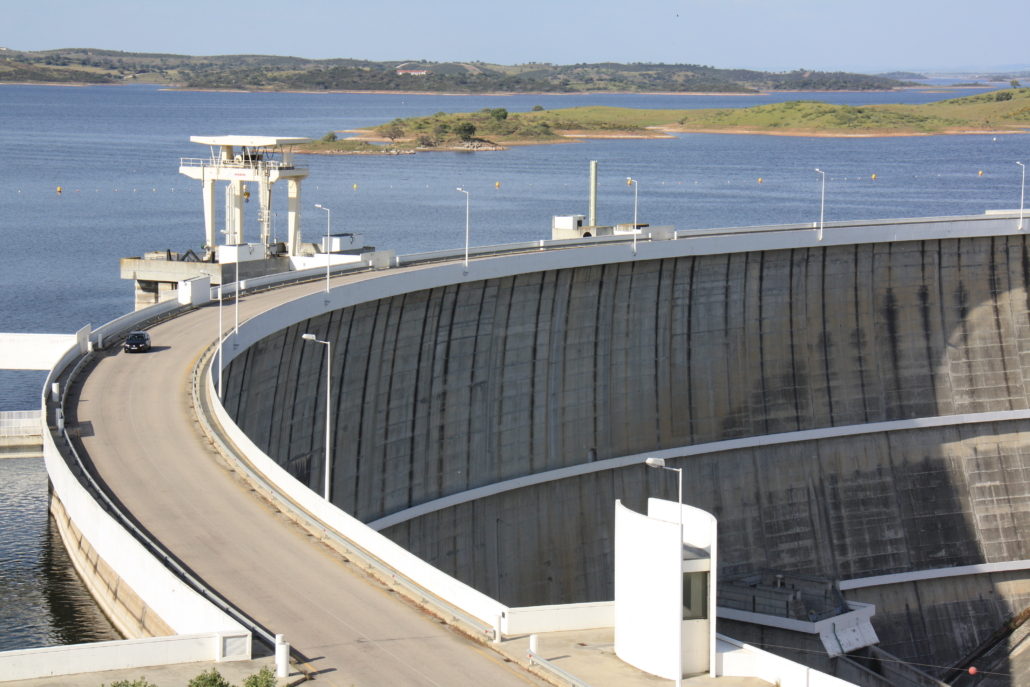
Alqueva Dam
(Guadiana River, Portugal)
© ERN France, Roberto Epple, 2016

The Alqueva dam financed, by the EU, is based in a model of intensive irrigation of the semi-arid Alentejo region, is not sustainable and with a incredible low return rate. Given credit to the scientific reports of the same European Commission that is financing the dam, there is a high probability of desertification and salinization. On February 8th 2002, the 96-metre-high floodgates have been closed. The Alqueva dam is one the biggest dams in the Iberian Peninsula and holds the water of the largest artificial lake in Europe (surface).

The dam with 240 MW hydropotential and a reservoire with a volume of 4150 milions M3 covering  25 000 ha, has destroyed one of the most bio-diversified region in Europe and caused the destruction of thousands of images of irreplaceable ancient rock art (petroglyphs). Over 400 panels of the prehistoric art are located within the impact zone of the dam along the Portuguese and Spanish sides of the Guadiana River.

This case study is not completed yet. Please read meanwhile our dedicated page on our old website.

The activities we carry out on dam removal are supported by .

© 2016-2026 Tous droits réservés | European Rivers Network