
Statement of the Hasankeyf Coordination
Ilisu Dam Reservoir has reached Hasankeyf town – Apocalypse is Impending!
The filling of the controversial Ilisu Dam continues despite the ongoing strong critic and protests by the affected communities along the Tigris River and civil society organizations from all over Turkey. Almost two weeks ago the raising dam reservoir has reached the 12,000 years old town Hasankeyf which is one of the most magnificent cultural and natural heritage sites at our planet. The planned “apocalypse” by the Turkish government is becoming slowly reality!
Situation in the Tigris Valley
Caught unprepared and uninformed, the residents of the mainly Kurdish populated Tigris Valley are unjustly made to emigrate from their homeland. Many people, especially in the province of Siirt, had to evacuate their villages without taking some of their belongings because the water was rising quickly.
What has been criticized by us and other in the last two decades is happening step by step and displaced people are confronted with poverishment in the new target settlements. While it is planned to flood 85 villages completely and 124 villages partially, the State Water Management (DSİ) has built only four new settlements, which forces tens of thousands of people to emigrate to Siirt, Batman, Diyarbakır and other big cities with meagre compensation rates. Among them are over ten thousand landless people who have not received any compensation at all. These people are supported by neither the DSİ, nor the trustee-appointed municipalities.
Situation in Hasankeyf
Having approached the district center of Hasankeyf in late December, the water level of the Ilisu Dam has been rising since July. Up to date around 35 villages have been already flooded in the last months.
While hundreds of families have been evacuated from Hasankeyf to New Hasankeyf – the resettlement site 2 km in the north – one by one since August 2019, in the last 2 months 40 families still lived in Old Hasankeyf as they have become homeless and do not know where they will bring their animals. They had access to only one tea house and a grocery store. Given water only for one hour a day, the families staying in Hasankeyf are now facing enforced displacement. Their number is now decreasing with the entering into the city.
When the historical bazaar was demolished with construction equipments in November, Hasankeyf received another blow. With the demolition of the bazaar, structures going back 2 thousand years were uncovered. The ‘rescue excavation’ undertaken by the Ministry of Culture for these structures sparked criticisms.
Construction equipments keep damaging historical fabric in other sites and the 80 meters high barrier set up around Hasankeyf Castle and constituting a crime in terms of landscape keeps on rising.
The people who have moved to New Hasankeyf are not content with their situation. As tourists come neither to old nor to new Hasankeyf, thousands of people have significant less income and are faced with the risk of becoming unemployed. In addition to financial difficulties, another important problem in New Hasankeyf is that the water coming from the tap is undrinkable. That is why daily many people transport drinkable water from Hasankeyf to New Hasankeyf. While the people of Hasankeyf used to live in and with water, they now have difficulties in access potable water. If people are not provided with job opportunities and if the problem of drinking water persists, people will have likely to emigrate from New Hasankeyf as well. If this happens, the vast majority of New Hasankey’s population will not consist of local people. The people of Hasankeyf are now against the Ilısu Project more than ever before.
We can stop it despite everything
The directly affected people from Hasankeyf and the 199 villages raise their critic more than ever against the Ilisu Project as they experience the expected disastrous social, cultural and ecological impacts. Almost the whole society in the affected provinces in the Tigris basin consider this project of destruction, eploitation and domination as a big loss and oppression.
We can stop the apocalypse that has unfolded in the Tigris Valley despite all the destruction that has been brought about. We are not tired of repeating that it is never too late for Hasankeyf and the Tigris River. No matter at what point we abandon the Ilısu Project, it will be to the benefit of us and next generations!
In 2019 in Turkey, groups more diverse than ever before stood up against Ilısu project and indicated that Hasankeyf had to be saved. This reaction should be prompted again by every person and organization and the government should be requested to stop filling the Ilısu Dam. It is urgent, we have no time to lose!
IT IS NOT TOO LATE FOR HASANKEYF AND THE TIGRIS RIVER!
Remarks:
1) This is a link showing the first days of the reaching dam reservoir in Hasankeyf: https://www.youtube.com/watch?v=QXAjqW-M7s4&feature=youtu.be
2) At the website you can find more pictures which you can use by citing the Hasankeyf Coordination or the Initiative to Keep Hasankeyf Alive.
3) You can find this statement at the website of the Initiative to Keep Hasankeyf Alive: http://www.hasankeyfgirisimi.net/?p=142617.01.2020
Hasankeyf Coordination (Initiative to Keep Hasankeyf is part of it)Twitter (Turkish and English): @HasankeyfKoord and @hasankeyfdicle
Facebook (Almost only Turkish): @hasankeyfyasatmagirisimi
Email: hasankeyfgirisimi@gmail.com
More information (Turkish and English): www.hasankeyfgirisimi.net

The French Agency for Biodiversity has just published its latest issue :
– Effacement de barrages, Quand la Sélune reprend son cours, – 24 au 26 septembre 2019, Les Rencontres, OFB, n°70, déc.2019, french
– Dam removal: The Sélune River free to run – 24 to 26 september 2019, Les Rencontres, OFB, n°70, déc.2019, english
This 6-page issue is entirely devoted to the Sélune conference held from September 24 to 26 in Rennes and Avranches.
A more detailed 60-page book on the conference communications is also being prepared.
The Wild Rivers project and its label will be implemented in the alpine countries and then in the Balkans.
European Rivers Network has established a partnership with WWF for the alpine region and with EURONATUR for the Balkan region.
Starting in April 2020 * is you can apply for the label and download all documents for the alpine countries, later on for the Balkan region.
More information > https://www.ern.org/en/wild-rivers/
* postponed to 2021 due to Covid 19 epidemie
Yesterday, 11 of Decembrer, European Commission release the fitness check results and they are largely positive, concluding the EU Water Framework Directive to be “fit for purpose”, acknowledging that the objectives of the law “are as relevant now as they were at the time of the adoption” and that the law has led to “a higher level of protection for water bodies and flood risk management”. The results also saying that any lack of progress is due to ‘insufficient funding, slow implementation and insufficient integration of environmental objectives in sectoral policies, and not due to a deficiency in the legislation’.
The conclusions also reference that : ‘water policy is very important to European citizens. The public consultation received more than 370,000 responses in total, which is an exceptionally high number’. Congratulations to all citizens and NGOs participated through the #ProtectWater campaign making this happen. And of course Living Rivers Europe coalition will be closely monitoring next steps.
These results are a very important first step towards bringing our European freshwater bodies back to life and must revitalize Member States who are now finalising their River Basin Management Plans to achieve the WFD’s objectives during the 2022-2027 cycle. This is an unparalleled opportunity for them to triple and speed-up their efforts on water protection, but also challenge climate change, water scarcity and pollutants of emerging concern for whom the report says that the Water Framework Directive flexible enough to accommodate this emerging pressures.
More infos
>Read Living Rivers Europe press release below
> More info about the campaign and Living Rivers Europe
> press release from ‘European Commission”
This concludes the two-year evaluation of the Water Framework Directive (WFD) and, by discarding the possibility of revision, sets the EU back on course to bring life back to its rivers through full implementation and enforcement of the law.
The message from the European Commission is clear: the WFD is a critical pillar of the EU’s environmental legislation and is here to stay in its current form. The fitness-check results highlight that the delay in reaching the WFD’s objectives is “largely due to insufficient funding, slow implementation and insufficient integration of environmental objectives in sectoral policies, and not due to a deficiency in the legislation.”
The conclusions come hot on the heels of the European Environment Agency’s State of the Environment Report 2020, which highlighted the WFD as being essential to halting and reversing biodiversity loss. The conclusions are strongly supported by WWF, EEB, Wetlands International, the European Rivers Network and European Anglers Alliance – who together form the Living Rivers Europe coalition and led the #ProtectWater campaign to safeguard the WFD.
Andreas Baumüller, Head of Natural Resources at WWF’s European Policy Office and Chair of the Living Rivers Europe coalition, said
“By signing off the Water Framework Directive as fit for purpose, the European Commission is standing shoulder to shoulder with the hundreds of thousands of European citizens, scientists and civil society groups who have all championed the WFD over the past two years.
We congratulate President Von der Leyen on sealing the deal before the end of the year. As the results point out, slow implementation is to blame for not having yet reached the WFD’s objectives. As expressed yesterday upon the publication of the European Green Deal, the Commission now needs to put its money where its mouth is. It must ensure that Member States submit ambitious plans and concrete actions to achieve the law’s objectives by 2027, and that this is supported by dedicated funding.”
Mark Owen, Freshwater Policy Advisor to the European Anglers Alliance and Living Rivers Europe partner, said
“For 20 years we have been battling Member States to properly implement the Water Framework Directive as the most sustainable way of restoring fish stocks for the millions of anglers who take part in recreational fishing, the thousands of jobs that depend on angling together with the rural economies that directly benefit from angling tourism. Now that the fitness check has determined that the WFD is not only fit for purpose but that failure is due to lack of implementation by Member States, we would expect urgent action to conform with the present legal requirements to deliver for fish and fishing.”
Support for the WFD stretches far and wide
Just last week, an open letter from 5,500+ scientists was sent to Executive Vice-President Timmermans and Commissioner Sinkevičius, calling on them to “save and implement the Water Framework Directive” in order to halt and reverse the catastrophic decline in freshwater biodiversity. Earlier this year, 375,386 citizens took a stand for the WFD through the #ProtectWater campaign, which facilitated citizens’ participation in the European Commission’s public consultation on the WFD (the only opportunity for the general public to have its say during the fitness-check) to express their clear opposition to changing the legislation. This made the public consultation on the WFD the third largest in the history of the EU. It went on to be supported by more than 130 civil society organisations, including national partners and offices of Greenpeace, BirdLife and Friends of the Earth, as well as unions.
A well enforced WFD must be at the heart of the European Green Deal
The gifts people and nature receive from healthy rivers, lakes and wetlands are key to delivering the four main pillars of the European Green Deal. From supporting climate adaptation to protecting biodiversity, fuelling sustainable food systems to thriving economies, a strong WFD forms the necessary baseline to secure all the benefits healthy freshwater ecosystems provide.
Next steps
Looking ahead, it is now important to pull all efforts towards reaching the objectives of the WFD by 2027.
There is a long way to go. 60% of EU surface waters are not healthy, failing to meet the WFD’s standards. Last week’s State of the Environment Report 2020 showed that, out of the four freshwater indicators analysed by the EEA, only one has shown progress over the last 10-15 years. For all indicators, the outlook to 2030 is “a mixed picture”.
However, Member States are now finalising their plans to achieve the WFD’s objectives during the 2022-2027 cycle (known as River Basin Management Plans). This is an unparalleled opportunity for them to triple and speed-up their efforts on water protection. The European Commission needs to embark all actors together in an ambitious vision for healthy and clean waters in Europe, one which requires political will, enforcement of the legislation, and investments.
Contact:
Sophie Bauer
Communications Officer (Freshwater)
WWF European Policy Office
sbauer@wwf.eu
+32 471 05 25 11
Claire Baffert
Senior Water Policy Officer
WWF European Policy Office
cbaffert@wwf.eu
+32 49273 1092
In the context of the UN Climate Change Conference, COP25 Madrid, civil society organizations from around the world are calling upon the Climate Bonds Initiative (CBI) to abandon the certification of destructive hydropower projects as climate-friendly. Here is their joint statement :
Civil Society Society Statement, 10 December 2019
“On behalf of 276 civil society organizations from around the world, we are calling upon the Climate Bonds Initiative (CBI) to abandon the certification of destructive hydropower projects as climate-friendly. The proposed hydropower criteria developed by CBI and its technical working group fall far short of acceptable standards and practice, and their adoption would pose a significant threat to rivers and the communities and freshwater species that depend on them.
If adopted, the CBI’s hydropower criteria would risk opening up a funding source that could prove profitable to dam operators and institutional investors with Paris-friendly branding, while making no meaningful contribution to stemming the climate crisis. Beyond permitting projects with dubious value to attract a new line of financing, the greatest risk of the proposed criteria is channeling scarce climate dollars toward projects that fail to help us confront the challenge of preventing a 2oC scenario and that exert increased pressure on freshwater biodiversity and the functioning of our water cycle.
In its eagerness to capitalize on the expanding market for climate-certified energy projects, the Climate Bonds Initiative has aligned itself with the International Hydropower Association (IHA), an industry body created to promote the interests of hydro companies and boost their image. In recent years, the IHA has rolled out a series of tools and guidance and advocated their use in lieu of established international standards and mechanisms for assessing the costs and benefits of hydropower.
The adverse environmental and social impacts of destructive hydroelectric dams are now well understood, ranging from displacing and impoverishing millions, particularly indigenous peoples, to driving the extinction of freshwater species and fragmenting rivers. Yet the CBI proposes to adopt the IHA’s own environmental, social and governance assessment tool as their principal source of assessment and verification. This would amount to little more than a box ticking exercise conducted by assessors accredited by the IHA itself – a glaring conflict of interest that lacks any meaningful oversight – making a mockery of international standards and conventions designed to protect rivers and the rights of communities. This would also be at odds with positive approaches adopted within the existing CBI standard for water infrastructure.
Besides profound damage to the hydrosphere – an important part of global climate system – hydropower reservoirs emit significant amounts of greenhouse gases, especially in the tropics. Dam reservoirs emit methane, a particularly potent greenhouse gas, and are a significant contributor to the climate crisis. Yet CBI’s proposed criteria set such a low bar that even high-emitting dams would qualify for CBI certification. This problem is compounded by CBI’s proposal to use the IHA’s own non-transparent emissions calculation tool, which systematically underestimates the greenhouse gas emissions from dams. Methane emissions from dams are highest in the first years of operation, thus incentivizing hydropower would contribute to a spike in emissions at the precise moment the world is trying to reduce GHG emissions to arrest the worst impacts of climate change.
Climate financing has the potential to play a critical role in ensuring positive outcomes for rivers. This could include: protecting threatened freshwater resources; restoring flows that facilitate reconnection of fragmented ecosystems; ensuring cultural and environmental flows determined in consultation with affected peoples; and promoting river restoration efforts such as the decommissioning of obsolete dams. This is of utmost importance because our freshwater resources are vital to sustain in an era of climate change. The CBI has already issued a separate standard for water infrastructure, which took an important step to help promote nature-based solutions to addressing climate change.
CBI’s hydropower criteria, on the other hand, would represent a step backward, sanctioning business-as-usual energy practices that further threaten our rivers. If approved, it would exacerbate global threats to freshwater biodiversity, undermine the cultural values and human rights of affected communities, and fail to make progress toward addressing the climate crisis. It would at the same time damage the reputation of the Climate Bonds Initiative and contribute to discrediting green bond finance mechanisms in general. Therefore, we call upon the CBI, its board and advisory bodies to abandon their pursuit of a hydropower standard that caters to the hydropower industry instead of providing meaningful solutions to address the climate crisis.”
6th of Décember , an open letter from 5,500+ scientists was sent to Executive Vice-President Timmermans and Commissioner Sinkevičius, calling on them to “save and implement the Water Framework Directive” in order to halt and reverse the catastrophic decline in freshwater biodiversity. Congratulations to all signatories for this commitment!
It is still possible to join the statement and sign.
NGOs and Living Rivers Europe Coalition reaction
“Scientists and academics concerned by the dire state of European rivers, lakes and wetlands have released a statement calling on the EU to fully implement and enforce its own water law – the EU Water Framework Directive (WFD) – in order to halt and reverse the catastrophic decline in the world’s freshwater biodiversity.
The statement has been endorsed by twelve scientific bodies representing over 5,000 scientists, and nearly 500 individual scientists specialising in the wide array of species impacted by the WFD – from amphibians to insects, freshwater fishes to birdlife. The scientists include Dr. Jörg Freyhof, Regional Chair of the IUCN/WI Freshwater Fish Specialist Group, and Professor Carlos Garcia de Leaniz, Director of Swansea University’s Centre for Sustainable Aquatic Research.
The statement was released earlier today alongside an op-ed for Euractiv by Professor Steven Weiss – a freshwater biodiversity expert at the University of Graz and one of the statement’s signatories.
The statement describes the WFD as a critical tool for ensuring that Europe has “healthy and resilient freshwater bodies to support people and nature, today and in the future”, stressing that ‘There cannot be an effective European Green Deal without healthy freshwater ecosystems at the heart of it’. The statement is released as the European Commission is in the final stages of a standard evaluation of the WFD – known as a “fitness-check” – which is designed to assess whether the law is still relevant and fit for purpose. The final conclusions of this evaluation are expected next week.
Andreas Baumüller, Head of Natural Resources at WWF’s European Policy Office, said:
“EU Member States and business lobbies have been using the fitness-check of the Water Framework Directive to push for weaker environmental standards. The European Commission’s silence has been deafening, and it has continued to allow the impact of the WFD to be gutted by poor implementation and abuse of exemptions. We hope this massive call from thousands of scientists acts as a final wake-up call for the Commission: This law is the right tool to protect Europe’s rivers, any watering down of it would put the European Green Deal in serious jeopardy.”
ENDS
Contact:
Alexandra Chevalier
WWF European Policy Office
achevalier@wwf.eu
0032 48449 4354
Claire Baffert
Senior Water Policy Officer
WWF European Policy Office
0032 49273 1092
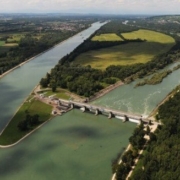
You were told in our news of June 2019 : Several French and Swiss NGOs had made the request, with their respective governments, to be involved in the reflection on the renewal of the concessions of 3 hydroelectric structures present on the Franco-Swiss Doubs (The Châtelot, The Chorus and The Ghoul) which come soon to maturity (respectively 2024, 2028, 2032).
In November, they have just received two similar replies from their respective governments, who each propose to meet them in the course of 2020. Let’s hope that this will be a real consultation, and not just a restitution of already taken decisions. We remain vigilant!
The governments also specify that they are currently working on a draft international convention applicable on the whole section of the Doubs Franco-Swiss. The governments consider that the adoption of this convention is a preliminary and necessary framework for the definition of the modalities of renewal of the hydropower concessions. It is the advancement of this draft convention that will determine the schedule of the meeting with associations.
In view of the next Ministerial Conference, which will take place in Amsterdam in 2020, environmental protection NGOs from the Rhine basin in favor of the ecological continuity of the Upper Rhine have just published a common position, in which they make known their requirements.
Indeed, at the last plenary meeting of the ICPR in Malbun in July 2019, France communicated its global plan for the restoration of ecological continuity of the Rhine between Rhinau and Vogelgrün.
Despite the implementation of the new “Living Rhine Plan”, which they welcome and approve, the NGOS deplore that the deadline of 2020 originally planned, nor any other deadline, is no longer included in the French program.
As a result, NGOs are demanding that all necessary work to ensure ecological continuity and relocation of naturally balanced salmon populations in the Rhine Basin to Basel be completed by the end of 2025.
They also call for a review clause for late 2022 and for a progress report.
>> For more details, read the position of associations (available in French and in German only)
> Read also our previous news about Rhine (July 2019)
>> French flyer “Plan Rhin Vivant”
ERN France
8 rue Crozatier
43000 Le Puy en Velay
+33 (0)4.71.05.57.88
ERN is the official WWF Freshwater Partner in France and cooperates with WWF Switzerland, Austria, Netherlands and others




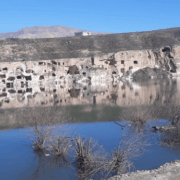 Hasankeyf Coordination
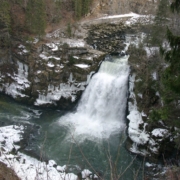 ERN France
 EDF
EDF