FR / EN audio files & abstracts are online

After presentations PDF online, it is now possible to access audio conference files in French and English.
Some presentations offer abstracts.
And for memories, some photos are online too.

The press review is available on request.

Access to audio and abstract


A new guideline on Hydroelectric Power Development by the European Investment Bank


The European Investment Bank has just published a guideline ” Environmental, Climate and Social Guidelines on Hydropower Development”.
It set out the EIB’s objectives for investments in hydropower projects, establishing sector-specific standards and criteria, which promoters should meet.

They also summarise best practice recommendations for integrating social, biodiversity, natural resource management and climate considerations into hydropower projects.

They have been written for use by hydropower promoters, who should take the requirements and recommendations into account from the early stages of the project development cycle, preferably during the pre-feasibility stage. The guidelines will also serve as a reference for other stakeholders with interests in hydropower projects.

It is stipulated that EIB (and where appropriate its financial intermediaries) will treat potential hydropower investments on a case-by-case basis, assessing the features of the project and information on the biophysical and socioeconomic context within which the project would be constructed,rehabilitated or refurbished, and subsequently when it is operational and,if appropriate, ultimately decommissioned. EIB will promote best practice mitigation of environmental and social impacts and risks.

> Read the environmental-climate-and-social-guidelines-on-hydropower-development

Euronatur Awards 2019 to the Brave Women of Kruščica (Bosnia-Herzegovina)

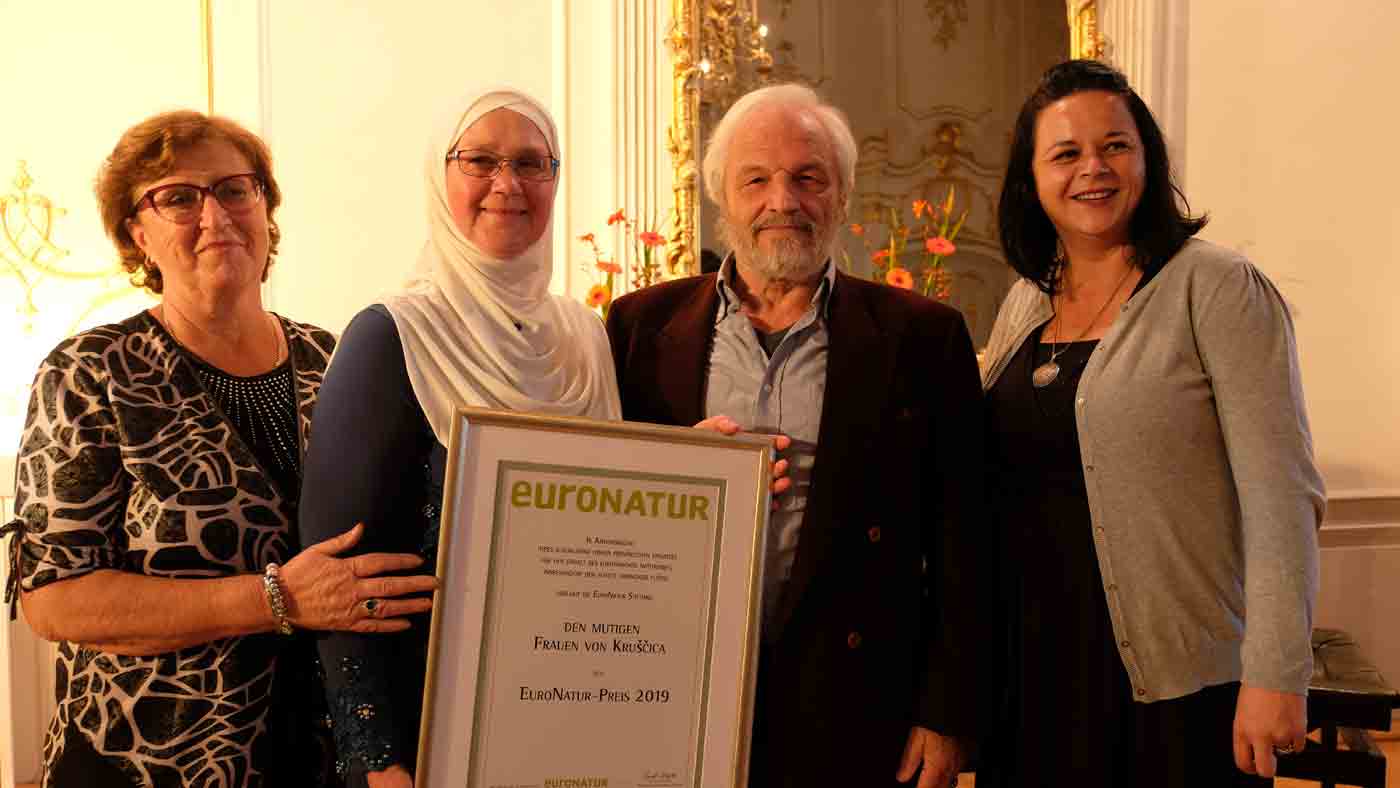
It is with great emotion that our President, R. Epple, who received the Euronatur 2018, handed it over to the admirable women of Kruscica! Photo copyright ERN France

On 10 October, a delegation of the “Brave Women of Kruščica” received the EuroNatur Award 2019 in recognition of the outstanding bravery and tenacity they showed in protecting their river. For over 500 days and nights, a group of women from the village of Kruščica in Bosnia and Herzegovina occupied a bridge over the Kruščica River, thereby preventing the construction of two hydropower plants. The women also defied adverse weather conditions and violent attempts to remove them. (See our last post about if (last january)

“I have huge admiration for the bravery and determination and for the perseverance and solidarity of this community. Their commitment to the protection of their natural resources serves as a model for other groups in the Balkans that are peacefully but resolutely fighting for the preservation of their rivers”, said EuroNatur President Christel Schroeder, explaining the choice of EuroNatur Award winner for 2019.

>>  More info ? Download the full speech 10/10/19 (english)

Ilisu Dam Project (Turkey) : Let’s act now for Hasankeyf and the Tigris Valley!

Important message from Hasankeyf Coordination (founded on 5th July 2019 as an umbrella for all fighting the Ilisu Dam):

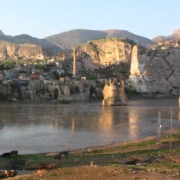
The Turkish government aims to destroy the 12,000 year old town Hasankeyf and the entire Tigris Valley through the Ilisu Dam project, which only has an economic lifespan of 50 years. We would like to borrow the sentence of a Roman poet “De te fabula narratur” (What is told is your story) and transform it into “What is set to be destroyed is your history”. A site where you can find the footprints of many people of this world is threatened with extinction. The cry rising from Hasankeyf and the Tigris Valley is growing daily.

The open air museum of Hasankeyf exhibits the first traces of humans from 300,000 years ago, and of the first human settlements from 12,000 years ago. Hasankeyf is the only historical site in Anatolia and Upper Mesopotamia which could be entirely preserved in its integrity. Hosting at least 24 cultures in its past, Hasankeyf is one of the most distinct examples of how humans transitioned to settled life.

We do not and will not be able to know much about the past of the Tigris River which itself is a living being, and which has created life in its valley for millions of years, but the life created by the waters of the Tigris River is facing inundation by its own waters. The Ilisu Dam, which has been constructed at the Tigris River over the last years, initiated the filling of the dam reservoir in July 2019. If filled completely, aside from Hasankeyf, it would bury 289 archaeological sites, of which only 20 have been excavated partly, 199 villages fully or partly, and the habitat of at least 100 endemic and threatened species. The climate of the region would be affected as well. We, as campaigners and affected people, do not really know the dimension of the cultural and natural heritage.

With its 550 monuments and 5,500 human-made caves determined up to date, Hasankeyf was selected as one of the 7 most endangered cultural heritage sites by Europa Nostra in 2016. Although Hasankeyf has been put under conservation according to Turkish law, no serious effort has been made by the officials to conserve it for the following generations. The former director of the German Archaeology Institute, Prof. Adolf Hoffman, has stated that despite excavations done since 1986 only around 10% of the site of Hasankeyf has been excavated and analyzed.

It is not too late to save the Tigris Valley, home to millions of living beings, from impoundment and destruction as an ecosystem. While some destruction has occured recently, there is much more culture, nature and social structure in the Tigris Valley which could be defended. It is not too late to save 400 kilometres of riverine habitat and all the millions of life existing in this oustanding ecosystem. It is not too late to save 200 settlement sites with a population of up to 80,000 people and their unique ways of life. It is not too late to save the Mesopotamian Marshes in South Iraq, the biggest wetlands of the Middle East.

We would like to thank in advance all those supporting and spreading the urgent cry of Hasankeyf and the Tigris River on behalf of the natural and cultural heritage created over thousands and millions of years in the magnificient Tigris Valley.

It is possible to save the 12,000 year old Hasankeyf and the Tigris Valley, which gave and gives life to all of us.

We call upon on everybody to stand for Hasankeyf and the Tigris Valley immediately. Now and not later, it is urgent to act!

email: hasankeyfgirisimi@gmail.com
Twitter: @HasankeyfKoord and @hasankeyfdicle
Instagram: @hasankeyfkoord
Facebook: @HasankeyfKoord and @hasankeyfyasatmagirisimi
Website in English and Turkish: www.hasankeyfgirisimi.net

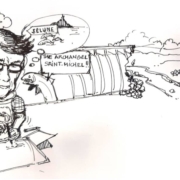
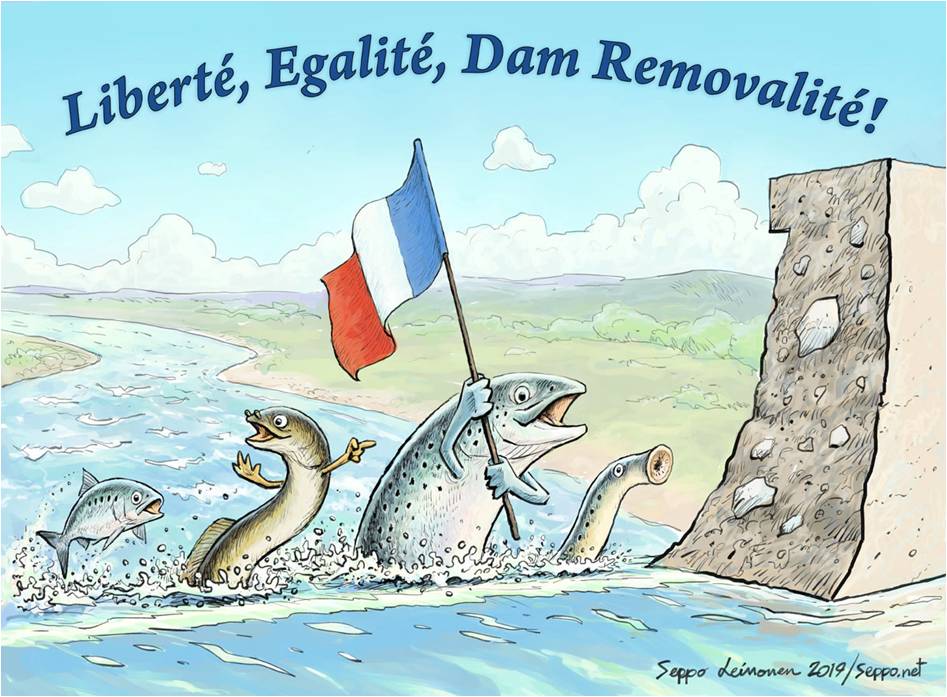
Selune Revival Conference : the drawings of Seppo Leinonen already online!

Seppo Leinonen, a talented cartoonist, accompanied us throughout the all conference!

During the 3 days he published on social media using #selunelibre

Find his works inspired by the symposium on his website

Thanks again to Seppo!

N.B: Welcome image of this news is a caricature of Seppo realized by another participant of the conference. Thanks to him !


Selune Valley Revival: a successful international conference!

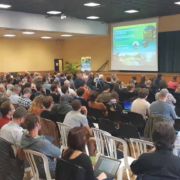
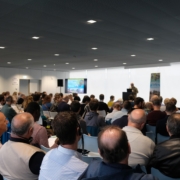
The International Dam removal Conference held from the 24th to the 26th of September, organised by ERN with support from numerous partners was a great success. Participants came from 20 countries and three continents with 30% from the local, Rennes-Avranches region.

The day preceding the conference itself participants and the locals attended a debate “Salmon in our rivers: myth or reality?” organized by Brittany Great Migrators for the International Year of the Salmon.

Interaction was lively and diverse, beginning with a discussion on the importance of ecological continuity for rivers. The presentation of dam removal projects in France and abroad including feedback, has come to remind us that the restoration of ecological continuity is a transcontinental movement affecting all countries. Benefits to the quality of our rivers and territories are very real. Examples presented show just how much French territory profits from a committed, leading policy in this field.

Central to the debates was the Sélune river, with the presentation of work in progress including the first results of the remarkable scientific monitoring program coordinated by INRA, which has taken place over the past fifteen years. This didn’t leave out the sociological issues of dam removal, indeed they were put at the heart of the dialogue via the restitution of the sociological study conducted on the Sélune with strong participation and expressions of their feelings by the association of the Friends of the Dams. Hopefully many positions were understood from all sides.

In summary, a fascinating conference with a lot of ideas exchanged in a pleasant atmosphere, and in the beautiful setting of Rennes and the wonderful bay of Mont Saint Michel and Vallée de Sélune!

Thank big you to all participants, stakeholders, and funding partners for making this event possible.

More infos https://www.ern.org/en/colloque-international-selune/

> Presentations, talks and more informations  

24-26 sept : Seminary “Selune revival” : great success !

From Septemebr 24-26  will be held a International seminary on the large scale damremoval and the revival of the Sélune Valey in Rennes/Avranches (Mont aint Michel) ; It is the 5th international symposium on the restoration of ecological continuity of rivers!
The conference, will bring together 200 people from 20 different countries as well as from the Sélune River region … !!

> more informations about the event and the organisation

> Read Press Release (French Only)


The partial removal of the Poutès dam enters in the decisive phase.

The partial dam removal (New Poutès) on the upper Allier river (Loire tributary) enters in the decisive phase. The three big gates, each weighing 30 tons, are being dismantled. The unic and spectacular operation takes place under the eyes of all the regional media. The deconstruction including the lowering of the dam from 17m to 6.8m will end in 2021. The removal takes time because the up and downstream migration of the salmon un must be respected. For more information visit our dedicated pages

Photo : EDF


40 % of Vezin Dam Remova completed l

The largest european dam removal is under way. 40 % of the 37 m dam are dismanteld today.

Photos and videos are availabe on demande.

Normally the removal the dam itselfs will be completed end of september, just in time with the international dam removal seminary helt in Rennes and Avranchen (Mont Saint Michel) September 24- 26 organised  by ERN and its partners.

More on the the Sélune dam removals

UK : Whaley Bridge dam – Work to prevent from bursting is continuing (BBC)

Work to prevent a damaged dam in Derbyshire from bursting is continuing as the Met Office warns of thunderstorms and possible flooding.

Workers have been pumping water out of the 300-million-gallon Toddbrook Reservoir near Whaley Bridge.

Extra pumps are being installed to speed up the work and contractors are putting concrete between bags of ballast placed on the dam wall.

But the risk of collapse remains at a “critical level”.

> https://www.bbc.com/news/uk-england-derbyshire-49217887

> https://www.bbc.com/news/uk-england-derbyshire-49201467