the “Georges EMBLANC Award for River Culture ” : Announcement of the winners

Launched for the first time in 2019, the “Georges EMBLANC Award for River Culture, Flood Risk Prevention and Biodiversity”, jointly sponsored by ERN and the EPTB Seine Grands Lacs, aims to reward students, who have achieved during the last three years work on an educational project related to rivers, the topic flood / low water or biodiversity in wetlands and related topics such as climate change.
This prize also pays tribute to Georges EMBLANC, recognized expert of the professional and institutional circles for his knowledge on rivers and freshwater ecosystems. A man of value and conviction, Georges accidentally left us on March 11, 2017 and the prize that bears his name, comes to reward young people, students or professionals committed to serving others or for the protection of nature. This award continues the taste he had for transmitting and sharing knowledge and knowledge on topics that were important to him.

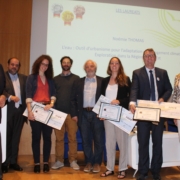
In total, a dozen applications were received and submitted to the jury. After difficult arbitrations given the quality of the files received, 3 laureates were appointed and are awarded their prize on June 4, in Paris, during the meeting between PAPI (Flood Prevention Action Programs). , in the presence of Nicole and Baptiste Emblanc, the wife and son of Georges Emblanc. All our congratulations go to:

Noémie THOMAS, a graduate of INSA Strasbourg and the National School of Architecture of Strasbourg, winner of the first prize Georges Emblanc 2019 for her thesis on: “Water: urban planning tool for adaptation to change Exploration in the Greater East Region »

Marion PERNEY, holds a master’s degree in architecture from Catholic University of Louvain (Belgium), and from the Faculty of Architecture, Architectural Engineering and Urbanism – LOCI Brussels, winner of the Second Prize Georges Emblanc 2019 for her dissertation « Resilience of a Floodable Territory – Between Surface and Soffit.

Arnaud MANRY, graduate of the Master 2 IMSGA specialty “Management of crisis situations” University of Technology Troyes for his thesis “Extreme rain and rapid submersion: Social and economic solidarity in the service of resilience? “.

During the ceremony, the prizes were awarded to the winners by Frédéric MOLOSSI, president of the EPTB Seine Grands Lacs, Roberto EPPLE, president of ERN France and Daniel Marcovitch, co-president of the Mixed Floods Commission. A new edition of the Georges Emblanc Award will most likely be launched in 2020.

France: Biggest dam removal in European history started

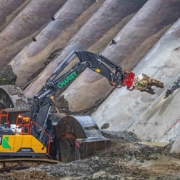
Photo : Copyright Vincent M.


Sélune River, Normandy, France – In a historic moment for Europe’s rivers, the first, irreparable breach was made today in the 36 metre high Vezins Dam – kick-starting the biggest dam removal in Europe so far.

This landmark event is part of a long-term project to free the Sélune River, and bring salmon, eels and other wildlife back to the river and the famous bay of Mont-Saint-Michel – a UNESCO world heritage site and one of Europe’s prime tourist attractions.

Along the Sélune River in Normandy, the removal of two old, obsolete dams over the next two years – the Vezins and La Roche Qui Boit— will open up 90 km of river, improving water quality, allowing migratory salmon to return to their ancient spawning grounds and benefiting people and nature all along the river.

“The removal of the Vezins Dam signals a revolution in Europe’s attitude to its rivers: instead of building new dams, countries are rebuilding healthy rivers and bringing back biodiversity,” says Roberto Epple, president of European Rivers Network and 2018 Euronatur Award recipient. “Nature can recover remarkably quickly when dams are removed and I look forward to watching salmon swimming past Mont St Michel and spawning in the headwaters of the Sélune for the first time since my grandparents were young.”

Historically, the Sélune River was home to salmon that travelled from the river mouth, near Mont Saint Michel, upstream to mate and lay eggs. However, construction of these two dams stopped the salmon from migrating and this effectively stopped the recreational and commercial harvest of them as populations collapsed. The removal of these dams will help to bring more wildlife and biodiversity back to the river along with other recreational and touristic opportunities.

Artificial barriers (dams) are one of the biggest threats to river ecosystems, resulting in river fragmentation and loss of habitat connectivity. They stop the natural flow of sediments downstream and affect migratory fishes from travelling up- or downstream to complete their lifecycles. These impediments often lead to the decrease or decimation of native fish populations and can harbour other, non-native species in their adjacent impoundments. A new study in Naturerevealed just one-third of the world’s longest rivers remain free-flowing with river “fragmentation and flow regulation are the leading contributors to the loss of river connectivity.”

Globally, freshwater species populations have declined by 83% on average since 1970. The recently approved Intergovernmental Science-Policy Platform on Biodiversity and Ecosystem Services (IPBES) reportspecifically recommends conserving and restoring river connectivity to boost freshwater biodiversity. As prescribed by the Water Framework Directive (WFD), each of Europe’s rivers must attain a ‘good’ ecological status and yet 40% of rivers fall short. Removal of old, obsolete dams is a viable option to help reach WFD goals, reconnect and restore rivers and allow fish populations and other wildlife to return and flourish. In fact, many countries in Europe are now removing dams as the economic, environmental and social benefits of doing so far outweigh the alternative of restoring the dam.

It is estimated that over 3,500 barriers have been removed across Europe including the biggest dam removal in Spain last year and an ongoing historical river restoration project in Estonia that will remove 8-10 dam and open up 3,300km of river basin. Moreover, European citizens are also donating funds to see these barriers go as a part of a larger dam removal crowdfunding campaign.

“There are tens of thousands of old, obsolete dams in Europe that can and should be removed,” says Arjan Berkhuysen, managing director of the World Fish Migration Foundation.  “We are hopeful that by removing not only big dams like this but also by removing small barriers through local efforts we can restore these important life sources.”

The unique project will measure the effects of dam removal with ten-years worth of environmental data.

More information :  https://www.ern.org/en/selune-libre/

Dowload Press Release here

##

Notes for Editors:

Photographs of the dam and start of its removal are available here, please respect the copyrights.

Contact:
Roxanne Diaz, WFMF Communications Officer, Mob +31 (0) 6 18918786 Email: roxanne@fishmigration.org
Roberto Epple, Chairman ERN European Rivers Network / Friends of the Sélune, Mob. +33 6  08 62 12 67 , Email : roberto.epple@ern.org

Dam Removal Europe The Dam Removal Europe initiative aims to connect local dam removal projects, stakeholders and organizations to better highlight and disseminate the positive impacts dam removal provides for rivers. It is an initiative that allows relevant specialists share knowledge and inspire new visions for a free-flowing Europe. Dam Removal Europe better enables support and guidance for future dam removal projects under the umbrella of the European Dam Removal movement.

ERN European Rivers Network > www.ern.org  ERN is an NGO engaged in the preservation and sustainable management of water and rivers. ERN is based in France and is Freshwater-Partner of WWF France.
Concessions renewal on the franco-swiss river “Doubs” : NGOs want to be consulted !

The concessions of the three hydropower works on the Franco-Swiss Doubs (Le Châtelot, Le Chrain and La Goule) are soon reaching their end (2024, 2028, 2032 respectively).
The renewal of concessions for these works will be granted by the two states on the basis of the new Franco-Swiss agreement currently under negotiation.
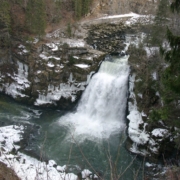
The French and Swiss environmental and fishing associations are already heavily involved in the environmental monitoring committee of the new water regulation (signed in 2017) which reinforces the principle of coordinating the management of the three concessions in force. Since the Doubs is a watercourse with a very high protection status, it is essential that civil society, through NGOs, is from the beginning associated with the definition of framework conditions for the renewal of concessions.For this reason, several NGOs (FNE, ERN, CPE, FNPF, ANPER-TOS) sent a letter in early June to the French Ministry of the Environment asking for the creation of a support group for negotiations and, of course, the integration of NGOs in this group. A similar letter was sent by Swiss NGOs to the Swiss government.Photo Copyright ERN France: Cascade du Saut du Doubs (classified site) on the French-Swiss border

Success of last Dam Removal Europe seminar – 22- 23 May, Pärnu, Estonia

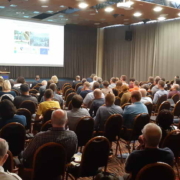
May 22nd and 23rd, in Pärnu, Estonia, was the “Let it Flow” seminar on dam removal in Europe. Organized by the Dam Removal Europe platform, the World Fish Migration Fundation and the Environment Agency of Estonia The opportunity was given to visit the restoration works on the Pärnu River, the country’s first salmonid river. Including […]

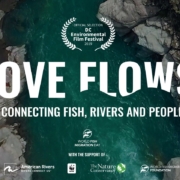
“Love Flows” : a beautiful film to involved people into the next World Fish Migration Day

Ce documentaire réalisé par Francisco Campos-Lopez (réalisateur primé) retrace les événements de la Journée mondiale des poissons migrateurs en 2018 et met en lumière l’impact des barrages et les personnes qui s’emploient à restaurer nos rivières. Ce film donne une voix à ces poissons migrateurs en montrant les actions : célébrations, connaissances, restauration que nous pouvons mettre en place pour les préserver.

En mars 2019, le film a été sélectionné pour le Festival du film environnemental de Washington DC.

Participez à la prochaine Journée Mondiale des Poissons Migrateurs le 16 mai 2020! L’objectif est d’organiser plus de 1000 événements locaux à travers le monde pour une résonance globale. Organisez un évènement, créons l’impact !!

Plus d’infos sur la Journée Mondiale des Poissons Migrateurs

Regarder, diffuser la video !

# Protect Water : handover public consultations signatures officially

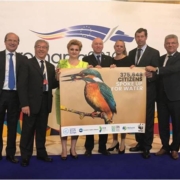
Jeremy Wates, Secretary General of the European Environmental Bureau (EEB) on the behalf of Living Rivers Europe coalition handovered the public consultation’s signatures officially. It took place ahead of the informal meeting of the Environment Council, 21-22 May, with Commissioner Vella, Romania as the Council Presidency, Austria and Luxembourg.

Remember : From the 9 October to 12 March, through the #ProtectWater campaign, more than 375,000 citizens accross Europe expressed to the European Commission their wish for the WFD to remain unchange.

(From left to right: EU Director General for Environment, Mr. Callega Crespo; EU Commissioner Vella; Minister Gravilescu (Environment Minister for Romania); EEB Secretary General Jeremy Wates (representing the campaign); Minister Dieschbourg (Environment Minister, Luxembourg); Mr. Gunter Liebel (Water Director, Austria), Minister Denes (Minister of Waters and Forests, Romania).

More info about the Protectwater campaign and Living Rivers Europe

Germany’s representative at Environment Council, State Secretary Jochen Flasbarth, stated that the WFD should not be re-opened.

Lors de la dernière réunion informelle du Conseil de l’environnement, le 21 mai, le représentant allemand au conseil, le secrétaire d’État Jochen Flasbarth, a déclaré que la DCE ne devrait pas être rouverte.

Cette déclaration officielle était accompagnée d’un tweet: 

( Traduction: Lors de la réunion informelle du Conseil de l’environnement à Bucarest, j’ai clairement indiqué que nous ne voulions pas de changements dans la directive-cadre sur l’eau. Les objectifs pour le bon état de nos eaux doivent être atteints avec ambition d’ici 2027).

Félicitations pour avoir défendu l’une des législations environnementales les plus avancées en Europe! C’est une excellente nouvelle pour tous les citoyens qui ont signé la campagne Protectwater! Un élan inspirant à suivre par les autres États membres!

Plus d’infos, voir notre dernière news à ce sujet

Spring publication for our Rivernews Europe

We’ve just published our Rivernews Europe (only in English). Read it here !

 In Summary

  • Industry’s  “wishlist” to weaken EU law
  • European elections May 2019 : the European Environmental Bureau gives us food for thought !
    Dams & Hydro  – World Hydropower Congress and side events
  • Balkan rivers : Successes & new Threats
  • Impressive large Dam Removal  events ahead
  • Wild Rivers
  • Biblic rivers under pressure
  • Do you know “Hydrodiplomacy” ?
  • Patagonia Enterprise increases its support to save the planet and its rivers
  • SAVE THE DATE
  • RELATED PUBLICATIONS

> Read the Rivernews Europe

>> Enjoy ? Subscribe here (free)

New report by WWF / TNC : “Connected and flowing : a renewable future for rivers, climate and people”

13th of May,  WWF and TNC launched a major report on the accelerating the renewable revolution in Paris,  just before the opening of the WorldHydropower Congress.
This report “Connected and Flowing: a renewable future for rivers, the climate and people” shows how for the first time global climate (keep warming below 1.5 degrees) and energy goals (provide power to the 1 billion people who currently lack access), without sacrificing the world’s remaining free flowing rivers – wich deliver a number of critical ecosystem services.

 The report is a collaboration between WWF,TNC, IUCN, the Stimson Center, the University of California, Berkeley, the University of California, Los Angeles, Manchester University and Stanford University Woods Institute for the Environment.

> More infos on the WWF Site

The future of EU rivers: New paper exposes business lobbies devastating ’wish list’

Unsustainable industries, including industrial agriculture, hydropower, and coal mining, are lobbying for devastating changes the Water Framework Directive.

A new paper from NGOs (WEAKENING THE EU WATER LAW: INDUSTRY’S WISH LIST) shows that, if ever put into effect, such changes would give these sectors the green light to undertake even more destructive activities, potentially causing havoc on our rivers and lakes. But, far from obliging these sectors to clean up their act, some Member States have compiled a strikingly similar wish list, raising serious questions as to where their true interests lie.

This document, published ahead of an informal meeting of the Environment Council in Bucharest, Romania on 20 and 21 May and reflected in a letter sent to the Environment Ministers of EU Member States, launch the second step of the campaign lead by Living Rivers Europe to ensure the integrity of the WFD, and follows the #Protectwater campaign during which more than 375,000 citizens expressed their wish for the WFD to remain unchanged.

Read the letter adress to UE Environment Ministers

Access to our campaign page


Read Press release by Living Rivers Europe
Brussels, 15 May 2019


Unsustainable industries, including industrial agriculture, hydropower, and coal mining, are lobbying for devastating changes to the EU water law – the Water Framework Directive (WFD).

A new paper from environmental groups [1] shows that, if ever put into effect, such changes would give these sectors the green light to undertake even more destructive activities, potentially causing havoc on our rivers and lakes. But, far from obliging these sectors to clean up their act, some Member States have compiled a strikingly similar wish list, raising serious questions as to where their true interests lie.

The paper, developed by WWF, EEB, Wetlands International, the European Anglers Alliance and European Rivers Network – who together form the Living Rivers Europe coalition – is published ahead of an informal meeting of the Environment Council in Bucharest, Romania on 20 and 21 May. Environment Ministers from all EU Member States will come together to discuss, amongst other topics, issues related to water management across the EU. The gathering comes in the wake of scientists declaring a state of ecological emergency, with extensive research confirming that nearly 75% of freshwater resources are now devoted to agriculture alone, and freshwater ecosystems are showing the highest rate of decline.

“Rivers, lakes and wetlands are our life-support systems, but they are being annihilated under our very eyes. We have the legal tool to stop this – the EU water law – but Member States must actively stand up to the sectors that pollute and destroy the most”, said Andreas Baumüller, Head of Natural Resources at  WWF’s European Policy Office. “Through the civil society-led #ProtectWater campaign, more than 375,000 citizens called for the water law to remain unchanged. Member States’ alignment with the positions of business lobbies begs the question: Do they really have the best interests of their citizens at heart?”

The briefing shows the clear alignment between the wishes of some Member States and those of lobby groups representing the interests of the agriculture, hydropower and mining sectors, as well as German industry associations (comprised of representatives of the construction, chemicals, and pharmaceuticals industries, amongst others). These parties want to weaken the WFD’s ambitious scope and environmental objectives, and attack two of the law’s most visionary cornerstones – the “one-out, all-out principle”, as well as the “non-deterioration obligation”, both crucial in assessing the health of freshwater bodies.

Where they differ is in their reasoning, which is completely contradictory – whilst Member States argue that these changes are needed to maintain ambition in EU water management, industry groups ask for changes because the current system is too ambitious.

“Industry groups and some EU member states are calling for the same changes to the EU water law – but, bizarrely enough, how they justify the need for these changes is poles apart: Whilst some governments say they are trying to be more ambitious to protect water, the industry groups say they want these changes because the current rules are too stringent. So, if Member States want to be truly ambitious, the current law needs to be kept and the focus needs to be on properly implementing it to protect the environment and human health,” said Sergiy Moroz, Water and Biodiversity Policy Officer at the EEB.

These arguments and questions have also been reflected in a letter sent by Living Rivers Europe to the Environment Ministers of EU Member States ahead of next week’s meeting in Bucharest.

ENDS

Download pdf

Contact:
Sophie Bauer, Communications Officer (Freshwater)
WWF European Policy Office
sbauer@wwf.eu
+32 471 05 25 1

[1] Living Rivers Europe, 2019, Weakening the EU water law: Industry’s wish list

[2] According to the “one-out, all-out principle”, a water body (such as a  river, lake or wetland) is only considered healthy if all the quality elements (for example the flow, whether it is biodiversity-rich, whether there are chemical substances) are in good status, and the overall status is defined by the quality element in the lowest class.

[3] Within the Water Framework Directive, Member States must ensure that the current state of of any given water body does not deteriorate any further.

[4] Officials from several Member States have drafted a paper on the Future of the EU Water Policy for the meeting of EU Water Directors in November 2018. The paper put forward several amendments to the WFD.

Notes to the editor:

About the EU Water Framework Directive (WFD)

  • The WFD is one of the EU’s most progressive pieces of environmental legislation. It requires the protection, enhancement and restoration of our rivers, wetlands, lakes and coastal waters.
  • Under the WFD, EU governments have committed to ensure no deterioration and achieve good status for the vast majority of all water bodies by 2015, and at the very latest by 2027.
  • The WFD requires Member States to aim to achieve at least good status in each water body within their river basin districts. Each Member State must produce a plan for each of the river basin districts within its territory. Member States should also coordinate the preparation of River Basin Management Plans (RBMPs) for international river basin districts (iRBDs).
  • Plans must include objectives for each water body, reasons for not achieving objectives where relevant, and the programme of measures required to meet the objectives.
  • In line with the WFD, the European Commission is required to publish a report on the implementation of the Directive every six years. The report has to include among other things a review of progress in the implementation of the Directive and a survey of the RBMPs submitted in accordance with Article 15, including suggestions for the improvement of future plans. First reports assessing RBMPs were published by the Commission in 2012; this report looks at 2nd cycle of River Basin Management Plans (2015-2021).
  • The Commission at the same time also published a report on the implementation of Floods Directive (FD), assessing flood risk management plans (FRMPs), member states were required to submit in 2015.
  • Where implemented, the WFD has proved to be effective in achieving its goals of good water status and non-deterioration, successfully balancing environmental, social and economic requirements.
  • The WFD is currently undergoing its standard review in the form of a ‘fitness check’. Every piece of EU legislation goes through this process. The fitness check will look at the relevance, effectiveness, efficiency, coherence and EU added value of the WFD (and its ‘daughter’ directives) and the Floods Directive. It includes the ongoing stakeholder consultation and public consultation.