La consultation publique de la Commission Européenne sur la Directive Cadre d’Eau s’est achevée hier, mercredi 12 mars.
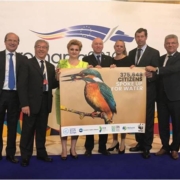
375 386 personnes ont demandé à la Commission européenne de défendre cette législation. Cette consultation publique de l’UE devient ainsi l’une des plus importantes de toute l’histoire de l’Union européenne.
Les citoyens ont parlé haut et fort et ni la Commission Européenne ni les États membres ne pourront ignorer ce chiffre.
Un grand merci et toutes nos félicitations à tous les citoyens et ONG qui ont participé.
Les travaux de Living Rivers Europe ne s’arrêtent pas à la mobilisation pour la consultation publique, la coalition LRE continue de suivre les travaux de la commission.
Lire le Communiqué de presse de Living Rivers Europe (en anglais)
Brussels, 13 March 2019

375,386 people have called on the European Commission to defend Europe’s strong water law, making the EU’s public consultation on the legislation one of the largest ever in the history of the European Union. This law is critical to ensure that Europe’s rivers, lakes and wetlands are protected and brought back to good health.
The NGO-led #ProtectWater campaign inspired citizens across Europe and beyond to take a stand for Europe’s rivers, lakes and wetlands, and the strong law which protects them, the EU Water Framework Directive, during the European Commission’s ongoing fitness-check
“375,386 citizens have spoken up for Europe’s precious rivers, lakes and wetlands, and against their ongoing destruction. They have told their governments loud and clear not to undermine the EU water law – decision-makers must now listen up and take these voices seriously”, said Ester Asin, Director of WWF’s European Policy Office, “With 60% of Europe’s waters in a critical state, the need for action from Member States is urgent. They were meant to put a stop to this destruction when they signed up to the Water Framework Directive in 2000, but, instead, have spent the best part of two decades brazenly side-stepping their commitments and not implementing it. We urge them to own up to their inaction today and, instead of pushing for this law to be changed, take citizens’ views on board.”
“One need only look elsewhere in the world to see that Europe is incredibly fortunate to have a general and cross-border legal framework in the shape of the Water Framework Directive to protect its rivers, lakes and wetlands, underlined Roberto Epple, President of the European Rivers Network, “It would be shameful to weaken it. Citizens have understood that. Member States should respect this and move up a gear to achieve the results outlined in this text, which can be considered a treasure.”
The #ProtectWater campaign was led by WWF, the European Environmental Bureau, the European Anglers Alliance, the European Rivers Network and Wetlands International – who together form the Living Rivers Europe Coalition. It facilitated citizens’ participation in the European Commission’s public consultation on the Water Framework Directive (the only opportunity for the general public to have its say during the EU fitness-check) to express their clear opposition to changing the legislation. It was launched in October 2018 and went on to be supported by more than 130 civil society organisations, including national partners and offices of Greenpeace, BirdLife and Friends of the Earth, as well as unions.
The EU’s official analysis of the public consultation, which closed on 11 March, is likely to be published in the autumn of 2019, with the final decision on the future of the legislation expected by the first half of 2020. As Living Rivers Europe, we will be there every step of the way to ensure that the Water Framework Directive remains intact, and will continue to push for this visionary legislation to be fully implemented by Member States and enforced by the European Commission so that it that the vast majority of Europe’s waters are returned to good health by 2027 (at the absolute latest).
Contact:
Sophie Bauer, Communications Officer (Freshwater)
WWF European Policy Office
sbauer@wwf.eu
+32 471 05 25 1
Notes to the editor:
About the state of water in Europe:
About the #ProtectWater campaign:
- The goal of #ProtectWater is simple: to defend the Water Framework Directive (WFD) and in doing so, protect Europe’s rivers, lakes, groundwater and wetlands, and the wildlife they house, for generations to come.
- The campaign was led by Living Rivers Europe (WWF’s European network, the European Anglers Alliance, European Environmental Bureau, European Rivers Network, and Wetlands International), who together represent a movement of over 40 million people across Europe.
- 130+ civil society groups went on to support the campaign
- The campaign allowed anyone to easily take part in the European Commission’s public consultation on the evaluation of EU water policy, which includes the WFD.
- By filling in the e-action’s form (available on livingrivers.eu as well as individual organisations’ websites), individuals could quickly and easily send the suggested response to the public consultation to the European Commission on their behalf.
- For more information, please visit livingrivers.eu
About the EU Water Framework Directive (WFD):
- The WFD is one of the EU’s most progressive pieces of environmental legislation. It requires the protection, enhancement and restoration of our rivers, wetlands, lakes and coastal waters.
- Under the WFD, EU governments have committed to ensure no deterioration and achieve good status for the vast majority of all water bodies by 2015, and at the very latest by 2027.
- The WFD is currently undergoing its standard review in the form of a ‘fitness check’. Every piece of EU legislation goes through this process. The fitness check will look at the relevance, effectiveness, efficiency, coherence and EU added value of the WFD (and its ‘daughter’ directives) and the Floods Directive. It includes the ongoing stakeholder consultation and public consultation.
Recommendations for improving the implementation of the Water Framework Directive:
The following recommendations outline some of the actions Member States and the Commission need to take to ensure no further deterioration occurs and that the majority of water bodies in the EU achieve good status by 2027.
- Member States should develop more effective and ambitious third-cycle river basin management plans (2021-2027) and associated programmes of measures to bring European waters to good status by 2027.
- Member States should significantly restrict their use of exemptions to exceptional cases only. To uphold the purpose and effect of the WFD, the European Commission should use enforcement measures to facilitate significant reduction in the use of exemptions.
- Member States should strictly apply the non-deterioration principle and
precautionary approach. They must protect remaining free-flowing, unaltered
and clean stretches of rivers for their biodiversity and ecological values and
not leave them open to further hydropower development and modifications
for inland navigation.
- Member States should increase the uptake of nature-based solutions and
dam removal to ensure that freshwater biodiversity can spread back into
degraded areas.
- Member States should apply in full the ‘polluter/user pays principle’ in line with the WFD, ensuring that water pricing reflects the true value of water and that all users, including agriculture, contribute to the full costs of water services in a more equitable way, the European Commission should take prompt and
effective enforcement actions to ensure introduction of adequate water pricing.
- Member States should improve transparency and enable effective public
participation in river basin management planning and application of
exemptions (e.g. Article 4.7 WFD).
- Member States and the European Commission should ensure coherence between management and conservation of water ecosystems and relevant sectoral policies (most notably energy, agriculture, transport, flood management).
- Member States and the Commission should improve procedures and introduce effective tools for preventing, detecting and sanctioning breaches of established water and conservation laws.
 ERN France