24-26 sept.2019 : International conference on dam removal Register now !

The final program is well on the way ! The last major speakers have already confirmed their participation like the French Ministry of Environment and the French National Federation of Fishing, as well as representatives of the State of Massachusetts (US) and the Danish University (DK).

Of course, Sélune river – the erasing of its dams but also the future of the valley- will be the feature project with varied presentations from State, scientists, local actors !

You will learn more about French and European state of the art in establishing ecological contuinity with a focus on removal and the current results of Amber project. And also about the economic benefits of dam erasures.

Many interesting examples will be introduced by speakers from France, Spain, Japan and Finland, etc.

At the end of the second day, you will have the opportunity to visit the “Mont Saint Michel”, and, the day after, to go on field of Selune Valley.

More info and registration

France: Biggest dam removal in European history started

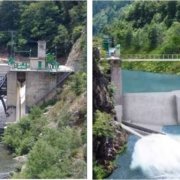
Photo : Copyright Vincent M.


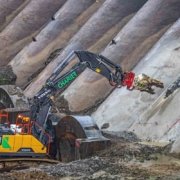
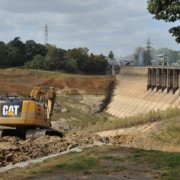
Sélune River, Normandy, France – In a historic moment for Europe’s rivers, the first, irreparable breach was made today in the 36 metre high Vezins Dam – kick-starting the biggest dam removal in Europe so far.

This landmark event is part of a long-term project to free the Sélune River, and bring salmon, eels and other wildlife back to the river and the famous bay of Mont-Saint-Michel – a UNESCO world heritage site and one of Europe’s prime tourist attractions.

Along the Sélune River in Normandy, the removal of two old, obsolete dams over the next two years – the Vezins and La Roche Qui Boit— will open up 90 km of river, improving water quality, allowing migratory salmon to return to their ancient spawning grounds and benefiting people and nature all along the river.

“The removal of the Vezins Dam signals a revolution in Europe’s attitude to its rivers: instead of building new dams, countries are rebuilding healthy rivers and bringing back biodiversity,” says Roberto Epple, president of European Rivers Network and 2018 Euronatur Award recipient. “Nature can recover remarkably quickly when dams are removed and I look forward to watching salmon swimming past Mont St Michel and spawning in the headwaters of the Sélune for the first time since my grandparents were young.”

Historically, the Sélune River was home to salmon that travelled from the river mouth, near Mont Saint Michel, upstream to mate and lay eggs. However, construction of these two dams stopped the salmon from migrating and this effectively stopped the recreational and commercial harvest of them as populations collapsed. The removal of these dams will help to bring more wildlife and biodiversity back to the river along with other recreational and touristic opportunities.

Artificial barriers (dams) are one of the biggest threats to river ecosystems, resulting in river fragmentation and loss of habitat connectivity. They stop the natural flow of sediments downstream and affect migratory fishes from travelling up- or downstream to complete their lifecycles. These impediments often lead to the decrease or decimation of native fish populations and can harbour other, non-native species in their adjacent impoundments. A new study in Naturerevealed just one-third of the world’s longest rivers remain free-flowing with river “fragmentation and flow regulation are the leading contributors to the loss of river connectivity.”

Globally, freshwater species populations have declined by 83% on average since 1970. The recently approved Intergovernmental Science-Policy Platform on Biodiversity and Ecosystem Services (IPBES) reportspecifically recommends conserving and restoring river connectivity to boost freshwater biodiversity. As prescribed by the Water Framework Directive (WFD), each of Europe’s rivers must attain a ‘good’ ecological status and yet 40% of rivers fall short. Removal of old, obsolete dams is a viable option to help reach WFD goals, reconnect and restore rivers and allow fish populations and other wildlife to return and flourish. In fact, many countries in Europe are now removing dams as the economic, environmental and social benefits of doing so far outweigh the alternative of restoring the dam.

It is estimated that over 3,500 barriers have been removed across Europe including the biggest dam removal in Spain last year and an ongoing historical river restoration project in Estonia that will remove 8-10 dam and open up 3,300km of river basin. Moreover, European citizens are also donating funds to see these barriers go as a part of a larger dam removal crowdfunding campaign.

“There are tens of thousands of old, obsolete dams in Europe that can and should be removed,” says Arjan Berkhuysen, managing director of the World Fish Migration Foundation.  “We are hopeful that by removing not only big dams like this but also by removing small barriers through local efforts we can restore these important life sources.”

The unique project will measure the effects of dam removal with ten-years worth of environmental data.

More information :  https://www.ern.org/en/selune-libre/

Dowload Press Release here

##

Notes for Editors:

Photographs of the dam and start of its removal are available here, please respect the copyrights.

Contact:
Roxanne Diaz, WFMF Communications Officer, Mob +31 (0) 6 18918786 Email: roxanne@fishmigration.org
Roberto Epple, Chairman ERN European Rivers Network / Friends of the Sélune, Mob. +33 6  08 62 12 67 , Email : roberto.epple@ern.org

Dam Removal Europe The Dam Removal Europe initiative aims to connect local dam removal projects, stakeholders and organizations to better highlight and disseminate the positive impacts dam removal provides for rivers. It is an initiative that allows relevant specialists share knowledge and inspire new visions for a free-flowing Europe. Dam Removal Europe better enables support and guidance for future dam removal projects under the umbrella of the European Dam Removal movement.

ERN European Rivers Network > www.ern.org  ERN is an NGO engaged in the preservation and sustainable management of water and rivers. ERN is based in France and is Freshwater-Partner of WWF France.
Success of last Dam Removal Europe seminar – 22- 23 May, Pärnu, Estonia

May 22nd and 23rd, in Pärnu, Estonia, was the “Let it Flow” seminar on dam removal in Europe. Organized by the Dam Removal Europe platform, the World Fish Migration Fundation and the Environment Agency of Estonia The opportunity was given to visit the restoration works on the Pärnu River, the country’s first salmonid river. Including […]

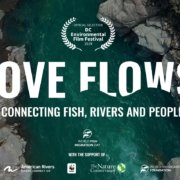
“Love Flows” : a beautiful film to involved people into the next World Fish Migration Day

This documentary directed by Francisco Campos-Lopez (award winning director) captures the stories of events from World Fish Migration Day 2018 and highlights the understanding of the impacts of dams and the people who are working to make positive differences for rivers. It aims to give these migratory fish a voice by showcasing the celebrations, knowledge, and great visions we have for our rivers.

In March 2019 the movie was selected for the Washington DC Environmental Film Festival.

Participate to the next WFMD on May 16, 2020 ! the objectif is to aiming for over 1000 events and open up rivers from local to global. Let’s do this together and create impact!

More info about WFMD

Watch the video

The prefect of Lot-et-Garonne orders the Caussade dam removal

No less than 5 court decisions, favorable to FNE and SEPANSO Aquitaine, as to the illegality of the project, had not prevented the Chamber of Agriculture of Lot-et-Garonne to build a dike 300 meters long by 12 meters high on the Caussade stream in order to create an artificial lake of 920 000 m3 for about 20 farmers.

But on May 2, the state took a decree obliging the Chamber of Agriculture to destroy the dam within 3 months and to restore the site under 18 months: restore the riverbed, wetlands, destroyed habitats many protected species; put in place compensation measures proportionate to the impacts of illegal work …. The decree also specifies that the Chamber of Agriculture must record 1 million euros corresponding to the dam removal works, with a penalty of 500 € per day within 3 months if the reservoir has not disappeared.

In a territory where the lack of water is regular, FNE denounced a racket of water and a project that did not respond to the challenges of climate change and sharing the resource. In its court decision, the court also pointed out that this project is incompatible with the Water Framework Directive and the SDAGE (Master Plan for Water Development and Management) of the Adour-Garonne basin and acknowledged the lack of contribution of the project to the adaptation of agricultural productions to climate change “.

This is a victory for the NGOs, who will monitor the application of the decree and rely on the authorities to enforce the rules.

Read FNR press release (in french)

Large scale dam removal: “Selune Valley Revival”- International conference – FIRST CALL

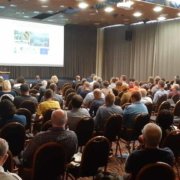
European Rivers Network, the French Agency for Biodiversity, the national french Federation for Fishing, Dam Removal Europe  and the INRA announce the international conference on dam removal and renaturation of the Sélune river, from 24th to 26 September, 2019 in Brittany and Normandy (Mont Saint Michel).

The Sélune, coastal river, considered as the 3rd river of France in “Salmon potential”, now renaturing, will be at the heart of the conference and presented with different points of view (ecological, territory project, research program). This summer, the Vezins dam (36m high) will be removed making this project the biggest dam removal project in Europe. These huge works – which will be followed by the removal in 2021 of the La Roche-qui-boit dam (16m high), will improve the quality of the water into the bay of Mont St Michel and restore ecological continuity for more than 70 km of Selune river. It is an opportunity for the territory to create value with this river renaturated. The project has an important scientific monitoring program since more than 6 years (sociological, geomorphological and biological) allowing knowledge of the valley, helping the implementation and evaluation of the project.

3 days of conference will present a global vision of the policy of restoration of continuity in France and in Europe by highlighting the successes and the failures, the means implemented, the challenges and stakes to integrate and the research programs. Cases studies from Europe and US on dam removal and territorial projects compatible with a free flowing river will be shown.

Registration and practical info  : www.ern.org/en/colloque-international-selune/

This event is part of the internationals seminars regularly organized by the Dam Removal Europe platform co-founded by ERN – the next event will take place on 22 and 23 May in Estonia – and give the chance in Europe, France and the Sélune Basin to share knowledge and experiences on dam removal and projects enable the re-appropriation of the river space.


Partial removal of the Poutès dam (France) : Favorable opinion by the investigation Commissioner (public consultation)- Read the reaction by regional NGOs

Favorable opinion by the investigation Commissioner (public consultation). Regional NGOs support the project but ask for improvement of the project governance.
Read the french NGO  press release

20190304_CP_Poutes_FINAL

Free Selune river : the timeline become clearer !

On the Sélune river, in Normandy, the timeline of dismantling is becoming clearer. The Vezins dam, whose sediment management has been completed, will be erased from April / May 2019.

For that of La Roche which drinks, further downstream, the deadline is 2021.

More information on our free Sélune page


Review on the 1st European Rivers Summit – Sarajevo 2018

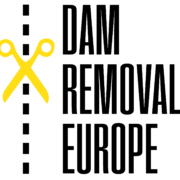
Photo : Copyright Luka Tomac (Art) and Flying Pangolin Film

This post comes from the web site Riverwatch

++ 250 people attend Summit to save Europe’s rivers and stop the damming ++ Participants call upon EU and Heads of State to stop funding hydropower ++

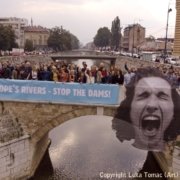
Sarajevo, September 30th, 2018. Between September 27th and 29th, Sarajevo became the center of European river conservationists and dam opponents. At the first European Rivers Summit, about 250 people from over 30 countries discussed how to stop the destruction of Europe’s rivers from hydropower, how to protect the last free-flowing river jewels in the long run and how to restore those already destroyed (a full list of topics can be found in the Summit Program).

Participants formulated a list of demands addressed to relevant decision makers in politics and industry. In this declaration, Europe’s river conservationists call upon the European Commission, the Energy Community, international banks and national governments to stop promoting and funding hydropower projects as green and renewable energy source and tighten environmental criteria. These demands aim to help the successful implementation of the EU Water Framework Directive in order to bring rivers back to a good ecological state by 2027.

Today, rivers are the most threatened habitats on Earth. 81% of global freshwater wildlife populations have been lost – higher than in any other ecosystem. According to the European Environmental Bureau (EEB) European waterways are degraded to a point where they can no longer sustain functioning ecosystems. The main threat to river’s health is the massive expansion of hydropower, boosted by the green myth and funding methods such as feed-in tariffs.  In EU, 25,000 hydropower plants are registered, according to the EEB. This figure does not even include small hydropower plants – the actual figure is therefore much larger. Almost two thirds of European rivers are in a bad ecological state.

“We have to stop the dam craze. Europe’s rivers have long paid for our energy-hungry lifestyle with their integrity. The last intact rivers must remain free-flowing“, says Ulrich Eichelmann, CEO of Riverwatch.

Hydropower plants not only fundamentally destroy the biodiversity of riverine habitats but also turn a dynamic river into a monotonous stagnant waterbody. Moreover, hydropower is not even a carbon-neutral source of energy as dam reservoirs are a major source of greenhouse-gas emissions. In addition, dams also have dire social costs. Worldwide, between 500 and 750 million people suffer from direct or indirect impacts of dams,

“Hydropower is a destructive, outdated technology that, today, can be easily substituted with modern sources of renewable energy, such as solar power“, Natasa Crnkovic, president of the Center for Environment in Bosnia and Herzegovina

Fortunately, there is one region in Europe which still hosts free-flowing rivers: the Balkans. However, even these last jewels are under massive attack by about 2,800 projected hydropower plants. To make a statement against this destruction, the first European Rivers Summit was held in Sarajevo. Starting this year, a European Rivers Summit will be held every two years in a different region in Europe. The next summit will be held in Portugal in 2020.

Background information

  • Declaration for DOWNLOAD
  • The First European Rivers Summit was carried out by Riverwatch (Austria) and the Center for Environment (Bosnia and Herzegovina) and organized within the framework of a newly formed alliance of several European NGOs with the purpose to save Europe’s rivers and stop the dams. These organisations include Riverwatch, EuroNatur, WWF Adria, Wetlands International, and Rios livres (GEOTA) from Portugal.

  • Big finish of the Summit was the Concert for Balkan Rivers in the Sarajevo city centre, organized with in the campaign “Save the Blue Heart of Europe”. Popular musicians Rambo Amadeus (Montenegro), Eda Zari (Albania), Tamara Obrovac (Croatia) and Damir Imamovic (Bosnia-Herzegovina) raised their voices for free Balkan rivers and against the dams in front of hundreds of people.

For more information contact


save the date : Next Dam Removal Workshops in Estonia and France

Save the date. Two news Dam Removal Workshops ;

– 22-23 May 2019 : Seminar in Estonia on the River Parnu
– Fall 2019 : Seminar in France on the Selune river