Call for Proposals: Open Rivers Program Open until June 26, 1:00 p.m.

Don’t wait any longer to submit your dam removal projects to the Open Rivers program. By 2029, the goal is to fund more than 500 dam removals and reopen more than 5,000 km of waterways. Let’s help them reach this goal.

Watch or rewatch our May 5 webinar, which introduces the program and the application form

ERN can help you prepare and submit your project — contact us


Learn more and access the application form

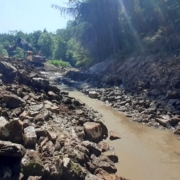
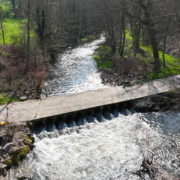
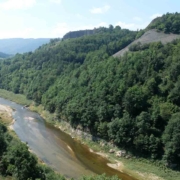
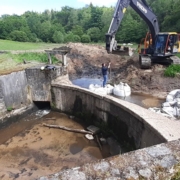
Discover the 6 dam removal projects supported by the Open Rivers program in partnership with ERN that will begin this summer

six river restoration projects will begin this summer in France with support from the Open Rivers Programme and in partnership with ERN

Led by various local stakeholders, including river conservation groups, associations, and municipalities, several rivers will have their flow restored this year. The obstacles being removed are quite varied (water crossings, old weirs, and impoundments on waterways) but all involve rivers of heritage significance:

– The Lignon (43): removal of a ruined weir led by the SISMAE association; learn more about the project

– The Souvigne (19) and the Branugues (15): two removal projects are led by the Syndicat Mixte Dordogne Moyenne et Cère Aval; learn more about the project on the Souvigne and on the Branugues

– The Gave d’Azun (65): removal of the first two obstacles located at the confluence with the Gave de Pau, led by the Municipality of Argelès-Gazost and the 65 Fishing Federation; learn more about the project

– The Daronne (07): reconfiguration of the Sibila municipal road crossing, led by the Syndicat Mixte du Bassin Versant du Doux; learn more about the project

– The Boivre (86): removal of two obstacles, including a pond near the springs. Five other structures will be removed in 2027. This initiative is led by the Syndicat du Clain Aval; learn more about the project

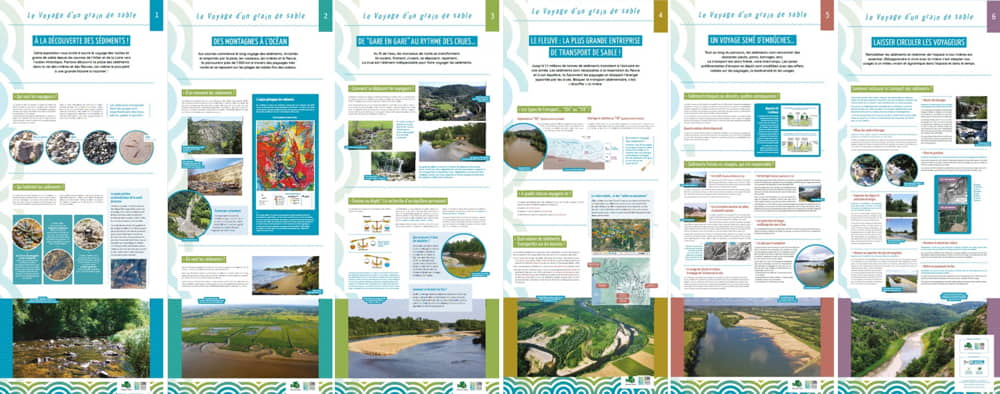
The exhibition “The Journey of a Grain of Sand” has just opened

This exhibition, organized by SOS Loire Vivante – ERN with support from the Loire-Bretagne Water Agency as part of the Haut-Allier territorial contract, invites you to follow the journey of rocks and grains of sand from the headwaters of the Allier to the Atlantic Ocean. You’ll learn about their role in how rivers function and the vital role that flooding plays in maintaining healthy rivers. You’ll see how human activities can disrupt sediment transport. Many restoration projects are possible, from upstream to downstream, and have in fact been carried out on the Allier and the Loire. Come check out the six panels! (in french only) :

Panel 1: Discovering Sediments
Panel 2: From the Mountains to the Ocean
Panel 3: “From Station to Station” to the Rhythm of Floods…
Panel 4: The River: The Largest Sand Transport Company!
Panel 5: A Journey Full of Pitfalls…
Panel 6: Letting Travelers Pass

View the exhibition in PDF ; a printed version on an 85×200 roll-up banner is available for loan upon request—please contact us


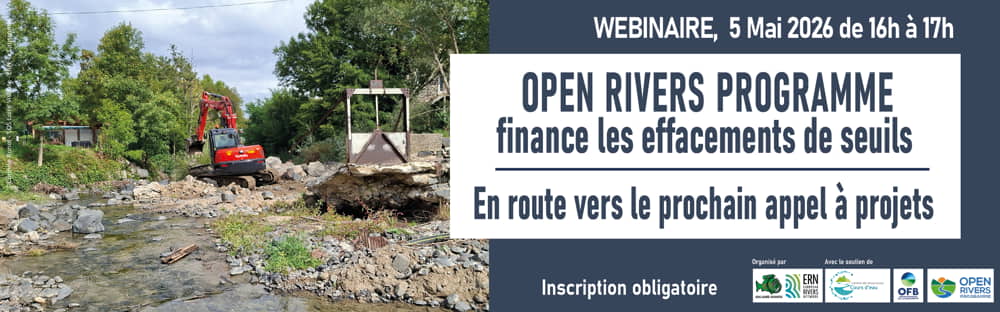
webinaire Open Rivers Programme , le 5 mai de 16h à 17h

Venez y découvrir les appels à projet de Open Rivers Programme. Celui-ci finance des effacements d’obstacles transversaux en rivière partout en Europe.

 Collectivités, Syndicats de rivières, associations sont éligibles. Prochain dépôt de candidatures possible du 1er au 26 juin 2026.

Webinaire organisé par ERN avec le soutien de l’OFB et de Open Rivers Programme

Pendant 1 h : Présentation du Programme, retour d’expérience, conseils pour bien préparer sa candidatures, Q&R, animé par Corinne Ronot, ERN

Inscription obligatoire 

European laws that protect our environment are under threat. Sign the petition

Our nature and our health are under attack. European laws that guaranteed clean water, pure air and diverse ecosystems, including the Water Framework Directive, are being quietly dismantled under the pretext of ‘simplification’ and ‘reducing red tape’.

More infos about the petition launched by the European NGO coalition #HandsOffNature, which requires our national and European leaders to uphold laws that protect people and nature.

  Together, let’s protect the EU law on Water! 

 Petition :


Register “Barrier Removal for Flood Prevention and Safety” webinar

WWF Netherlands and ERN – on behalf of DRE – in collaboration with McMillen are organizing this Barrier Removal for Flood Prevention and Safety webinar.

programme & registration

𝐂𝐞𝐥𝐞𝐛𝐫𝐚𝐭𝐢𝐧𝐠 25 𝐲𝐞𝐚𝐫𝐬 𝐨𝐟 𝐭𝐡𝐞 𝐖𝐚𝐭𝐞𝐫 𝐅𝐫𝐚𝐦𝐞𝐰𝐨𝐫𝐤 𝐃𝐢𝐫𝐞𝐜𝐭𝐢𝐯𝐞 💧🎉

For a quarter of a century, the Water Framework Directive (WFD) has been the cornerstone of #EU water management. It protects rivers, lakes, groundwater, coastal waters and establishes the principle that clean water is a shared public good.
📝 To celebrate this milestone, Friedrich Barth, former team leader for the European Commission, takes us back to the day it was adopted.

𝐘𝐞𝐭 𝐭𝐨𝐝𝐚𝐲, 𝐭𝐡𝐞𝐫𝐞 𝐢𝐬 𝐫𝐞𝐚𝐬𝐨𝐧 𝐟𝐨𝐫 𝐜𝐨𝐧𝐜𝐞𝐫𝐧.
The European Commission has taken a dangerous step back and promised to reopen the #WFD, which would undermine decades of effort and put Europe’s ability to address pollution, biodiversity loss, and climate impacts on #water at risk.
The Living Rivers Europe coalition is worried.
⚠️𝐑𝐞𝐨𝐩𝐞𝐧𝐢𝐧𝐠 𝐭𝐡𝐞 𝐖𝐚𝐭𝐞𝐫 𝐅𝐫𝐚𝐦𝐞𝐰𝐨𝐫𝐤 𝐃𝐢𝐫𝐞𝐜𝐭𝐢𝐯𝐞 𝐭𝐡𝐫𝐞𝐚𝐭𝐞𝐧𝐬 𝐰𝐡𝐚𝐭 #𝐄𝐮𝐫𝐨𝐩𝐞 𝐡𝐚𝐬 𝐰𝐨𝐫𝐤𝐞𝐝 25 𝐲𝐞𝐚𝐫𝐬 𝐭𝐨 𝐬𝐚𝐟𝐞𝐠𝐮𝐚𝐫𝐝 𝐚𝐧𝐝 𝐫𝐞𝐬𝐭𝐨𝐫𝐞!⚠️

Mor info see the news from 4 december

Interview with Friedrich Barth by Wetlands International

Are there still rivers for migratory fish?

Registration is now open (in French only)

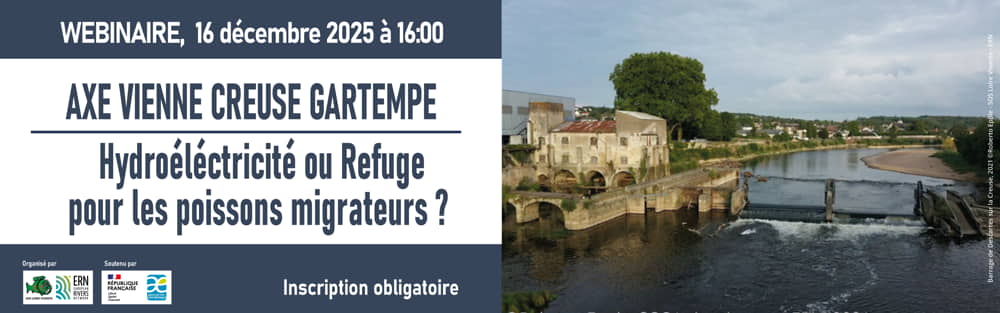
  • 16 December from 4pm to 6pm: Axe Vienne Creuse Gartempe – Hydroelectricity or Refuge for Migratory Fish ?

Registration (in French only)

The Creuse has been identified as a key area for migratory fish in the context of climate change. Restoring watercourses and water quality, removing pressures, reconnecting rivers and providing access to refuge areas will facilitate the resilience of watercourses and the return of migratory fish to our rivers.
However, due to the energy transition in particular, there has been an increase in projects to equip weirs with micro-hydroelectric power stations, perpetuating the fragmentation of waterways on strategic routes.
Can these rivers be both sources of hydroelectric power and refuges for biodiversity and endangered migratory fish?
Should we sacrifice biodiversity and water quality in the name of renewable energy, or demand radical solutions to restore the free movement of species and the health of our rivers?


Programme : 1h de présentations, 1h round table , Q&A 

by ERN-SOS Loire Vivante (Roberto Epple, Président, Corinne Ronot, Co-directrice)

Speakers

  • Bruno Bordeau, Président LOGRAMI : L’axe Vienne-Creuse-Gartempe, un refuge pour les poissons migrateurs ?
  • André Berne, Avocat du barreau de Paris : Le droit français au secours de la biodiversité ou de la production d’énergie renouvelable ?

Table ronde / Questions – réponses 

  • Gilles Deguet, représentant FNE au comité de bassin Loire Bretagne
  • Bruno Barbey, Directeur FDAAPPMA 36
  • Joël Herbach, Président Allier Sauvage
  • Lionel Martin, Président de la Fédération de Pêche de la Haute Loire
  • un représentant du secteur de la production hydroélectrique (sous réserve)

25,000 km of open waterways?

Registration is now open (in French only)

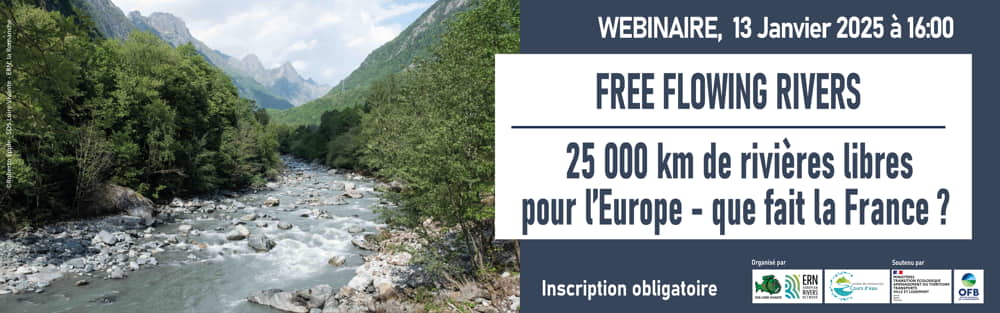
  • 13 January from 4pm to 6pm: 25,000 km of free-flowing rivers for Europe – what is France doing?


registration (in French only)

The European Union has set itself an ambitious target: to restore at least 25,000 km of free-flowing watercourses by 2030. Under Article 9 of the Nature Restoration Law (NRL), officially adopted on 18 August 2024, Member States must contribute to this target and propose their own contributions. Article 9 of the Nature Restoration Regulation aims to reverse the decline in biodiversity in Europe by 2030 and achieve healthy and resilient ecosystems, with a clear objective of reducing pressures. For watercourses, for example, removing obsolete obstacles is a priority.
But what is Europe’s definition of a free-flowing river? What methodology should be used to characterise them? What actions should be taken to contribute to the objective? What ambitions should we set ourselves?


1h de présentations, 1h round table / Q&A with public participation 

by  ERN- SOS Loire Vivante (Roberto Epple, Président, Corinne Ronot, Co-directrice)

with

  • Andrea Goltara, CIRF – Italian Centre for River Restoration,
  • Claire-Cécile Garnier, Cheffe du Bureau de la ressource en eau, des milieux aquatiques et de la pêche en eau douce, Direction de l’Eau et de la Biodiversité

  • Claire Baffert, Senior EU Policy Officer, Water & Climate Change Adaptation| WWF European Policy Office

  • Karl Kreutzenberger, OFB, Chargé de mission « Migrateurs amphihalins et hydromorphologie », membre ECOSTAT

FREE-FLOWING FUTURE: DAM REMOVAL ACTIONS SURGE ACROSS SOUTHEASTERN EUROPE

Once lagging behind Southeastern Europe is now seeing growing action to dismantle outdated dams, weirs, and culverts that fragment rivers, disrupt fish migration, degrade water quality and pose risk of failure. A new report reveals that river restoration through barrier removal—a critical tool to revive Europe’s freshwater ecosystems—is gaining unprecedented traction in Southeastern Europe (Figure 1). The breakthrough comes as EU Member States prepare their National Restoration Plans under the EU Nature Restoration Regulation, which requires 25000 km of rivers to be restored to free-flowing conditions by 2030.

The Southeastern Europe Barrier Removal Movement Progress Report 2024–2025, documents 135 activities, including 33 barrier removals across seven countries in just 18 months, signaling a turning point for a region long behind the rest of Europe in reconnecting its rivers. The activities presented in the report were classified into: (1) those contributing to scaling up the implementation of barrier removal (e.g., seminars, stakeholder engagement, knowledge dissemination, efforts to influence policy and legislation), (2) the preparatory works (e.g., barrier mapping and assessment, and hydrological, archaeological, etc. surveys), and (3) the actual barrier removals (Figure 1).


Restoration Success Stories 

  • Croatia: Eight obsolete barriers were removed, the first ever in the country, at Plitvice Lakes National Park reconnecting 7.6 km of river and restoring habitat for the endangered Danube trout (Figure 2).
  • Italy: Five barriers on the Giovenco River were removed, reopening 11 km of free-flowing river and revitalizing local wildlife and ecotourism (Figure 3).
  • Bosnia & Herzegovina: Multiple barriers (n=9) were dismantled for the first time in the country, at Hutovo Blato Nature Park and thus 2.5 km were restored for critical fish migration routes and important endemic species.
  • Slovakia: Removal of five barriers in the region of the original channel of the Danube reconnected a vital side arm, boosting biodiversity, flood protection & ecosystem resilience.

Southeastern Europe holds some of Europe’s most ecologically valuable rivers, yet they remain heavily fragmented. With the EU Nature Restoration Regulation now in force, there has never been a better moment to scale up barrier removals, unlock funding, and prioritize free-flowing rivers as natural solutions to biodiversity loss and climate impacts.” said Jelle de Jong, CEO WWF-Netherlands

 A Call to Action

Despite this progress, less than 1% of all barrier removals in Europe to date have taken place in Southeastern Europe. Extra support is needed to assist the launch of pilot projects, to promote awareness about the benefits of free-flowing rivers, to create networks for practitioners to exchange methods and lessons learned, and to shift existing policies that will enable the implementation of this practice.


More info :

Read the SEE Progress Report 2024-2025

Read full press release