Save the “Nature Restauration Law”

The Nature Restoration Law, which will be shortly put to vote in the European Parliament, sets the target of restoring at least 25,000 km of free-flowing watercourses by 2030 (Article 7) in order to improve the natural longitudinal and lateral connectivity of watercourses. These objectives complement the obligations of the Water Framework Directive and is necessary given the significant degradation of aquatic ecosystems.

Read our note for Members of the European Parliament  in french  and english.

We should even go further and set a target of 178,000 km by 2030.

But even more, there is a high risk that it will be fully rejected as several parties went as far as calling to completely denied it back this past May.  This next Thursday 15 June the ENVI Committee of the European Parliament must be strong.

Send a message easy and quick message to your decision-maker to be ambitious : https://www.restorenature.eu/en/take-action #RestoreNature


The Nature Restoration Law proposal lays out plans to restore thousands of kilometers of rivers.

More info about fragmentation by dams

More info about Nature Restauration Law (anglais)

DRE launch today the dam removal progress report for 2022

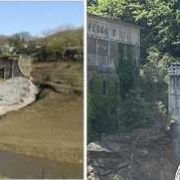
The latest report uncovers a surprising figure of (at least) 325 barriers have been removed in 16 European countries – a new record! As in 2021, most of the removed barriers were weirs, as these structures have a high probability of being old and obsolete and can be removed in a cost-efficient way. But large dams such as the Roche-qui-boit dam in France (16m high) are also among the 2022 achievements.

Several factors have contributed to the new numbers such as newly available funding opportunities, like the Open Rivers Programme, the coordinated efforts of national and regional public authorities to report removed barriers, and the hype created by findings of last year’s report disseminated all around Europe.

Given the latest developments in European climate policy and the Commission’s proposal for a Nature Restoration Law, it is important to keep highlighting dam removal as a crucial tool to accomplish ecosystem restoration and celebrating success stories across Europe. Moreover, barrier removal also contributes to the global Freshwater Challenge to restore 300,000km of degraded rivers by 2030, a goal launched at the UN Water Conference held in New York in March. Besides pollution, habitat degradation, and over exploitation of natural resources, freshwater ecosystems face one major issue: dams.

It has been found that over 1,2 million barriers fragment European rivers, with many being obsolete. Among the several harmful consequences is biodiversity loss, with a decline of 93% in freshwater migratory fish populations in Europe and 76% on a global level. The alarming numbers ask for costeffective and efficient solutions to restore rivers. Dam removal has been paving its way in nature
restoration tools – a trend has been confirmed across Dam Removal Europe’s annual reports.

Read the press release

Read the report

Open Rivers : Second weir removed on the Tardoire !

Sélune dams removals in video (12 min)

The Sélune has been free since last autumn. After the dismantling of the two large dams, the path is free for sediment and migratory fish for almost 100 km.

In a 12-minute video (in French and English) with spectacular images, you can follow the steps of the renaturalisation:

Video in french https://vimeo.com/549070141
Video in english https://vimeo.com/546711100


More infos about the Sélune


Open letter: Counting on new hydropower to accelerate Renewable Energy deployment in Europe is irresponsible

ERN and more than 100 NGOs write to EU negotiators asking them to protect Europe’s rivers from new hydropower deployment in the revised Renewable Energy directive.
Already in 2020, 150 NGOs signed a manifesto asking EU decision-makers to stop new hydropower development in Europe.

Read the WWF press release:

 Ahead of the nextpolitical trilogue on the revision of the Renewable Energy Directive, more than 100 NGOs are sending an open letter to co-legislators from the European Parliament, European Commission and Council Presidency, asking them to exclude new hydropower from go-to areas as well as to include sustainability criteria recognizing that hydropower has direct impacts on freshwater ecosystems which must be mitigated.

 Because hydropower potential has been so exploited already in Europe, new hydropower would only make a small contribution to the energy transition, while causing immense damage to our waterways. According to WWF’s Living Planet Report 2022, freshwater species populations have seen the greatest overall global decline (83%), and within this species group, on average, monitored migratory fish populations have declined by 93% in Europe, making our continent the most affected.

Contact
Florian Cassier
Climate Communications Officer
fcassier@wwf.eu
+32 479 33 92 11

Open Rivers : First weir removed on the Tardoire !

Open Rivers Programme : 2 Q&R sessions on November