Historic milestone for rivers: Emptying of the Iron Gate dam on the Klamath River to prepare its removal

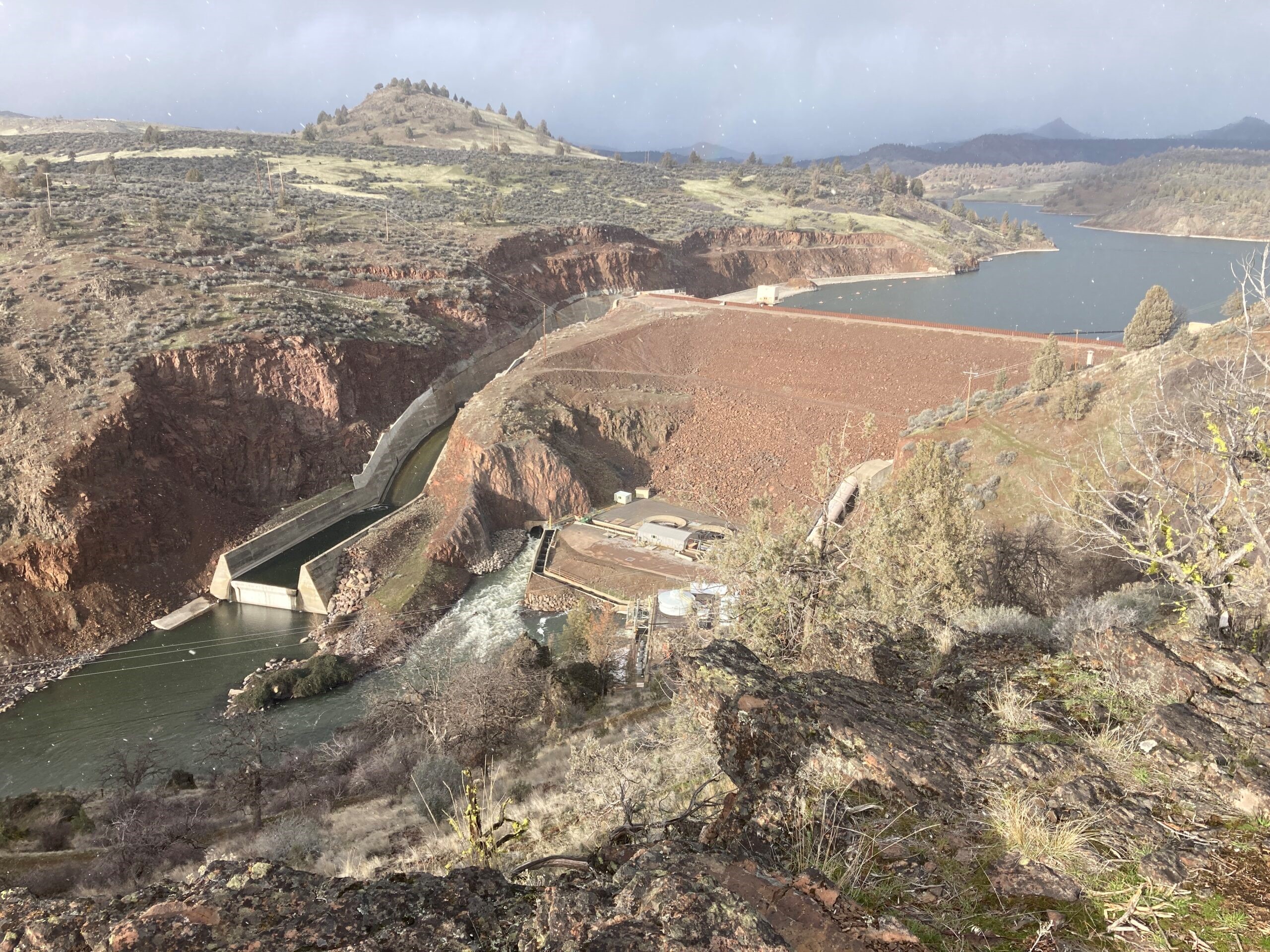
The largest dam removal and river restoration project in the history of the United States is taking a major step toward the removal of all hydroelectric dams on the Klamath River in northern California and southern Oregon. The drawdown (draining) of Iron Gate Reservoir began early January so that Iron Gate Dam can be removed later this year. Two other dams, Copco #1 and JC Boyle, will likewise begin to drain in the coming weeks and be fully removed in the summer/fall timeframe. Copco #2, the smallest of the four dams slated for removal, was demolished in October 2023.

IRONGATE dam Klamath

For more than 100 years, these artificial barriers have blocked the migration of several species, like salmon and steelhead trout, impeding them from reaching over 400 miles of habitat. Not only the animals have been harmed. Water quality has been severely damaged, impacting the Hupa, Yurok, and Karuk tribal communities whose livelihoods depend on a healthy river.

To turn the tide, this monumental project symbolizes a collective effort to repair a century of obstruction to fish migration, celebrate indigenous heritage, and ensure the long-term vitality of the Klamath River ecosystem. The project integrates the growing movement to remove more dams and free rivers across the USA, a trend that has also been scaling up in Europe in the past decade through the combined action of several organisations integrating the Dam Removal Europe coalition.

This article is an extract from the article published by Dam Removal Europe (read the complet article)

Our 2023-2024 webinars are online: flood risk, ecological continuity, hydric stress, etc.

With between 70 and 90 people registered for each webinar, SOS Loire Vivante – ERN is helping to raise awareness of the issues surrounding water and rivers.
Watch the replays of our webinars from December 2023 and January 2024 (french only):

9 January 2024: Flood risk: “How can technology help us respond better to flood risk?” more info and programme here
19 December 2023: Law, Hydro & Ecological Continuity, more info and programme here , organised in partnership with Réseau RivièresTV, the Centre de Ressources Cours d’eau and supported by the French Office for Biodiversity (OFB)
5 December 2023: Water stress and water savings on the Allier, more info and programme here

All our webinars since 2020 (french only)

Salmon Comeback Rhine: Visit to the fish pass construction site

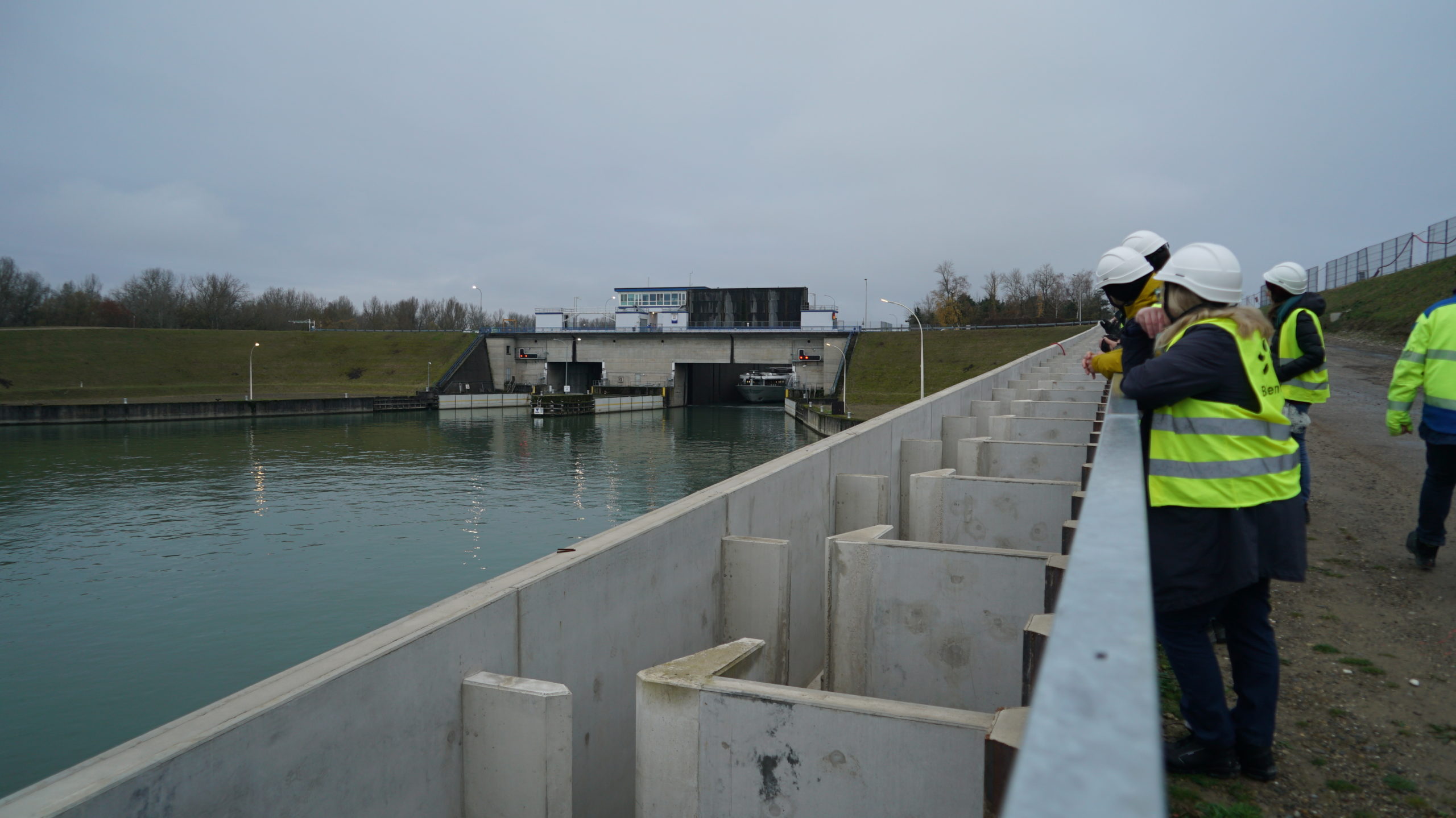
From Thursday 30 November to Friday 1 December, the ERN team travelled down the Rhine to see the progress of the fish passes under construction at the Marckholsheim and Rhinau sites. These projects, managed by EDF, represent an investment of several tens of millions of euros to protect the Rhine’s large migratory species. The two projects, which are identical, are being carried out with a slight time lag of 8 months between the two sites.
These fish passes have several entrances on each side of the power station, on the left and right banks, enabling each fish to find its way to the pass. To pass from the left bank to the right bank, the fish will use a “bridge” that will pass over the power station. This will take them a total of 1 kilometre to get around the power station. The fishways will span a 13 m difference in height, and consist of more than 90 upstream pools with a 20 cm drop between each pool.
Friday morning was devoted to a meeting in Kembs to monitor the renaturation of the Rhine island.

More info about Salmoncomeback Rhine campaign


© ERN

© ERN

Open Rivers Programme continues to support projects in France and across Europe

72 projects supported by the Open Rivers programme throughout Europe and a new call for projects underway

At the beginning of November 2023, the Open Rivers Programme* launched a new call for projects to provide financial support for the removal of weirs and dams. Applications can be sent in until 8 December.

After two years of the implementation of the Open Rivers Programme, 72 projects are supported throughout Europe, either underway or completed, contributing to the achievement of the objective of 25,000 km of freeflowing rivers by 2030 in Europe, voted on 09/11/2023 by the European Parliament as part of the Restoration Naturation Law. It is a significant support for restoring rivers in Europe, including in France where legislation to restore ecological continuity is frequently attacked to slow the momentum and hamper the efforts made by a community of stakeholders to restore our rivers effectively and sustainably in favour of energy issues of little interest.

France is one of the pioneers of the dam and weir removal movement in Europe, which began in 1998, and the results are encouraging, not only in terms of reconnecting river habitats but also in terms of increasing functionality and reducing the risk of flooding. Other European countries, such as Finland, Spain and Sweden, also see dam removal as a viable solution for restoring rivers. Elsewhere, however, tools are still lacking, particularly in Eastern Europe, to facilitate the implementation of such measures. This is why ERN, together with regional and international partners (World Fish Migration Foundation (WFMF), Fauna & Flora, MedINA Greece, Wetlands International (WI), WWF Netherlands, Slovakia, and Adria) are running a project with the Open Rivers Programme to facilitate and accelerate the removal of barriers in 4 target countries: Croatia, Greece, Romania and Slovakia. These countries have all the conditions needed to develop, inspire and raise awareness of the benefits of this tool for restoring nature: high ecological potential, emerging opportunities and projects, strong community involvement (more info).

In this context, WWF, WFMF and ERN are organising Q&A sessions to answer technical questions from potential projects on 15 and 20 November. Interested parties can contact corinne.ronot@rivernet.org  The next Open Rivers application session is scheduled for the end of February for all grant categories.

Latest news on French projects run by ERN and its local partners

Since 2021 and the launch of the programme, ERN has applied with several local partners for preliminary studies and works, and 6 projects have been selected.

In 2022-2023 ERN worked with the SYMBA on the Open Rivers Programme application to restore the Tardoire, an european eel river. After six months of works to removed four obsoletes weirs, the river was flowing again on more than 20 kms. After just a few months, the riverbed was unrecognisable, and habitats were quickly recreated (more info). To make this story happened Open Rivers Programme funded 100% of the works, because even the local stakeholders were all in favour of the project, the States at this moment was not in a position to finance such project. A 12 minutes movie in French and English subtitle relate the project and the stakeholders involvement.

Latest, ERN and its local partners obtained two new preliminary study projects for the removal of small obsolete weirs. One is located in the Eyrieux river basin (Ardèche catchement) and is run by the SMEC and the other is in the Branugues river basin (Cère and Dordogne catchement) and is run by the SMDMCA. These two projects are located in preserved area with high biodiversity potential and will allowed to reconnect habitats for fish (trout) and white-clawed crayfish, increase their range, and improve the resilience and morphology of the river. A great opportunity to restore the functionality of the river through a simple acte : remove obsolete barrieres on rivers.

More info

* Open Rivers Programme is a foundation funded by Arcadia which aims to restore endangered European rivers by supporting interventions that lead to the removal of small dams and the restoration of river flow and biodiversity.


Download press release 
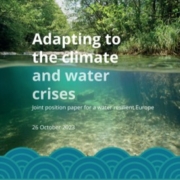
NGOs call for new EU Climate and Water Resilience Law

On 26 October, a coalition of six NGOs grouped under the umbrella of Living Rivers Europe published a position paper calling for a more resilient Europe.

Read press release from WWF :

“Six NGOs call for a new EU Climate and Water Resilience Law to address the climate and water crises”
A coalition of six NGOs is asking for a new “EU Climate and Water Resilience Law” that prioritises restoring and protecting freshwater ecosystems to ensure clean and sufficient water for drinking and sustainable farming. The NGO call comes as the European Economic and Social Committee holds a high-level “Call for an EU Blue Deal” conference today, and it follows the European Commission’s announcement that it will present an Initiative for Water Resilience in the first quarter of 2024.

Freshwater ecosystems have been overexploited for decades, severely degrading their health and undermining Europe’s resilience to the fast-growing consequences of climate change: increased drought, floods and fires, while also driving massive biodiversity and habitat loss. The new EU Climate and Water Resilience Law supported by the NGOs would create a network of natural Water Reserves to protect critical water supplies and their catchments in water-stressed areas, provide adequate finance for protecting and restoring natural “sponge” landscapes, and contribute to setting sectoral water efficiency and water abstraction targets for all water users at basin level.

“Rather than calling for an EU Blue Deal which relies heavily on grey infrastructure, we need to continue implementing the Green Deal and accelerate efforts to safeguard water for nature and for people,” says Claire Baffert, Senior Water Policy Officer at WWF’s European Policy Office and Chair of the Living Rivers Europe coalition. “We urge the European Commission to draw up a new EU Climate and Water Resilience Law that ensures clean and sufficient water for people by securing healthy freshwater ecosystems for nature.”

The NGOs caution against turning to concrete infrastructure in a bid to temporarily fix water shortage and flood problems: “Building new dams, channelling riverbeds or implementing large-scale water transfers only increases our vulnerability to climate change impacts in the future. Instead, natural ecosystems including free-flowing rivers, restored floodplains, wetlands and peatlands need the space and freedom to do their job of absorbing, filtering and storing water, and providing vital habitats for nature,” Paul Brotherton, Freshwater Manager at Wetlands International Europe.

In the position paper for water resilience, the coalition also calls for the full enforcement of the Water Framework Directive, climate adaptation to be integrated into all EU policies and an end to subsidies that harm freshwater.

Download the document : https://wwfeu.awsassets.panda.org/downloads/climate-and-water-crisis-report_web-final.pdf

International conference “Salmons & people “: Registration now open

The salmo salar – extinction or restoration?
We need a shared roadmap!

Salmon is in decline in France, as is biodiversity in general. Migration statistics are clear: fewer and fewer migratory fish are reaching their best spawning grounds, particularly those on long rivers, such as the Loire-Allier axis….
All hope is not yet lost, however, as there are promising examples where rigorous, jointly-developed measures have resulted in an upward trend. Despite climate change.
Ten years after the last meeting, SOS Loire Vivante – ERN is organizing a new event in an attempt to unite the players around a common roadmap. Probably the last chance!

> More info and registration


Open Rivers : Fourth weir removed on the Tardoire

OPEN RIVERS PROGRAMME : 7 July next call for applications

The Open Rivers Program announces the next call for applications for 7 July 2023 (5th sessions since the programme began, deadline for application : 1st September).

For this call, organisations from all over Europe are encouraged to apply for all grant categories.

A new feature of this call for proposals is that public-sector support structures will also be eligible as leading, but only for demolition grants if match funding is available. Before applying in this context, a discussion with Open Rivers will be necessary. See the updated Open Rivers guide, in which all the new eligibility criteria will be detailed.

As an NGO, and with 4 projects underway with Open Rivers, ERN is in regular contact with the programme and closely follows its developments. ERN is therefore still a strong partner which, together with a field coordinator such as a river syndicate, can propose a project in France.

In other European country, ERN provides a help desk to support a project idea and links organisation with other applicants or referents.

Q&A sessions for France and European countries will be organised in the near futur.

Memo : an run application process is approximatively 9 months. For an application to session 5, from 7 July 2023, your project will not be able to start until March 2024 if it is selected. Project duration: 1 year.


More info

Open Rivers : Third weir removed on the Tardoire!

Nature Restauration Law : Encouraging but fragile results from the ENVI Commission

June 15 MEPs from ENVI Comission saved the Nature Restauration Law project, the amendment to reject the legal proposal did not pass, although with the smallest margin possible (44/44).

Compromise amendment 6 on Article 7 (river connectivity) was approved, which means that the 25,000 barrier removal target is – so far – still in the ENVI report. Although an encouraging result, it does not mean much, as there is a chance that the ENVI report ends up being rejected. MEPs will continue the voting of the last individual amendements during the next ENVI Committee meeting end of June, and then will vote on the full ENVI report.

So nothing is certain at this stage, advocacy efforts will need to continue until the plenary vote on the week of 10 July.

More infos : Save the “Nature Restauration Law” – European Rivers Network (ern.org)

Read the Press release from EEB

European People’s Party fails with disinformation campaign

Nature and the ever-growing list of stakeholders supporting the Nature Restoration Law can breathe a sigh of relief as the Environment, Public Health and Food Safety (ENVI) Committee of the European Parliament rejected attempts by conservative and right-wing groups to kill the proposed law in a very tight vote on Thursday morning.

[…]

Sergiy Moroz, Policy Manager for Water and Biodiversity at the European Environmental Bureau, said: “Recent weeks have seen a growing chorus of unprecedented support for the Nature Restoration Law [2], including from the scientific community, as this law offers a solution to tackle both the climate and biodiversity crises. Science is clear: the biggest threats to food security and to farmers are climate change and the degradation of nature. We urge the MEPs to resist the misinformation campaigns and continue negotiating constructively towards the adoption of a strong Nature Restoration Law in the lead committee and plenary without further delay.”

read Press release in full : https://eeb.org/the-nature-restoration-law-lives-to-fight-another-day/