8 October is Dam Removal Day: register your events

8 October 2025 will mark the very first Dam Removal Day.
Across Europe, visits and meetings will highlight the same message: free rivers bring life back.

Everyone can get involved: organise an event, share a local story, spread the word on social media.

👉 Register your action atdamremoval.eu/dam-removal-day

Open Rivers Programme : upcoming work in France and new call for applications starting 6 October

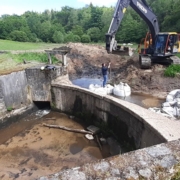
After the summer break, restoration work on the Laussonne (43), the Eyrieux (07) and Malencourie (24) rivers will begin this autumn.

The aim of this work is to ensure the continuity of the river and reconnect several kilometres upstream, increasing access to refuge areas and restoring the white-water habitats needed by sensitive species that inhabit these environments, such as trout, white-clawed crayfish and pearl mussels. Follow the progress of the work on the dedicated page

These projects were submitted by the European Rivers Network to the Open Rivers Programme for co-financing.

During the last application cycle, ERN received support for the Malencourie project aimed at removing an old reservoir and the Clain project for the removal of seven small structures on the upper Boivre, bringing the number of projects supported by the association (studies and works) to 15. During the last cycle, at least three other projects in France, led by fishing federations or unions, received support from the Open Rivers Programme: more info

The programme’s next call for projects will be open from 6 October 2025 to 31 October 2025 (decision in March 2026). Contact us for more information or to help you apply.

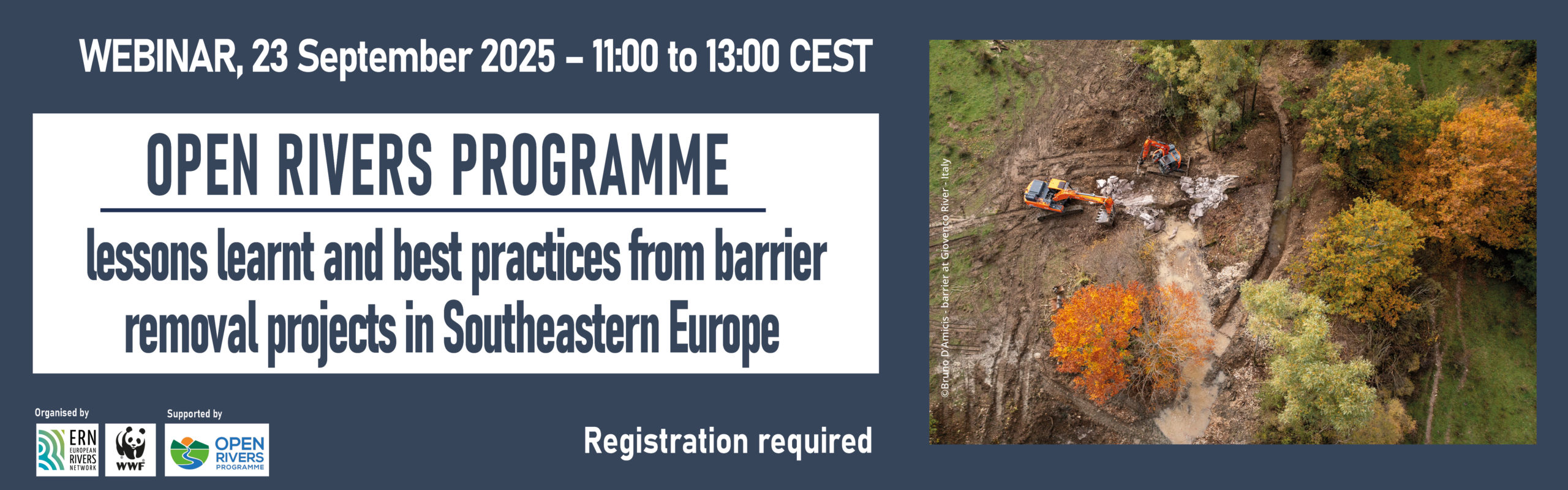
SAVE the DATE and REGISTRATION OPEN : Webinar on Open Rivers Programme : lessons learnt and best practices in Southeastern Europe

The next call for Open rivers Programme* applications is coming soon (from the 6th to the 31st of October 2025).


Need ideas and advice to prepare your projects and activities, or you just want to know more about Dam Removal in Southeastern Europe ?

Join our webinar on September 23, 2025 from 11:00 to 13:00 CEST. Organized by ERN and WWF NL, the webinar will highlight 3 successful projects completed and implemented in Eastern Europe.  We’ll have 3 presentations from different ORP grant categories. Speakers will present their project as well as lessons learnt and best practices, and it will be followed by a Q&A session :

Introduce, and moderate by Corinne Ronot ERN and Kerry Brink, WWF Nl

Registration is required: https://us02web.zoom.us/webinar/register/WN_GBqXlSOeQZKO_YuY47vYiA


* The European Open Rivers Programme is a Dutch grant giving foundation funded by Arcadia. The foundation aims to restore endangered European rivers by supporting interventions that lead to the removal of small dams and the restoration of river flow and biodiversity.

Dam removal report 2024 is available

A a glance :

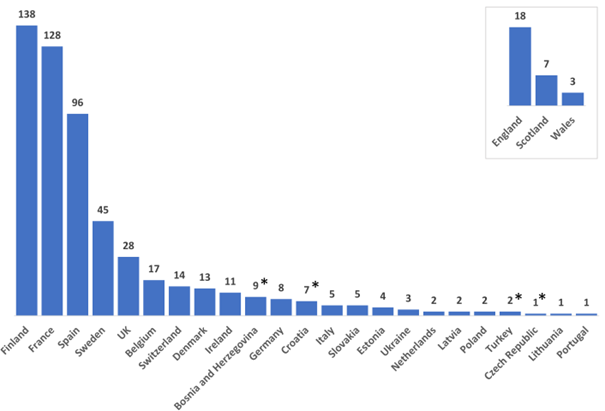
542 obstacles removed in 2024 in 23 countries – an increase of 11% on last year.
2900 km of rivers reconnected across the continent
4 countries have removed their first barriers

Those highlight the growing support for barrier removals across Europe as well as increasing understanding among communities and governments of the benefits of reconnecting and restoring our rivers for people and nature. These actions are helping to strengthen climate resilience, enhance water and food security, and reverse nature loss.


read the report

read press release


Figure 1. Number of removed barriers per country in 2024. Notes: the inset shows the removals per country in the UK. The countries that officially removed their first barriers in 2024 are marked with an asterisk (*)


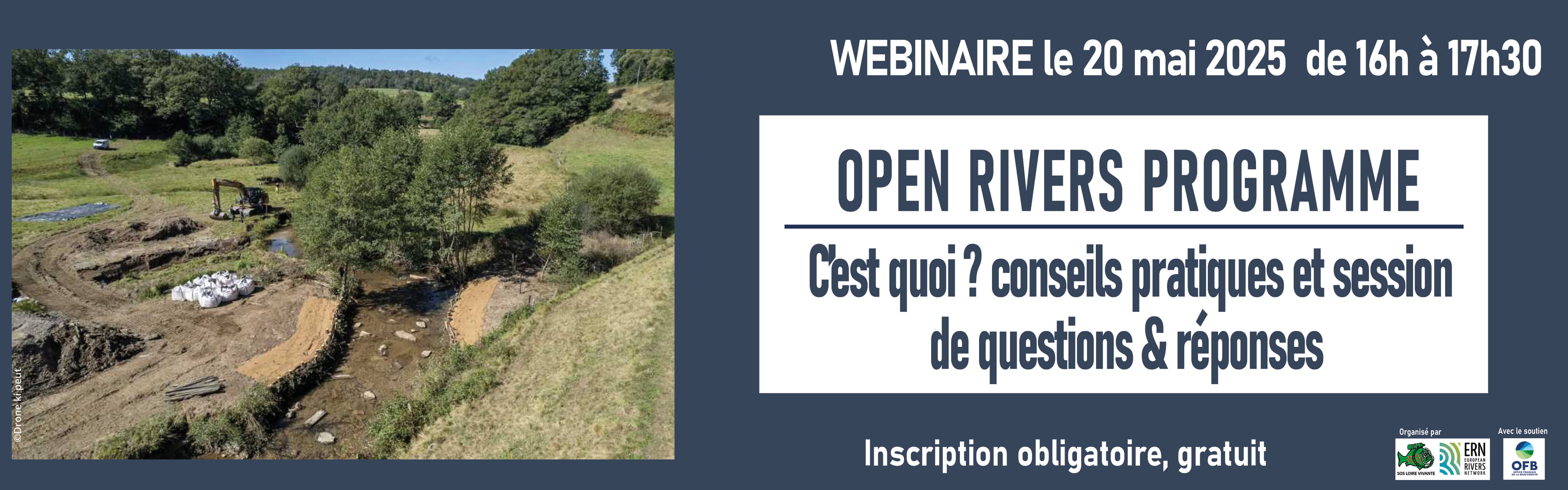
Tuesday, May 20 from 4 to 5:30 p.m.: ERN webinar “Learn more about the Open Rivers Programme” (in French).

The Open Rivers Programme continues to found barriers removal projects, preparatory studies and works. ERN – SOS Loire Vivante, can help and advise you if you wish to apply. To prepare the next call for projects, a webinar to present the program, eligibility criteria and ask your questions is organized on May 20 from 4 to 5:30 pm (in french). registration required.


Open Rivers Programme : Open Rivers Programme: Two new projects selected in partnership with ERN and SMDMCA

The Open Rivers Programme continues to support the restoration of river continuity in Europe.

Two new projects, supported by ERN in partnership with SMDMCA, have just been selected in the Cantal region of France: the Batitan and Moulin Bas weirs.

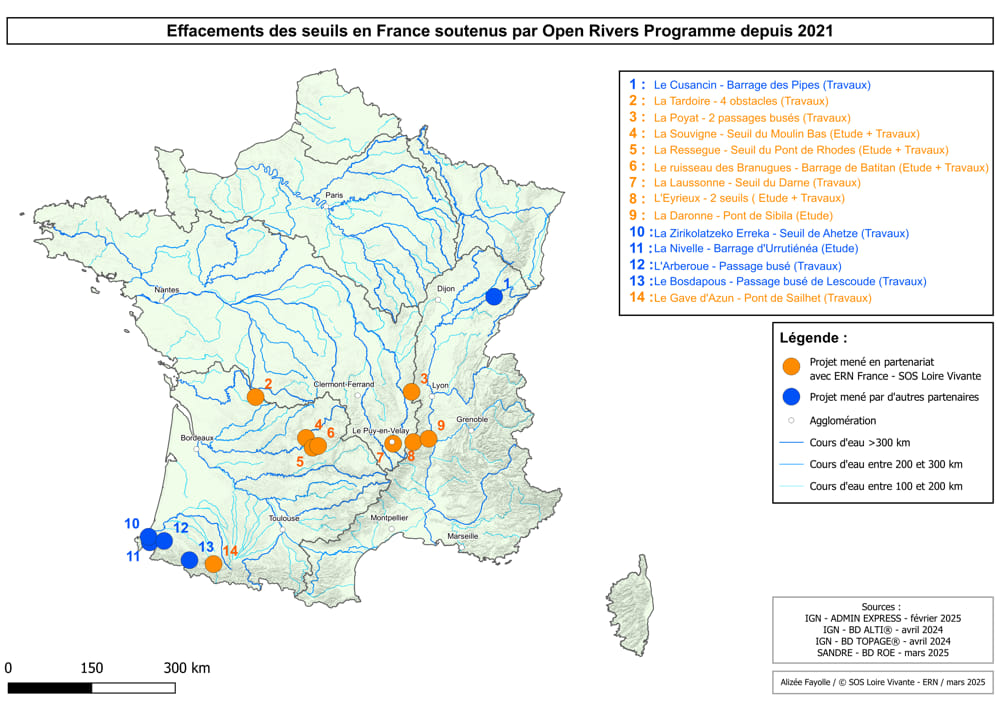
This brings to 13 the number of projects (studies or works) in partnership with ERN and the Open Rivers Programme in France.


Seuil de Moulin Bas ©SMDMCA

The Moulin Bas project

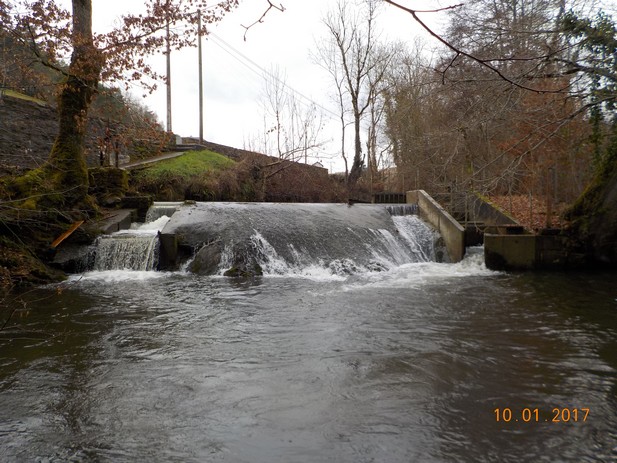
The Moulin Bas weir is located on the Souvigne stream, a tributary of the Dordogne. This watercourse, classified in lists 1 and 2 (L.214-17 du CE) is of great ecological importance. In 2018, the Souvigne was home to 8.4% of the spawning grounds for large salmonids in the Dordogne basin, according to a study carried out by ECOGEA for MIGADO. The Moulin Bas weir is an obstacle to migratory fish. It will therefore be removed during the works scheduled for autumn 2025, opening up 15 km of river, or 83% of the Souvigne’s length. Read more

Seuil de Batitan ©SMDMCA

The Batitan project

The Batitan dam is located on the Branugues stream, a tributary of the Cère, in the Cantal department. The Branugues stream is home to numerous species, including fario trout and river lamprey. As with the Moulin Bas project, work will start in autumn 2025, opening up more than 8 km of stream, or 87% of the creek. By eliminating this obstacle, it will be possible to restore upstream spawning habitats and bolster the trout population already present in the stream. Read more 


Upcoming webinar

Ahead of the next Open Rivers Programme call for projects, ERN will be organizing a webinar to present the program and eligibility criteria. (to be confirmed – May 20, 2025 in frenche).


Dates of the next Open Rivers Programme calls for projects

Summer session 2025: from June 9 to July 4, 2025 (decision and start of projects from November 2025)
Autumn session 2025: from October 6 to October 31, 2025 (decision and start of projects from March 2026).

Find out more about these projects and the Open Rivers program:


The EEA report on the state of water bodies in Europe has just been published : Pollution, over-use and climate change threaten water resilience in Europe

Member States must urgently accelerate the implementation of the Water Framework Directive to improve the state of our waters.

Bruxelles, Belgique, 15 october 202, press release from Living Rivers Europe

A new report from the European Environment Agency (EEA) reveals that Europe’s water resources are under serious pressure, with no significant progress made since 2009*.

The report Europe’s state of water 2024: the need for improved water resilience underscores the urgent need for stricter implementation of the Water Framework Directive (WFD), significant changes to agricultural production, pollution reduction, and urgent ecosystem restoration.

Its main findings include:

  • Less than 40% of surface waters, such as rivers and lakes, are currently healthy.
  • Nearly 25% of groundwater bodies are not in good chemical status, even though they provide almost two-thirds of our drinking water.
  • The chemical status of rivers, lakes, and coastal waters has further deteriorated, with less than 30% meeting the pollution standards set by the WFD.
  • Harmful agricultural practices, particularly the intensive use of nutrients and pesticides, continue to be the most significant pressure on water. Diffuse pollution pressures from agriculture affect 32% of groundwaters and 29% of surface waters.
  • Chemical pollution from coal-fired plants, along with alterations to rivers due to dam construction and straightening, also exerts considerable pressure on surface waters.

Claire Baffert, Senior EU Policy Officer, Water & Climate Change Adaptation at WWF European Policy Office, said: “The persistently lousy state of Europe’s waters shows that Member States are failing to address the water crisis, year after year. The Water Framework Directive has been in place for over two decades, but its goals remain largely unmet because national governments do not take its requirements seriously. Unfortunately, as reflected in the Draghi report*, there are strong calls to weaken the directive’s standards to facilitate harmful projects, when what we truly need is to prioritise the protection of our water resources.”

Sara Johansson, Senior Policy Officer for Water Pollution Prevention at EEB, said “The EEA data shows that less than 30% of surface waters are in good chemical status. While these stats are alarming, they’re not even giving the full picture as it’s only assessed against a limited and outdated list of pollutants. New quality standards for water must be adopted with urgency so that monitoring and planning of measures can be included in the next River Basin Management Plans.”

Mark Owen, Director of the European Anglers Alliance, said: “This report not only highlights the crisis that we face with the state of EU waters but also the significant cost that citizens will face by continued inaction by member states. The report showcases the way forward with the example in Estonia restoring 3,300 KM of rivers by removing dams and river restoration, increasing biodiversity with improvements to 32 species. Similar actions are now required across the EU.”

Irene Duque, Freshwater Policy Officer at Wetlands International Europe, said: “Thank you, EEA! We have heard the message loud and clear: our water resilience is at risk. The path forward to meet EU targets and improve the health of European waters is equally clear: wetland restoration over maladaptation. Building dams and relying on more grey infrastructure continues to prove counterproductive, often worsening the problems it aims to solve. Wetland restoration remains a low priority on the EU’s agenda, but for those concerned about devastating floods, droughts, the decline of freshwater fish, or access to water as a human right, this is truly a no-brainer.”

Andras Krolopp, Head of Biodiversity Policy at The Nature Conservancy Europe, said: “The state of Europe’s waters is a wake up call for urgent action. As the EEA report shows, this is not only a European issue, but a global crisis. Restoring at least 25,000 km of rivers to their free-flowing state is not just an environmental necessity: it’s a commitment to biodiversity and our future. Europe has a global commitment under the Convention on Biological Diversity and the Nature Restoration Law to achieve this goal. We need to accelerate the implementation of the Water Framework Directive and prioritise water and ecosystem protection across all policies. The time to act is now, and delay is not an option.”

Europeans are increasingly paying the price for their government’s inaction on the water crisis. According to the latest Eurobarometer survey, 78% of Europeans want the EU to do more to address water pollution.

The Living Rivers Europe NGO coalition* urges Member States to accelerate the implementation of the WFD to improve Europe’s waters and integrate water and ecosystem protection across all policies.

Notes to editors:

*The deteriorating trend in the chemical status of surface waters and the overall lack of progress are partially linked to the fact that Member States are improving their monitoring practices, thereby identifying more pollutants than before.

*In its previous assessment from 2018, the EEA reported that “It can be expected that, by the time the third River Basin Management Plans are drafted (2019-2021), some of the several thousand individual measures undertaken in the first and second RBMPs should have had a positive effect in terms of achieving good status.” This has not been the case, showing that many Member States have failed to implement the planned measures.

*The Draghi report notes that the EU should consider other targeted updates to relevant EU Environmental legislation (i.e. the Environmental Impact Assessment Directive, the Birds, Habitats, Water Framework and potentially the SEA Directive) for renewable energy installations and grids. It considers including limited (in time and perimeter) exemptions in EU environmental directives (e.g.  the Habitats Directive and the Birds Directive) until climate neutrality is achieved. Exemption requirements need to be met under certain conditions (e g  installations do not endanger the population and mitigation measures).

*An illustration of insufficient WFD implementation can be found in the resurrection of infrastructure projects that damage biodiverse rivers, such as the Răstolița Hydropower Project in Romania, or the TURNU MĂGURELE –NIKOPOL hydraulic structure project on the Danube.

*Living Rivers Europe is a coalition of organisations advocating for the defence, maintenance and implementation of the WFD in its current form. The coalition includes the European Anglers Alliance, the European Environmental Bureau, the European Rivers Network, The Nature Conservancy, Wetlands International, and WWF, representing a movement of over 40 million European citizens. See the Living Rivers Europe’s handbook for the 2024-2029 mandate.
Opening of the Poutès dam on Monday 7 October

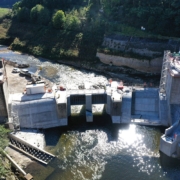
As has been the case every year for the past 3 years, the large gates of the ‘New Poutès’ were opened in automn to allow the highly migratory fish free passage and a free access to the best spawning grounds.

This year, 67 salmon from the Loire-Allier axis passed through the fish pass on the right bank of the Vichy dam bridge, but it is estimated that around a hundred fish must have passed through.

After interrupting their migration to spend the summer between Vichy and Langeac in the Allier or its tributaries, the survivors have restarted their migration towards the Dore, Sioule or Alagnon, and of course the Allier, with the arrival of more favourable temperatures. Over the next few days, they will pass through the Brioude, Vielle Brioude and Langeac dams before reaching the new Poutès dam, where the sluice gates were lowered on Monday in anticipation of their arrival.

Last year, spawning grounds were observed upstream of the Poutès, indicating that more than a dozen fish had returned to the Upper Allier. It is not yet possible to count fish at Poutès when the gates are open, but observing the spawning grounds upstream is still a good indicator. About ten spawners are expected to pass this year.

The gates will remain open for 2 months before closing again to enable hydroelectric production to resume.


Watch our two 2-minute videos


and the webpage : ‘New Poutes dam‘

24 October : Expert Masterclass on Dam Removal : Register

As we approach the opening of the ORP call for proposals on October 29, WFMF, WWF, and ERN will host a 1 hour expert masterclass on dam removal with French expert Stéphane Weil from CATER Calvados Orne Manche, France .

He will present on the topic “: Restoring river continuity at a river or catchment scale. How to proceed ? Examples of approaches, technical and communication tools proposed by CATER COM in France”

This event aims to increase the visibility of ORP call and encourage a greater number of submissions.

Join us on October 24th, 2024, from 10:00 to 11:00 (CEST) via Zoom

Registration