Tribute to Jean Wencker

It is with deep sadness that we learned of the death of Jean Wencker in August 2025.

Jean Wencker devoted much of his life to protecting the environment and restoring aquatic habitats. As former president and then vice-president of Alsace Nature, he represented the association in numerous bodies: the International Commission for the Protection of the Rhine (ICPR), the Rhine-Meuse Basin Committee, the Saumon-Rhin association, and the Salmoncomeback NGO coalition, which is committed to bringing salmon back to Basel.

During his various terms of office, he tirelessly defended the ecological continuity of waterways, the protection of the Doubs and Rhine rivers, and the return of migratory fish, particularly salmon. He grew up on the banks of the Rhine, which shaped his commitment. In 2015, during a conference in Huningue, he emotionally shared memories of his father bringing salmon home and spoke of the devastation of the alluvial forests for the construction of dams in Strasbourg and Gerstheim, a major ecological disaster. Among his successes was the renovation of the Franco-Swiss Châtelot hydroelectric power station on the Doubs, inaugurated in 2006 after more than thirty years of struggle.

ERN and the Salmoncomeback coalition pay tribute to his career and his struggles. May they continue to inspire all those who work to protect life. Our thoughts are with his family and loved ones.

Read also the tribute by Alsace Nature.

Jean Wencker lors du colloque international Salmon Summit à Huningue en 2015 – CR .ERN

SNB 2030 remains an ambitious framework, but its success will depend on the ability to remove the obstacles identified by the CNB.

The National Biodiversity Strategy 2030 aims to translate France’s commitment under the global biodiversity framework adopted in Montreal in December 2022 into concrete actions. Its ambition is clear: to halt and then reverse the collapse of biodiversity by 2030, in line with European and international objectives. The strategy is structured around four main areas and is based on a participatory approach involving public and private actors, associations and scientists.

At its meeting on 24 June 2025, the National Biodiversity Committee adopted a critical opinion on the 2024 progress report on the SNB 2030. It includes a detailed analysis and recommendations to strengthen the strategy’s effectiveness.
In summary, the SNB 2030 remains an ambitious framework, but its success will depend on the ability to overcome the obstacles identified by the CNB: financial resources, policy coherence and the involvement of all stakeholders.

Indeed, the CNB raises serious questions about France’s ability to meet its commitments, particularly in light of ongoing political and budgetary decisions. It emphasises that the resources allocated and the consistency of public policies remain insufficient to achieve the objectives set.
In particular, it recommends programming dedicated multi-year funding and ending subsidies that are harmful to biodiversity, as well as strengthening the convergence between climate and biodiversity policies in order to give them the same level of priority in public action.

The CNB highlights a gap between the stated ambitions and the concrete resources implemented, particularly in terms of ecosystem protection and the fight against invasive alien species.
It stresses the need for better territorialisation of the strategy, involving regions and local actors more closely, and for regular assessment of progress made.

The strategy must now be implemented at the regional level (regional COPs) and monitored annually by the CNB until 2030. The coming months will be crucial in assessing whether the committee’s recommendations are being taken into account and whether the resources allocated are sufficient to meet the challenges.

See NGO’s press release.

European water resilience strategy: ambition hampered by a lack of concrete commitments

On June 4, 2025, the European Commission presented its EU water resilience strategy, a much-anticipated document at a time when shortages, floods, and pollution are increasingly threatening aquatic ecosystems.

But behind the stated intentions, the content is disappointing.

This document, which is supposed to respond to the call made by the Living Rivers Europe coalition in its recommendations, falls short in several respects. It lacks concrete commitments, clearly identified funding, and truly operational governance tools. After the European Parliament vote on May 7, several NGOs had already expressed doubts about Europe’s ability to provide itself with the means to respond to the water crisis. The strategy reflects the Commission’s view that “the legislative framework is already in place,” based on the Water Framework Directive, the Floods Directive, and the newly adopted Nature Restoration Regulation, yet “persistent implementation failures are holding back progress.”

The text highlights nature-based solutions, but without setting legally binding targets or providing specific budgets for their implementation. The incentives proposed remain too vague to bring about real change. In two separate responses, the EurEau federation and the Living Rivers NGO coalition regretted the absence of targets to reduce water abstraction in the strategy. Such a target was included in a draft version of the communication—which Contexte had published—but was ultimately replaced by a target to improve “water use efficiency” in the final version presented by the Commission on June 4. The efficiency target is vaguely defined: it “provides no baseline, no sectoral roadmap, and no implementation mechanism to achieve it.” The NGO coalition also deplores the fact that the target is not binding in any case.

On pollution, the measures are still too weak, particularly on prevention at source and the application of the polluter pays principle. Yet PFAS, nitrates, and other harmful substances continue to pollute waters across Europe.

The lack of a roadmap for the agricultural sector, combined with the absence of quantified targets by area, weakens the strategy.

As Living Rivers Europe points out, without concrete means or a precise plan, this ambition risks remaining unfulfilled. Meanwhile, pressure on rivers and wetlands continues to worsen.

The coming months will tell whether the Commission and Member States will be able to turn promises into action and take decisions that are commensurate with the challenge.

More infos : read Living Rivers Europe press release

Public consultation to help preparation of the Nature Restauration plans

France is launching a public consultation on its future national plan on the “Nature restaration law.” The plan aims to restore degraded natural environments in accordance with the new European regulation on nature restoration. The European Union’s target is to restore at least 20% of terrestrial and marine areas by 2030, with intermediate stages in 2040 and a final target in 2050.

This project is part of the 2030 National Biodiversity Strategy and prioritizes the most fragile environments such as wetlands, forests, rivers, coastlines, and seabeds.

This consultation is open to everyone: citizens, associations, communities, professionals, and residents concerned. Giving your opinion means contributing to a fairer plan that is better suited to the needs of the regions and more effective in restoring biodiversity. It is also an opportunity to propose ideas and raise awareness of local priorities.

The consultation is being conducted under the responsibility of the National Commission for Public Debate, which guarantees the transparency and impartiality of the process. It will take place from May 23 to August 23, 2025. All relevant information, the calendar of events, and details on how to participate are available on the official website: https://restaurer-la-nature.biodiversite.gouv.fr

logo Living Rivers Europe

Living Rivers Europe recommendations to strengthen the EU Water Resilience Strategy

The European water resilience strategy will be voted on at the beginning of June.

But following the recent report voted by the European Parliament on 7 May, and media reports on the Commission’s draft, the NGO coalition Living Rivers Europe fears that the forthcoming strategy lacks the tools needed to make Europe truly water resilient. The strategy is intended to respond to the growing urgency of water scarcity, floods, pollution, and ecosystem degradation across the continent.

Based on recent media reports, the draft text lacks the binding commitments, dedicated funding, and governance tools needed to ensure meaningful implementation and systemic change. Without those, ambition will remain on paper and will not be able to tackle growing pressures on Europe’s rivers and wetlands. On 20 May, the NGO coalition Living Rivers Europe sent a letter to the European Commission outlining their recommendations to ensure that the strategy can help Europe and citizens thrive.

At the beginning of May, the Living Rivers Europe coalition had already indicated that the European Parliament’s recommendations were a step in the right direction, but lacked ambition, with the text focusing on ‘grey infrastructures’ – i.e. systems and structures created by man – to the detriment of nature-based solutions.

In their report, adopted on 7 May by 470 votes to 81 with 92 abstentions, MEPs called for an ambitious strategy to enable the EU to better manage its water resources and respond more effectively to current challenges in this area. The text stresses that water is not only essential for health and life, but is also central to the European economy, its competitiveness and its efforts to adapt to climate change. The recommendations are aimed at water efficiency targets, pollution reduction and better disaster preparedness, but without any real tools. More info

Dam removal report 2024 is available

A a glance :

542 obstacles removed in 2024 in 23 countries – an increase of 11% on last year.
2900 km of rivers reconnected across the continent
4 countries have removed their first barriers

Those highlight the growing support for barrier removals across Europe as well as increasing understanding among communities and governments of the benefits of reconnecting and restoring our rivers for people and nature. These actions are helping to strengthen climate resilience, enhance water and food security, and reverse nature loss.


read the report

read press release


Figure 1. Number of removed barriers per country in 2024. Notes: the inset shows the removals per country in the UK. The countries that officially removed their first barriers in 2024 are marked with an asterisk (*)


Loire/Ardèche : Montpezat – Quo Vadis !

For several years now, SOS Loire Vivante-ERN has been successfully campaigning on the subject of the Montpezat hydroelectric complex and the potential renewal of the concession at the end of 2028.

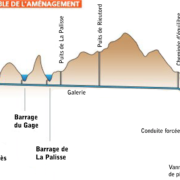
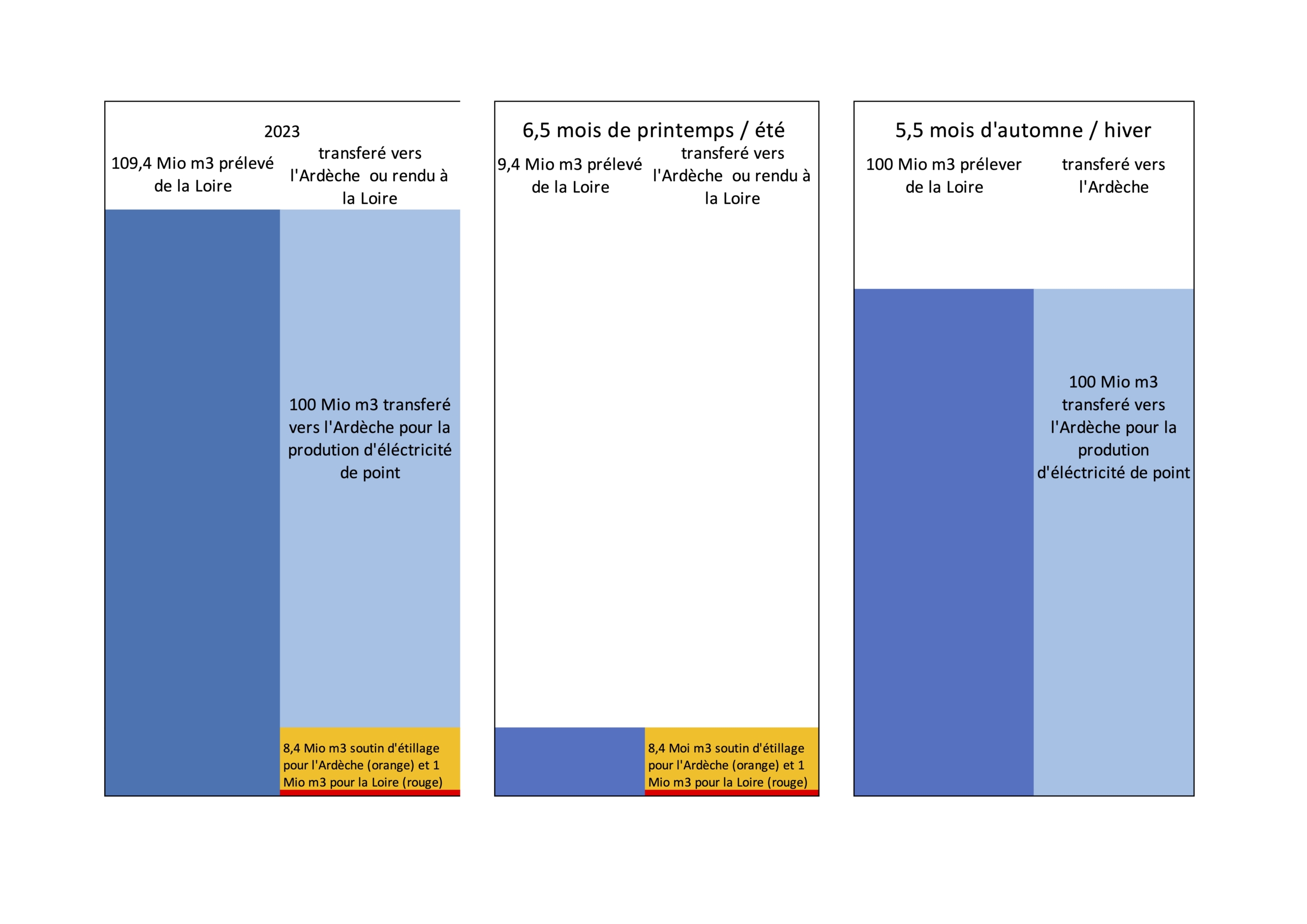
This is a thorny issue, because behind the question of energy production (135 MW), we are actually talking about one of the largest transfers of water in Europe between the Loire and Ardèche basins, amounting to 80 – 300 Mio M3 /year.

In order to lay the foundations for the future concession and to share the various issues surrounding the management of the structure, a restricted inter-sage Loire amont / Ardèche working group, led by the Prefect of the Haute Loire, has been set up. The WG, in which SOS Loire Vivante -ERN is represented, will deliver its recommendations to the InterSAGE by the end of 2025.

In order to bring everyone up to the same level of knowledge, the first two meetings were devoted to hydroelectricity and the natural environment, and at the end of May the focus will be on uses. A mediator has been appointed for the following meetings. That is wise…

In the summer, SOS Loire Vivante – ERN will be inviting interested NGOs from the Loire and Ardèche basins to a visual seminar in order to take stock of the situation and crystallise the initial positions.

> more information about the Montpezat hydroelectric complex

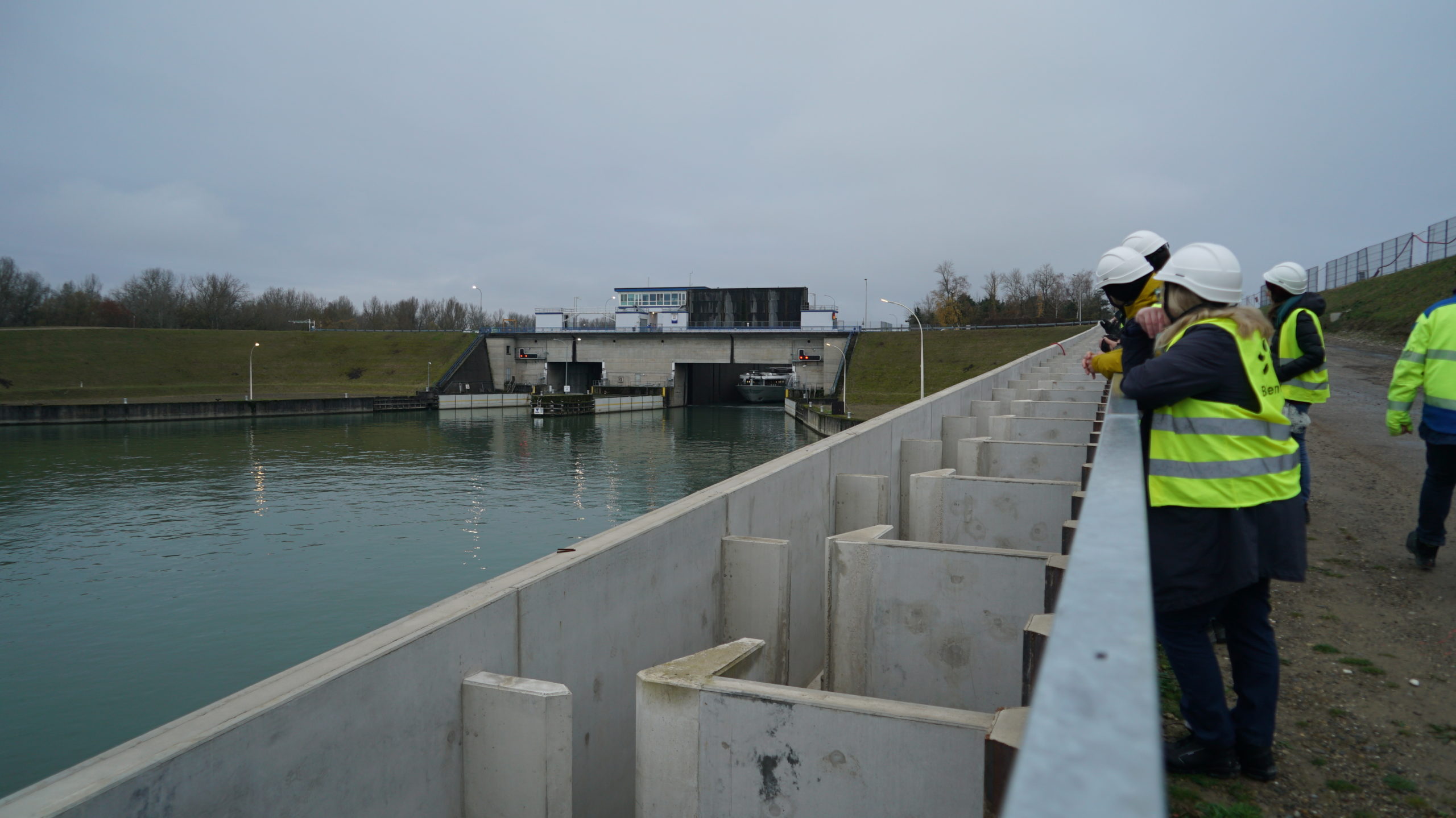
Rhinau fish pass: work completed on schedule

The impressive Rhinau fish pass on the Rhine will be put in the water next week for testing.
The deadline for completion of the work has been met.

A large-scale monitoring system will keep track of how the fish pass is used.

©Daniel Reininger – Alsace Nature

More info


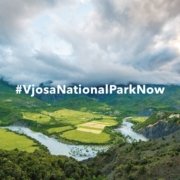
Goldman Prize 2025 : Eco Albania rewarded for his work for the Vjosa

Since 1989, the Goldman Environmental Prize has been awarded to environmental “heroes” around the world. In Europe, and in the “fresh water” category, two Albanian activists from Eco Albania were rewarded for their defense of the Vjosa, one of the continent’s last wild rivers. Through their campaign, they succeeded in preventing the construction of multiple dams and in designating the Vjosa and several of its tributaries a national park.

In 1992, France and Loire Vivante also won an award for Christine Jean, who coordinated the national campaign to prevent the construction of dams on the Loire at Serre de la Fare, Le Veurdre and Chambonchard.

Plus d’infos

Tuesday, May 20 from 4 to 5:30 p.m.: ERN webinar “Learn more about the Open Rivers Programme” (in French).

The Open Rivers Programme continues to found barriers removal projects, preparatory studies and works. ERN – SOS Loire Vivante, can help and advise you if you wish to apply. To prepare the next call for projects, a webinar to present the program, eligibility criteria and ask your questions is organized on May 20 from 4 to 5:30 pm (in french). registration required.