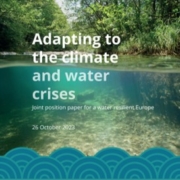
NGOs call for new EU Climate and Water Resilience Law

On 26 October, a coalition of six NGOs grouped under the umbrella of Living Rivers Europe published a position paper calling for a more resilient Europe.

Read press release from WWF :

“Six NGOs call for a new EU Climate and Water Resilience Law to address the climate and water crises”
A coalition of six NGOs is asking for a new “EU Climate and Water Resilience Law” that prioritises restoring and protecting freshwater ecosystems to ensure clean and sufficient water for drinking and sustainable farming. The NGO call comes as the European Economic and Social Committee holds a high-level “Call for an EU Blue Deal” conference today, and it follows the European Commission’s announcement that it will present an Initiative for Water Resilience in the first quarter of 2024.

Freshwater ecosystems have been overexploited for decades, severely degrading their health and undermining Europe’s resilience to the fast-growing consequences of climate change: increased drought, floods and fires, while also driving massive biodiversity and habitat loss. The new EU Climate and Water Resilience Law supported by the NGOs would create a network of natural Water Reserves to protect critical water supplies and their catchments in water-stressed areas, provide adequate finance for protecting and restoring natural “sponge” landscapes, and contribute to setting sectoral water efficiency and water abstraction targets for all water users at basin level.

“Rather than calling for an EU Blue Deal which relies heavily on grey infrastructure, we need to continue implementing the Green Deal and accelerate efforts to safeguard water for nature and for people,” says Claire Baffert, Senior Water Policy Officer at WWF’s European Policy Office and Chair of the Living Rivers Europe coalition. “We urge the European Commission to draw up a new EU Climate and Water Resilience Law that ensures clean and sufficient water for people by securing healthy freshwater ecosystems for nature.”

The NGOs caution against turning to concrete infrastructure in a bid to temporarily fix water shortage and flood problems: “Building new dams, channelling riverbeds or implementing large-scale water transfers only increases our vulnerability to climate change impacts in the future. Instead, natural ecosystems including free-flowing rivers, restored floodplains, wetlands and peatlands need the space and freedom to do their job of absorbing, filtering and storing water, and providing vital habitats for nature,” Paul Brotherton, Freshwater Manager at Wetlands International Europe.

In the position paper for water resilience, the coalition also calls for the full enforcement of the Water Framework Directive, climate adaptation to be integrated into all EU policies and an end to subsidies that harm freshwater.

Download the document : https://wwfeu.awsassets.panda.org/downloads/climate-and-water-crisis-report_web-final.pdf

International conference “Salmons & people “: Registration now open

The salmo salar – extinction or restoration?
We need a shared roadmap!

Salmon is in decline in France, as is biodiversity in general. Migration statistics are clear: fewer and fewer migratory fish are reaching their best spawning grounds, particularly those on long rivers, such as the Loire-Allier axis….
All hope is not yet lost, however, as there are promising examples where rigorous, jointly-developed measures have resulted in an upward trend. Despite climate change.
Ten years after the last meeting, SOS Loire Vivante – ERN is organizing a new event in an attempt to unite the players around a common roadmap. Probably the last chance!

> More info and registration


Logo Openrivers

Open Rivers : Fourth weir removed on the Tardoire

Logo Openrivers

Open Rivers : Third weir removed on the Tardoire!

Logo Openrivers

OPEN RIVERS PROGRAMME : 7 July next call for applications

The Open Rivers Program announces the next call for applications for 7 July 2023 (5th sessions since the programme began, deadline for application : 1st September).

For this call, organisations from all over Europe are encouraged to apply for all grant categories.

A new feature of this call for proposals is that public-sector support structures will also be eligible as leading, but only for demolition grants if match funding is available. Before applying in this context, a discussion with Open Rivers will be necessary. See the updated Open Rivers guide, in which all the new eligibility criteria will be detailed.

As an NGO, and with 4 projects underway with Open Rivers, ERN is in regular contact with the programme and closely follows its developments. ERN is therefore still a strong partner which, together with a field coordinator such as a river syndicate, can propose a project in France.

In other European country, ERN provides a help desk to support a project idea and links organisation with other applicants or referents.

Q&A sessions for France and European countries will be organised in the near futur.

Memo : an run application process is approximatively 9 months. For an application to session 5, from 7 July 2023, your project will not be able to start until March 2024 if it is selected. Project duration: 1 year.


More info

Nature Restauration Law : Encouraging but fragile results from the ENVI Commission

June 15 MEPs from ENVI Comission saved the Nature Restauration Law project, the amendment to reject the legal proposal did not pass, although with the smallest margin possible (44/44).

Compromise amendment 6 on Article 7 (river connectivity) was approved, which means that the 25,000 barrier removal target is – so far – still in the ENVI report. Although an encouraging result, it does not mean much, as there is a chance that the ENVI report ends up being rejected. MEPs will continue the voting of the last individual amendements during the next ENVI Committee meeting end of June, and then will vote on the full ENVI report.

So nothing is certain at this stage, advocacy efforts will need to continue until the plenary vote on the week of 10 July.

More infos : Save the “Nature Restauration Law” – European Rivers Network (ern.org)

Read the Press release from EEB

European People’s Party fails with disinformation campaign

Nature and the ever-growing list of stakeholders supporting the Nature Restoration Law can breathe a sigh of relief as the Environment, Public Health and Food Safety (ENVI) Committee of the European Parliament rejected attempts by conservative and right-wing groups to kill the proposed law in a very tight vote on Thursday morning.

[…]

Sergiy Moroz, Policy Manager for Water and Biodiversity at the European Environmental Bureau, said: “Recent weeks have seen a growing chorus of unprecedented support for the Nature Restoration Law [2], including from the scientific community, as this law offers a solution to tackle both the climate and biodiversity crises. Science is clear: the biggest threats to food security and to farmers are climate change and the degradation of nature. We urge the MEPs to resist the misinformation campaigns and continue negotiating constructively towards the adoption of a strong Nature Restoration Law in the lead committee and plenary without further delay.”

read Press release in full : https://eeb.org/the-nature-restoration-law-lives-to-fight-another-day/ 

Save the “Nature Restauration Law”

The Nature Restoration Law, which will be shortly put to vote in the European Parliament, sets the target of restoring at least 25,000 km of free-flowing watercourses by 2030 (Article 7) in order to improve the natural longitudinal and lateral connectivity of watercourses. These objectives complement the obligations of the Water Framework Directive and is necessary given the significant degradation of aquatic ecosystems.

Read our note for Members of the European Parliament  in french  and english.

We should even go further and set a target of 178,000 km by 2030.

But even more, there is a high risk that it will be fully rejected as several parties went as far as calling to completely denied it back this past May.  This next Thursday 15 June the ENVI Committee of the European Parliament must be strong.

Send a message easy and quick message to your decision-maker to be ambitious : https://www.restorenature.eu/en/take-action #RestoreNature


The Nature Restoration Law proposal lays out plans to restore thousands of kilometers of rivers.

More info about fragmentation by dams

More info about Nature Restauration Law (anglais)

DRE launch today the dam removal progress report for 2022

The latest report uncovers a surprising figure of (at least) 325 barriers have been removed in 16 European countries – a new record! As in 2021, most of the removed barriers were weirs, as these structures have a high probability of being old and obsolete and can be removed in a cost-efficient way. But large dams such as the Roche-qui-boit dam in France (16m high) are also among the 2022 achievements.

Several factors have contributed to the new numbers such as newly available funding opportunities, like the Open Rivers Programme, the coordinated efforts of national and regional public authorities to report removed barriers, and the hype created by findings of last year’s report disseminated all around Europe.

Given the latest developments in European climate policy and the Commission’s proposal for a Nature Restoration Law, it is important to keep highlighting dam removal as a crucial tool to accomplish ecosystem restoration and celebrating success stories across Europe. Moreover, barrier removal also contributes to the global Freshwater Challenge to restore 300,000km of degraded rivers by 2030, a goal launched at the UN Water Conference held in New York in March. Besides pollution, habitat degradation, and over exploitation of natural resources, freshwater ecosystems face one major issue: dams.

It has been found that over 1,2 million barriers fragment European rivers, with many being obsolete. Among the several harmful consequences is biodiversity loss, with a decline of 93% in freshwater migratory fish populations in Europe and 76% on a global level. The alarming numbers ask for costeffective and efficient solutions to restore rivers. Dam removal has been paving its way in nature
restoration tools – a trend has been confirmed across Dam Removal Europe’s annual reports.

Read the press release

Read the report

Logo Openrivers

Open Rivers : Second weir removed on the Tardoire !

Sélune dams removals in video (12 min)

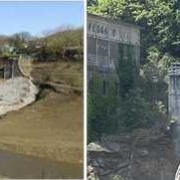
The Sélune has been free since last autumn. After the dismantling of the two large dams, the path is free for sediment and migratory fish for almost 100 km.

In a 12-minute video (in French and English) with spectacular images, you can follow the steps of the renaturalisation:

Video in french https://vimeo.com/549070141
Video in english https://vimeo.com/546711100


More infos about the Sélune