Living Rivers Europe publishes a water manual for the 2024-2029 mandate

Our society relies on clean and abundant water for drinking and sanitation, crop production, 
cooling down power plants, and manufacturing goods. However, mismanagement and accelerating climate change are making Europeans increasingly vulnerable to water pollution, water scarcity, and floodings. The EU has a role to play in ensuring Europeans are protected from these risks, that farmers are adequately supported in the transition to climate-resilient agricultural models, and that Europe remains an attractive place for businesses.

In this handbook, the Living Rivers Europe coalition offers key recommendations for decision-makers to mainstream the protection of water and freshwater ecosystems across the policy spectrum in the upcoming mandate and protect Europeans from the risks of pollution, drought, flooding and biodiversity loss.

24 October : Expert Masterclass on Dam Removal : Register

As we approach the opening of the ORP call for proposals on October 29, WFMF, WWF, and ERN will host a 1 hour expert masterclass on dam removal with French expert Stéphane Weil from CATER Calvados Orne Manche, France .

He will present on the topic “: Restoring river continuity at a river or catchment scale. How to proceed ? Examples of approaches, technical and communication tools proposed by CATER COM in France”

This event aims to increase the visibility of ORP call and encourage a greater number of submissions.

Join us on October 24th, 2024, from 10:00 to 11:00 (CEST) via Zoom

Registration

World Rivers Day, another step towards freeing our rivers

This September, thanks to the support of the European Rivers Network under the Open Rivers Programme, a number of river barrier removal projects are scheduled in France, in sub-basins of the Dordogne, Loire, Gave de Pau and Rhône (see details in the press release).

After three years of implementation of the Open Rivers Programme, more than 140 projects have been supported throughout Europe, including around ten in France, thus contributing to achieving the objective of 25,000 km of free rivers by 2030 in Europe, as set out in the European regulation on nature restoration and measure 20 of the National Strategy for Biodiversity (SNB) 2030, which aims to strengthen actions in favour of ecological webs and remove their main obstacles. Faced with the consequences of climate change, removing weirs and dams that have no use or have a high impact is a key measure for limiting the warming of water, restoring access to refuge areas and increasing the resilience of habitats and species.

On World River Day, we feel it is important to point out that life in our rivers and the quality of our watercourses is still too severely degraded and that urgent action is needed to halt the erosion of biodiversity and cope with the effects of climate change. ‘Repairing rivers and making environments and species more resilient to variations in temperature and hydrology will depend solely on our actions and involvement. There is still a huge task to be done, and it is sometimes difficult to get people to accept it,’ explains Roberto Epple, President of the European Rivers Network. Yet these projects are the result of a long, complex and collective process, combining technical work and consultation, and sometimes militant struggle. So each ecological restoration project is a source of pride, an event to be celebrated that contributes to restoring our shared heritage.

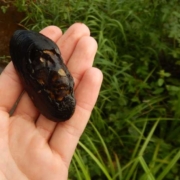
The projects taking part in the Open Rivers Programme are located in sensitive, protected areas with high biodiversity potential, and will help to reconnect habitats for fish (trout, lamprey, salmon), white-clawed crayfish and pearl mussels. ‘By re-establishing the natural dynamics of the watercourse and facilitating the movement of species, we are restoring the system and the complex interactions between living beings and their environments, and providing an additional opportunity to adapt to climate change. These are ‘no-regrets’ measures that benefit everyone,’ explains Corinne Ronot, Project Manager at the European Rivers Network. A range of highly ambitious projects that the European Rivers Network has submitted to the Open Rivers Programme for funding, sometimes in addition to that provided by the French Water Agencies.

Read presse release (in french)

3 new projects selected by the Open Rivers Programme in France

At the end of the summer of 2024, the Open Rivers Programme announced its support for three new projects proposed by ERN in collaboration with local partners:

The town of Argelès-Gazost in the Hautes-Pyrénées will be able to count on the participation of the European Rivers Network and the financial support of the Open Rivers Programme to remove the first obstacle downstream on the Gave d’Azun. Located just a few hundred metres from the confluence with the Gave de Pau, this structure prevents Atlantic salmon from accessing favourable breeding habitats. The work is scheduled for 2025. A “coordinated operation” to restore ecological continuity on the Gave d’Azun is being carried out by the Adour-Garonne water authority and will allow other upstream structures to be treated throughout the year, allowing migratory species to recolonise more than 11 km of the river.

(photo : ©ECOGEA)

Plus d’infos : https://www.ern.org/fr/openrivers/#toggle-id-4 et www.argeles-gazost.fr

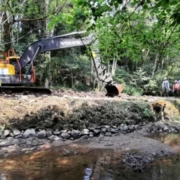
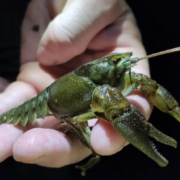
At the end of September, the SISMAE association will be carrying out a restoration project on a headwater stream in the Loire département, thanks to the Open Rivers programme, which has helped to finance the budget. The restoration of the watercourse and the removal of two culverts will reconnect the watercourse to the existing wetland and free the stream from all obstacles as far as its source. With its relatively permanent low flows, this watercourse is an important summer refuge for trout and could potentially be recolonised by the white-clawed crayfish (Austropotamobius pallipes, listed as endangered by the IUCN) already present in the downstream tributary. The project is funded by the Agence de l’Eau Loire Bretagne and a number of private sponsors, including the Open Rivers programme with the European Rivers Network, Patagonia and local companies (Rochebillard et Blin, Tiassage Linder, Chambon Paysage). (photo : ©SISMAE)

Plus d’infos : https://www.ern.org/fr/openrivers/#toggle-id-3  Et https://sismae.org/

Finally, on the Eyrieux (Rhône basin), the Syndicat Mixte de l’Eyrieux à Crussol (SMEC) is completing preliminary studies for the complete restoration of an upstream section of the Eyrieux. The work involves removing two weirs that are no longer in use and restoring the river to its original bed at the bottom of the valley, in the section that has been diverted. Fish continuity will be fully restored along 15 km of the upstream Eyrieux by reconnecting it with four of its tributaries, giving a total of 33 km of reconnected main watercourse and 12.5 km of secondary watercourse. In the summer of 2024, the Open Rivers Programme announced that it would also support the works phase, with the studies and works being partly funded by the Open Rivers Programme and supported by the European Rivers Network. (photo ©SMEC)

Plus d’infos : https://www.ern.org/fr/openrivers/#toggle-id-5 Et https://www.eyrieux-clair.fr/

Around a hundred Big Jumps recorded across Europe

The rivers were celebrated at 3pm on 14 July in over a hundred locations across Europe, mostly in fine weather.

New registrations are still coming in.
You can still label your event for 14 July or this weekend.

More info

How do you characterise a Free Flowing Rivers?

The importance of river restoration and free-flowing rivers (FFR) is increasingly recognized by European environmental policy. While the notion of free-flowing rivers is not yet defined in EU environmental legislation, the Commission’s interpretation is that free-flowing rivers are rivers that are not impaired by artificial barriers and are not disconnected from their floodplain, thus allowing the free movement of water, sediment, fish and other organisms. The Water Framework Directive (WFD) and the Biodiversity Strategy 2030 are of particular importance in this context. Indeed, the EU Biodiversity Strategy includes the target that at least 25000 km of rivers should be restored into free-flowing rivers by 2030 through the removal of primarily obsolete barriers and the restoration of floodplains and wetlands.

A guide has therefore just been published proposing criteria for identifying free-flowing rivers, taking into account longitudinal, lateral, and vertical connectivity at local and catchment scales. The aim is to provide a tool that can be used by authorities to determine the length of free-flowing rivers in their catchments. In addition, the tool can be used to predict the increase in free-flowing river length resulting from barrier removal and other restoration measures. This will help prioritising measures that can contribute to the 25,000 km target. Key elements of the method are (1) segmentation of the river into homogeneous reaches; (2) criteria for longitudinal, lateral, and vertical connectivity within a homogeneous reach; (3) a large-scale assessment taking into account sediment connectivity and migration barriers for target fish species; and (4) minimum length criteria to ensure hydromorphological processes and ecological functioning.

The Commission wants to use the rest of the year to further test the methodology by applying it to more cases. Then, they will adjust and finalise the methodology early 2025; and continue exchanges in ECOSTAT WG in the following years. Please let us know if you would like to test this methodology by writing to corinne.ronot@rivernet.org 

rapport critère identification FFR


The summary of the Sélune webinar has just been published

In early June, SOS Loire Vivante – ERN, in partnership with the OFB and INRAE, organised a webinar on the Sélune, attended by over 100 people from all over France. 4 scientists and researchers taking part in the “Sélune scientific programme” came to present their results one year after the end of work at the Roche Qui Boit site and the reopening of the Sélune axis. The studies presented concerned sedimentary, hydric and chemical continuity, recolonisation by migratory fish and the territorial and social aspects of the project. The presentations provided a wealth of information for the future of river restoration. The Sélune programme is also interested in other areas of river restoration, such as changes in riverbank vegetation and macrointertebrate communities, etc. The data can be consulted on the Sélune programme website and may be presented in a future webinar.

Download a 2-page pdf summary of the webinar (french only)

Replay the webinar and access the speakers’ pdf presentations (french only)

the EU Environmental Council finally adopted the Nature Restoration Law (NRL)

Read EEB press release :

Brussels/Luxembourg, 17 June 2024

Today, after a nail-biting last discussion, the EU Environmental Council finally adopted the Nature Restoration Law (NRL), marking the last step for this long-awaited proposal to become law. This outcome is a huge win for Europe’s nature, climate action, citizens and future. 

Member States followed through with their commitments and with a majority of 20 countries, representing 66.07% of the population, the law was officially endorsed, thanks to Austria’s Environment Minister Leonore Gewessler stepping up at the last minute, changing the country’s previous stance and safeguarding the law.

The #RestoreNature coalition, consisting of BirdLife Europe, ClientEarth, EEB and WWF EU, says: “Today’s vote is a massive victory for Europe’s nature and citizens who have been long calling for immediate action to tackle nature’s alarming decline. After years of intense campaigning and many ups and downs, we are jubilant that this law is now reality – this day will go down in history as a turning point for nature and society. Now, we need all hands on deck: Member States must properly implement this legislation without delay in their countries, in close collaboration with all involved stakeholders. At the end of the day, nature can rebounce, for the benefit of our climate, biodiversity and people!”

The law has faced one of the most tumultuous journeys in the history of EU legislation. After surviving an unprecedented and absurd disinformation campaign, aiming to destroy the NRL in the European Parliament, it faced the risk of being rejected at the very last step in the Environment Council. In the end, however, support for the law carried the day.

This is also a timely outcome to present at the upcoming UN Biodiversity Conference (CBD COP16) later this year, showing that Europe is willing to lead the way in tackling the climate and biodiversity crises by owning up to its global commitments. It is also a very clear message to the new EU Parliament and Commission, to not forget to keep biodiversity at the forefront of their agenda.


This result followed a massive public mobilisation. Over the past few years, over a million signatures and messages from citizens, repeated calls from 6000+ scientists, 100+ businesses, youth organisations, and civil society from across numerous sectors have been made to defend the law and the integrity of the EU Green Deal. As the #RestoreNature coalition, we want to thank anyone who contributed to this result and made it happen.


World Migratory Fish Day: Watch and share our videos

To mark World Migratory Fish Day on Saturday 25 May, ERN-SOS Loire Vivante is launching three videos about Atlantic salmon and ecological continuity.

These videos are previews of remixed extracts from the documentary entitled “Pour une fois qu’il faut laisser couler”, which will be released shortly.

The 2-minute portrait and landscape modules presented here, in French and English, plunge you into the life of the Atlantic salmon in the Allier and Sélune rivers and present 2 major innovative and far-reaching actions that France has taken to restore access to the upstream areas of rivers and streams, the historic breeding grounds of the Atlantic salmon.

Discover these videos :

The New Poutès, the dam that opens for wild salmon 
watch the French version / watch the English version

Allier River : An obstacle course for salmon
watch the French version / watch the English version

France: The largest dam removal project in the world, 2017-2022
watch the French version / watch the English version


All the videos can also be viewed on our new YouTube channel: “Rivières Vivantes – Laisser Couler”: https://www.youtube.com/channel/UCjokCmOpXMcgD4ag3UY3ctg

Note :

  • France is the European leader in the restoration of ecological continuity, particularly through the removal of small and large transverse structures. Since 1997, it has built up recognised expertise through innovative policies and major international projects. At a time when the decline in populations of migratory fish and fish at the head of river basins, such as trout, is alarming, we need to pursue innovative actions that provide the most effective response to the challenges of biodiversity.
  • To publicise France’s experience, you will soon be able to watch the full documentary produced by ERN – SOS Loire Vivante as part of the OFB’s Mobbiodiv call for projects. The 3-part film, told from the point of view of our association, traces the history of the major events and projects that have marked the restoration of free movement of rivers in France from 1997 to the present day.
    “For once it’s time to let things flow
    part 1/3: Reopening river routes to large migratory species
    part 2/3: Reconnecting small and medium-sized rivers
    part 3/3: Rethinking and reconfiguring major blocking structures

A new report from WWF France warns of the decline in biodiversity in French rivers

Every two years, the WWF publishes a report measuring the state of biodiversity. In 2024, we are presented with the state of France’s rivers.

The report states that “Despite spending an estimated €500 billion on water policies over the past 20 years, freshwater bird and fish populations are stagnating at a worrying rate, and only 43.1% of rivers and water bodies in France are in good ecological condition”. It also highlights “a slight decline in bird and fish populations observed in rivers (-0.4% in 20 years), with emblematic species such as the river trout and the great crested grebe particularly threatened. This virtual stagnation masks an overall deterioration in the quality of small rivers in rural areas, offset by an improvement in the water quality of rivers downstream of large towns”. River trout populations, which depend on upstream areas of rivers, are a good illustration of this phenomenon, with a 44% drop in populations in 20 years, as a result of serious deterioration in many rivers at the head of the basin.

With 3 years to go before the deadline set by the WFD, we need to think again and give a major boost to improving the resilience of the water cycle (preserving wetlands, overhauling the agricultural system).

Read Roberto Epple interview in the newspaper “Liberation

Read report (french)