Great Big Jump Day 2017 : large participation
Thousand of citizens in Europe participated in the Big Jump Day 2017
Please visite our dedicated website www.bigjump.org
Thousand of citizens in Europe participated in the Big Jump Day 2017
Please visite our dedicated website www.bigjump.org

The NGO Coalition ask Nicolas Hulot to change the policy to restore the ecological continuity on the Rhine and to cancel the project of a mobil fishpass…
Read the pressrelease (French only)
Read the letter (French only)
read the RiverNews France Mai 2017 (in french only)
Subscribe our newletters :
Only 1% of French river, mostly in national park, have a good statute of preservation, with a specific and endemic biodiversity. We need to save them from hydropower projects. This project causes too much damage on the rivers and do not participate to energetic transition. ERN France – Wild Rivers publishes a brochure with examples of 3 endangered beautyfull rivers.
It’s not just possible, but was once reality. And could be again ! Read this great article in the Atlantic Salmon Journal, written by Nathan Wilbur.
Download the 3 page article in pdf : 2017 04 – Atlantic Salmon – Rhine
Subscribe the Atlantic Salmon Journal : www.asf.ca
more information on the Salmon Comeback Campaign
It was just a dream and a April Fool’s day trick. EDF is NOT demolishing the Vogelgrün Dam. The salmon must wait and the Salmoncomeback-Coalition has to strenghten its campaign for a free Rhine river . . .
more information : www.salmoncomeback.org
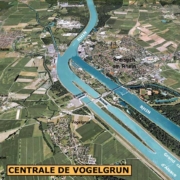
Due to technical issues in making the Vogelgrün dam passable for fish and the current financial difficulties faced by EDF, a surprising decision has been made to demolish the power station. Usually well-informed sources have said the removal should be completed at the same time as the opening of the Haringsvliet in Holland, at the latest by the end of 2018. A planned, hugely expensive mobile fish passage project is to be replaced by accelerating the adaption of the generation facility between Strassburg and Vogelgrün. This should ensure the free passage of salmon as far as Basel by 2020 in order to meet the conditions of the international agreement.
more information : www.salmoncomeback.org
March 15th, the parliament of New Zealand recognised the Whanganui river, the third-longest in the country, as a living entity with the legal status of a person after a 150-year battle by the local Maori people. “The Whanganui River is an indivisible and living whole which includes all its physical and spiritual elements from the mountains of the central North Island to the sea”.
The new status of the river means if someone abused or harmed it the law now sees no differentiation between harming the tribe or harming the river because they are one and the same. The bill allow Whanganui River to represent its own interests and advocate on its own behalf.
Two guardians will be appointed to act on behalf of the Whanganui river, one from the crown and one from the Whanganui iwi (tribe).
“Ko au te awa. Ko te awa ko au”
“I am the river and the river is me”. Maori proverb.
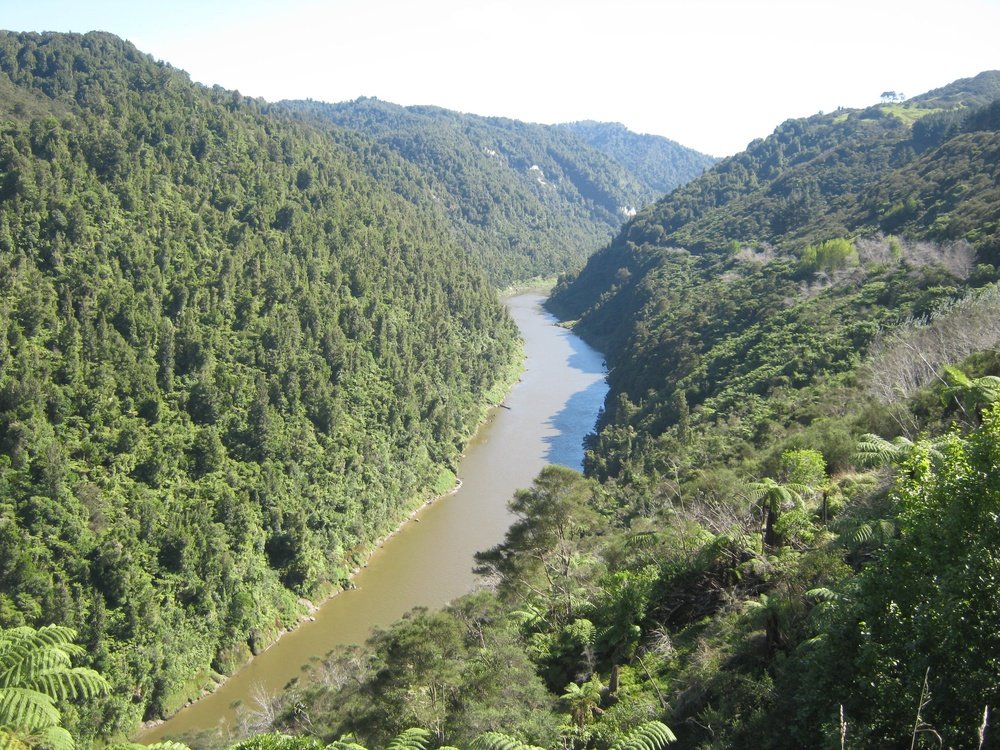
Whanganui river, known by the Maoris as Te Awa Tupua, © Prankster – Creative Commons
Few days latter New Zealand, India granted the same statut to the Ganges and Yamuna Rivers. considered sacred and holy by millions of Indians, these two rivers have been accorded the status of living entities and granting it the same legal rights as a human being, by the Uttarakhand High Court. The new status means if someone pollutes river Ganga, the law will see it equal to harming a human being.
“The Ganga should be saved for the generations to come,” the court added.
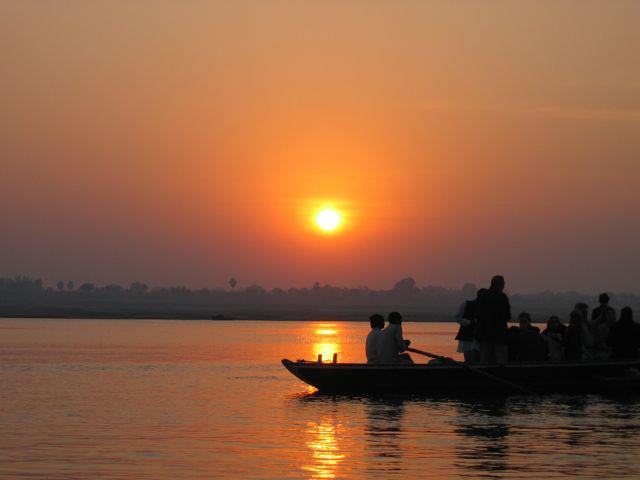
Ganga river at Varanasi © Mukul Kumar singh – CC BY-SA 3.0 – Wikimedia Commons
A coalition of five NGOs including the European Rivers Network (ERN) has launched a platform called “Living Rivers Europe” to closely monitor the upcoming review process of the EU Water Framework Directive [1].
On the 22nd March 2017 – the day celebrated at the global level as “World Water Day” – an event took place at the European Parliament entitled “The Water Framework Directive – Lifeline for European Waters” organised by the Forum on Recreational Fisheries and Aquatic Environment.
The event was chaired by four Members of the European Parliament, from four different political groups, all with a strong interest in this topic: MEP Ulrike Rodust (S&D), MEP Franc Bogovic (EPP), MEP Gerben-Jan Gerbrandy (ALDE) and MEP Linnea Engström (Greens).
The European Commission, represented by François Wakenhut, Director of the European Commission’s Directorate-General for Environment, and stakeholders from both NGOs and industries concerned (Copa Cogeca, Vorarlberger Illwerke AG – an Austrian Hydropower Company) were invited as speakers.
The NGO alliance “Living Rivers Europe” was then officially launched to achieve and secure healthy freshwater ecosystems, with a strong emphasis on the Water Framework Directive review process. “Living Rivers Europe” will campaign for a better implementation, a stricter enforcement and the upkeep of today’s Water Framework Directive’s standards. You can read more about its objectives here.
“Living Rivers Europe” is made up of five international environmental NGOs: the European Anglers Alliance (EAA), the European Environment Bureau (EEB), the European Rivers Network (ERN), the Wetlands International European Association (WI-EA) and the WWF, European Policy Office (WWF EPO).
For the new platform “Living Rivers Europe”, this day marked the beginning of a working process that will stretch into the year 2019.
Read the vision statement of Living Rivers Europe
[1] The Water Framework Directive (WFD) is an EU legislation adopted in 2000 recognising the poor condition of our inland waterways with a legally binding target to achieve good ecological status by 2015. This legislation has contributed to the improvement of water protection in the EU. However, in 2012 the European Commission realised that many Member States would miss the 2015 target as 47% of the EU waters at the time had not reached the good status objectives that were set. A review of this crucial piece of environmental legislation shall take place in 2019 and stakeholders are already getting engaged.
ERN France
8 rue Crozatier
43000 Le Puy en Velay
+33 (0)4.71.05.57.88
ERN is the official WWF Freshwater Partner in France and cooperates with WWF Switzerland, Austria, Netherlands and others