How far will the hydroelectic equipment of weirs in the Loire – Allier basin go?

The Loire-Allier basin is one of the main migration routes for wild Atlantic salmon. NGOs have been working for more than 30 years to protect and restore ecological continuity on this axis. Several successes have been achieved. Large dams have been removed (e.g. Maison-Rouge, Saint-Etienne-de-vigan), the Poutès dam is being completely restructured (partial removal) to reduce its impacts on upstream and downstream migration. Wild Atlantic salmon were saved in extremis on this axis.). (more infos)

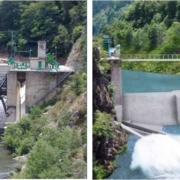
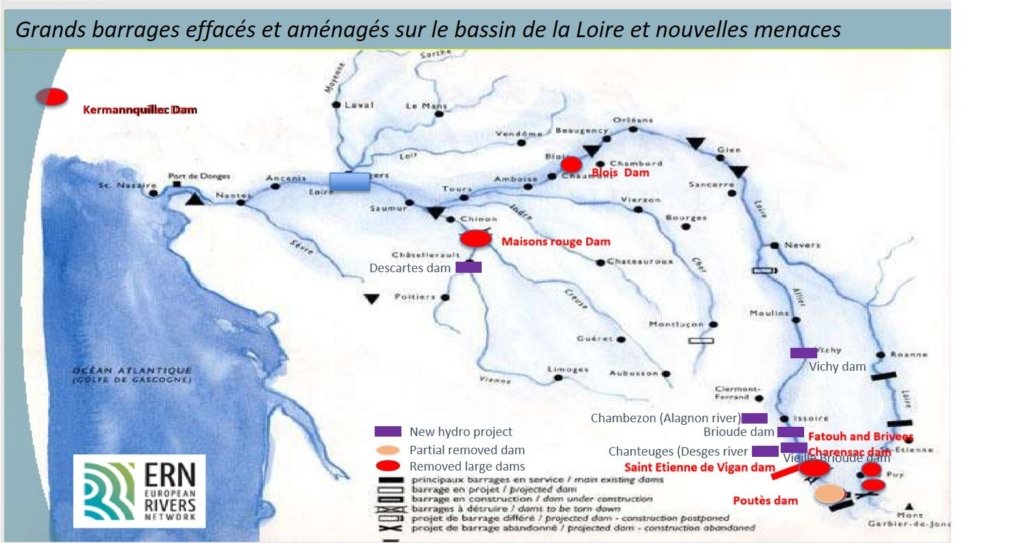
In spite of these victories and the strong biodiversity issue in the basin, at least 6 hydropowerplants are in project on existing weirs and dams with no real uses (see map).

Some projects would worsen the ecological continuity because they would prevent the removal of the dam. There is no denying that the development of renewable energies has entered into competition with biodiversity. What about the basin vision . Who takes care of it in these projects?
To take stock of the situation, avoid certain developments, reduce impacts, compensate as a last resort, SOS Loire Vivante – ERN France and several basin associations will lead in the coming months a series of Webinars and debates which will hopefully lead to a strategic vision for the basin conserving the interests of biodiversity and the river. Upcoming events, see the webinars page (in french only)

Big dam removed or retrofit and new threats on the Loire basin.
Sélune: the work on the Vezins dam is coming to an end!

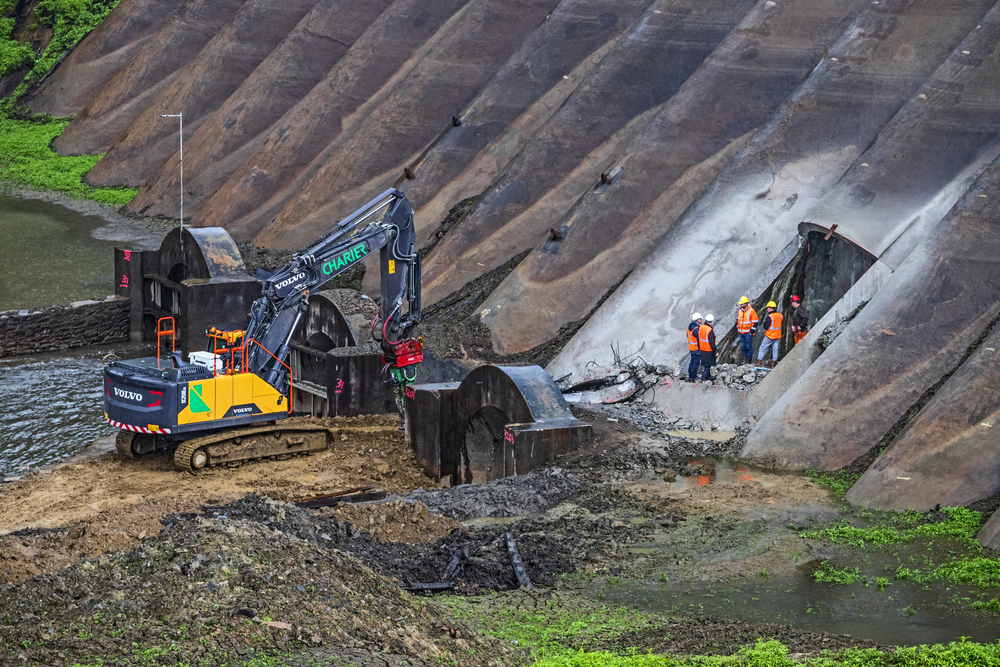
Since March, and in view of the health crisis, the Vezins works carried out by the DDTM 50 has been at a standstill. Only the central pier and the foundations remain today. With some delay, the work will resume until September so that the Sélune can finally be reopened. On the La Roche-qui-boit dam downstream, the only one remaining to date, EDF, the project manager for the site, will launch the sediment management work in June 2020. The final emptying of the reservoir is scheduled for April 2021 and the deconstruction of the dam at the end of 2021-early 2022.

>> More info on our dedicated pages

Europe unveils its Biodiversity Strategy for 2030 : by 2030, the 27 will have to have freed up 25 000 km of rivers

On Wednesday 20 May, Frans Timmermans, Executive Vice-President for the Green Deal, and Environment Commissioner Virginijus Sinkevicius unveiled the Biodiversity Strategy for 2030. Linked to the Green Deal, this strategy aims to halt the loss of terrestrial, lake and marine biodiversity.

Within this framework, strong announcements concern rivers and the restoration of ecological continuity. In 2021 the Member States will have to list the obstacles to the free movement of rivers and the restoration of flood plains. By 2030, the 27 will have to have freed up 25 000 km of rivers. The work of the NGOs, and the Dam Removal Europe coalition, to achieve these announcements has been effective.

With the Water Framework Directive (which we hope will be kept as ambitious by the European Commission despite the pressures – see our Living Rivers Europe page for more information) and now the Biodiversity Strategy and the Green Deal, all is there: the objectives, public policies and tools. So let’s get to work!

Link to the official communication of the European Commission

24-26 sept : Seminary “Selune revival” : great success !

From Septemebr 24-26  will be held a International seminary on the large scale damremoval and the revival of the Sélune Valey in Rennes/Avranches (Mont aint Michel) ; It is the 5th international symposium on the restoration of ecological continuity of rivers!
The conference, will bring together 200 people from 20 different countries as well as from the Sélune River region … !!

> more informations about the event and the organisation

> Read Press Release (French Only)


The partial removal of the Poutès dam enters in the decisive phase.

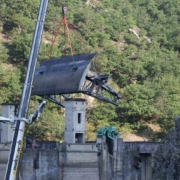
The partial dam removal (New Poutès) on the upper Allier river (Loire tributary) enters in the decisive phase. The three big gates, each weighing 30 tons, are being dismantled. The unic and spectacular operation takes place under the eyes of all the regional media. The deconstruction including the lowering of the dam from 17m to 6.8m will end in 2021. The removal takes time because the up and downstream migration of the salmon un must be respected. For more information visit our dedicated pages

Photo : EDF


Sélune: the demolition of the Vezins dam on the way

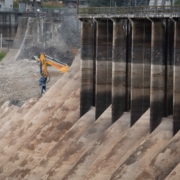
It is a historic moment for Sélune! In recent days the cranes are at work on the left side of the dam and started the deconstruction of Vezins dam itself.

By the end of May the machines were present on site to dismantle the old hydroelectric power plant and make work to be transparent to floods. In this way in June three big openings (4X5meters each) were realized and the three bottom sluices open allowing passage of centennial floods.

In a few weeks another gear will come into action. Already installed at the foot of the dam this crane and 55 meters long articulated arm will dismount the central part of the dam.

Work are schedulde throughout the summer and until the fall.

The international media cover the Selune case : among others the international network of WWF, the BBC, AL Jazeera, La Vanguardia and Eldiario in Spain, Dennik N in Slovakia will report on the spot.

More about the project and the steps that led to this decision, see our dedicated page


New Poutès : the three sluices will be removed at the end of this summer

The work for the new Poutès in the upper part of the Allier basin (France) is ongoing. And we will soon have an important momentum in the history of the Poutès dam. Indeed, at the end of the summer, the three sluices, each 14x5m and 20 tons, will be removed from the structure.

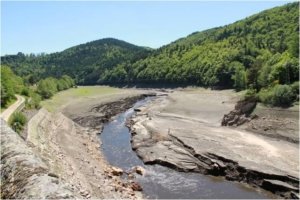
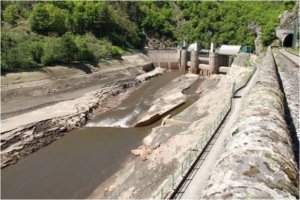
Since the end of May, the reservoir is completely emptied, revealing the old bed of the Allier river.

The bottom sluice gate is fully open. The machines will soon invest the area. A platform that will remain until 2021 (expected end of works) will be installed in front of the dam to allow work on the structure. A crane will then take the sluice, put them on the platform, where they will be cut before joining a revaluation workshop. The reservoir will be refill during the winter 2019. The removal of a part of the dam itself will then continue during spring of 2020 after the smolts downstream migration.

See schedule for work until 2021, and the history of Poutès dam in our dedicated webpage

Reminder, the Poutès dam will be lowered by 10 meters (now it is 17m) and completely retrofit to facilitate fish migration and sediment transport.

© Louis Sauvadet – APS – 31 mai 2019

© 2016-2026 Tous droits réservés | European Rivers Network