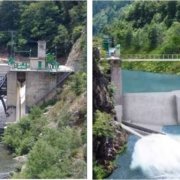
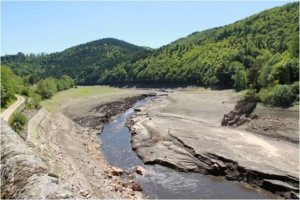
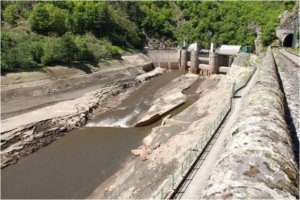
An overview of the Sélune conference by the AFB has just been published

The French Agency for Biodiversity has just published its latest issue :

– Effacement de barrages, Quand la Sélune reprend son cours, – 24 au 26 septembre 2019, Les Rencontres, OFB, n°70,  déc.2019, french
Dam removal: The Sélune River free to run – 24 to 26 september 2019, Les Rencontres, OFB, n°70,  déc.2019, english

This 6-page issue is entirely devoted to the Sélune conference held from September 24 to 26 in Rennes and Avranches.

A more detailed 60-page book on the conference communications is also being prepared.

60 years ago, the Malpasset Dam (Fréjus, France) broke…

The recent anniversary of the failure of the Malpasset dam (Fréjus-France) remind us how dangerous dams can be for human populations.

It was 60 years ago but the drama is still fresh in people mind. On December 2, 1959, the Malpasset dam, under the effect of torrential rains saturating its capacity, released 50 million cubic meters of water, in a wave of 60 meters high, making more than 400 victims…

Too many other dam-breaking accidents have already occurred in Europe. For example :

  • In 1923, the failure of the Gleno dan (Italia) caused 500 victims
  • In 1959, a dam failure in Vega de Tera reservoir (Zamora Spain), caused 144 deaths
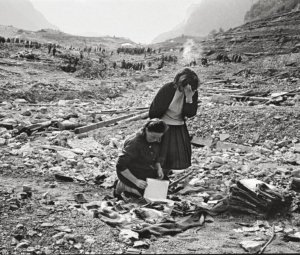
  • In 1963, the overflow of the Vajont dam in Italia caused almost 2000 deaths…
  • etc…

Nowadays, although technologies have progressed, the persistence of this risk is unacceptable, especially when we add it to all the other negative impacts of dams on rivers. One reason more to avoid them…

Photo : Vajont dam disaster (Italia- 1963) – Archive photo

A new guideline on Hydroelectric Power Development by the European Investment Bank


The European Investment Bank has just published a guideline ” Environmental, Climate and Social Guidelines on Hydropower Development”.
It set out the EIB’s objectives for investments in hydropower projects, establishing sector-specific standards and criteria, which promoters should meet.

They also summarise best practice recommendations for integrating social, biodiversity, natural resource management and climate considerations into hydropower projects.

They have been written for use by hydropower promoters, who should take the requirements and recommendations into account from the early stages of the project development cycle, preferably during the pre-feasibility stage. The guidelines will also serve as a reference for other stakeholders with interests in hydropower projects.

It is stipulated that EIB (and where appropriate its financial intermediaries) will treat potential hydropower investments on a case-by-case basis, assessing the features of the project and information on the biophysical and socioeconomic context within which the project would be constructed,rehabilitated or refurbished, and subsequently when it is operational and,if appropriate, ultimately decommissioned. EIB will promote best practice mitigation of environmental and social impacts and risks.

> Read the environmental-climate-and-social-guidelines-on-hydropower-development

Colloque Sélune Rennes

Selune Valley Revival: a successful international conference!

The International Dam removal Conference held from the 24th to the 26th of September, organised by ERN with support from numerous partners was a great success. Participants came from 20 countries and three continents with 30% from the local, Rennes-Avranches region.

The day preceding the conference itself participants and the locals attended a debate “Salmon in our rivers: myth or reality?” organized by Brittany Great Migrators for the International Year of the Salmon.

Interaction was lively and diverse, beginning with a discussion on the importance of ecological continuity for rivers. The presentation of dam removal projects in France and abroad including feedback, has come to remind us that the restoration of ecological continuity is a transcontinental movement affecting all countries. Benefits to the quality of our rivers and territories are very real. Examples presented show just how much French territory profits from a committed, leading policy in this field.

Central to the debates was the Sélune river, with the presentation of work in progress including the first results of the remarkable scientific monitoring program coordinated by INRA, which has taken place over the past fifteen years. This didn’t leave out the sociological issues of dam removal, indeed they were put at the heart of the dialogue via the restitution of the sociological study conducted on the Sélune with strong participation and expressions of their feelings by the association of the Friends of the Dams. Hopefully many positions were understood from all sides.

In summary, a fascinating conference with a lot of ideas exchanged in a pleasant atmosphere, and in the beautiful setting of Rennes and the wonderful bay of Mont Saint Michel and Vallée de Sélune!

Thank big you to all participants, stakeholders, and funding partners for making this event possible.

More infos https://www.ern.org/en/colloque-international-selune/

> Presentations, talks and more informations  

24-26 sept : Seminary “Selune revival” : great success !

From Septemebr 24-26  will be held a International seminary on the large scale damremoval and the revival of the Sélune Valey in Rennes/Avranches (Mont aint Michel) ; It is the 5th international symposium on the restoration of ecological continuity of rivers!
The conference, will bring together 200 people from 20 different countries as well as from the Sélune River region … !!

> more informations about the event and the organisation

> Read Press Release (French Only)


The partial removal of the Poutès dam enters in the decisive phase.

The partial dam removal (New Poutès) on the upper Allier river (Loire tributary) enters in the decisive phase. The three big gates, each weighing 30 tons, are being dismantled. The unic and spectacular operation takes place under the eyes of all the regional media. The deconstruction including the lowering of the dam from 17m to 6.8m will end in 2021. The removal takes time because the up and downstream migration of the salmon un must be respected. For more information visit our dedicated pages

Photo : EDF


40 % of Vezin Dam Remova completed l

The largest european dam removal is under way. 40 % of the 37 m dam are dismanteld today.

Photos and videos are availabe on demande.

Normally the removal the dam itselfs will be completed end of september, just in time with the international dam removal seminary helt in Rennes and Avranchen (Mont Saint Michel) September 24- 26 organised  by ERN and its partners.

More on the the Sélune dam removals

Logo ERN, petit format

UK : Whaley Bridge dam – Work to prevent from bursting is continuing (BBC)

Work to prevent a damaged dam in Derbyshire from bursting is continuing as the Met Office warns of thunderstorms and possible flooding.

Workers have been pumping water out of the 300-million-gallon Toddbrook Reservoir near Whaley Bridge.

Extra pumps are being installed to speed up the work and contractors are putting concrete between bags of ballast placed on the dam wall.

But the risk of collapse remains at a “critical level”.

> https://www.bbc.com/news/uk-england-derbyshire-49217887

> https://www.bbc.com/news/uk-england-derbyshire-49201467

Sélune: the demolition of the Vezins dam on the way

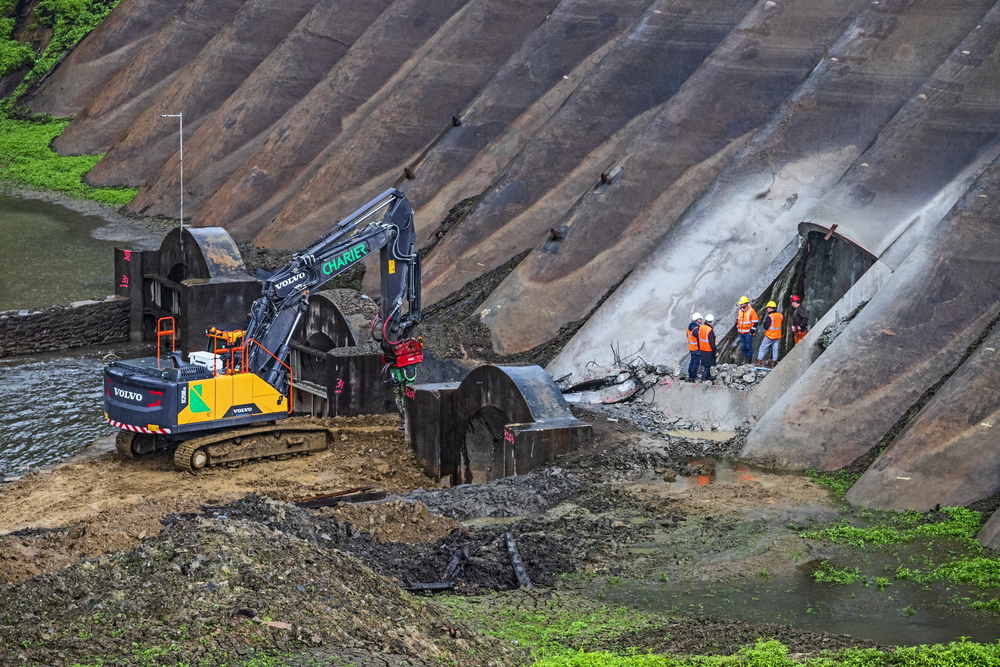
It is a historic moment for Sélune! In recent days the cranes are at work on the left side of the dam and started the deconstruction of Vezins dam itself.

By the end of May the machines were present on site to dismantle the old hydroelectric power plant and make work to be transparent to floods. In this way in June three big openings (4X5meters each) were realized and the three bottom sluices open allowing passage of centennial floods.

In a few weeks another gear will come into action. Already installed at the foot of the dam this crane and 55 meters long articulated arm will dismount the central part of the dam.

Work are schedulde throughout the summer and until the fall.

The international media cover the Selune case : among others the international network of WWF, the BBC, AL Jazeera, La Vanguardia and Eldiario in Spain, Dennik N in Slovakia will report on the spot.

More about the project and the steps that led to this decision, see our dedicated page


New Poutès : the three sluices will be removed at the end of this summer

The work for the new Poutès in the upper part of the Allier basin (France) is ongoing. And we will soon have an important momentum in the history of the Poutès dam. Indeed, at the end of the summer, the three sluices, each 14x5m and 20 tons, will be removed from the structure.

Since the end of May, the reservoir is completely emptied, revealing the old bed of the Allier river.

The bottom sluice gate is fully open. The machines will soon invest the area. A platform that will remain until 2021 (expected end of works) will be installed in front of the dam to allow work on the structure. A crane will then take the sluice, put them on the platform, where they will be cut before joining a revaluation workshop. The reservoir will be refill during the winter 2019. The removal of a part of the dam itself will then continue during spring of 2020 after the smolts downstream migration.

See schedule for work until 2021, and the history of Poutès dam in our dedicated webpage

Reminder, the Poutès dam will be lowered by 10 meters (now it is 17m) and completely retrofit to facilitate fish migration and sediment transport.

© Louis Sauvadet – APS – 31 mai 2019