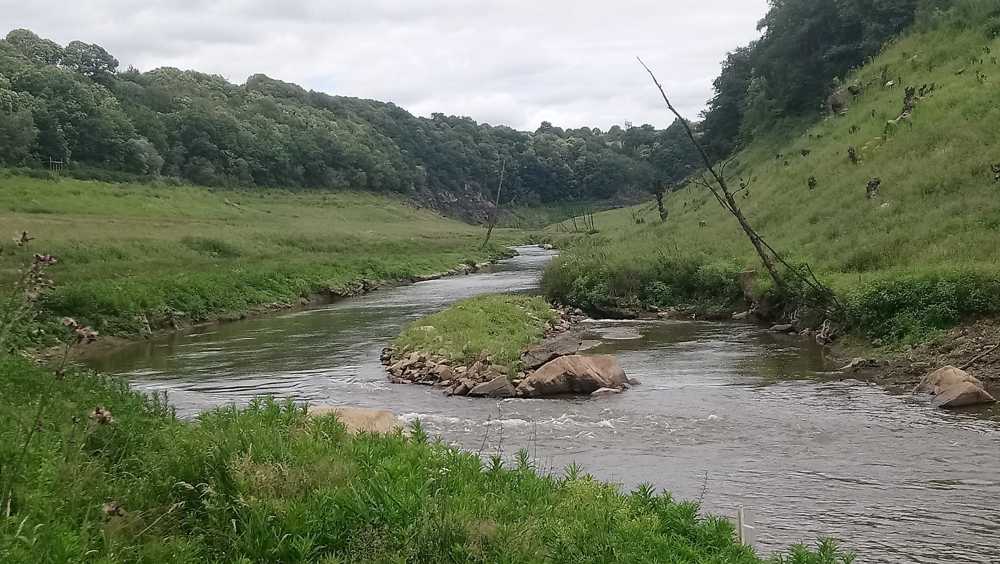
One year after the complet emptying of the reservoir, the Selune river is already welcoming its new inhabitants. Jean-Marc Rousel from INRA tells us “1km upstream the former Vezins dam the river is breathing vigorously now, incredibly rich in habitats and many invertebrates species (stone flies, caddis flies, dragon flies…) and some fish too! In particular the Sculpin (Cottus gobio) has returned from upstream. The invasive American crayfish is also spreading from downstream… but its upcoming predator, the European eel, is waiting for its turn, below the second dam (La Roche-qui-boit), ready for ascending…”.
https://www.ern.org/wp-content/uploads/sites/52/2020/07/DSC_0651_bd.jpg5641000Corinne Ronothttp://www.ern.org/wp-content/uploads/sites/52/2017/03/ERN_logo.pngCorinne Ronot2020-07-06 15:49:222020-07-06 16:14:12Selune River comes alive upstream the Vezins Dam
The June 29th webinar “Smart Ways to improve connectivity river” was a great success. If you missed the event and want to watch some presentations again, you can now watch the webinar video online.
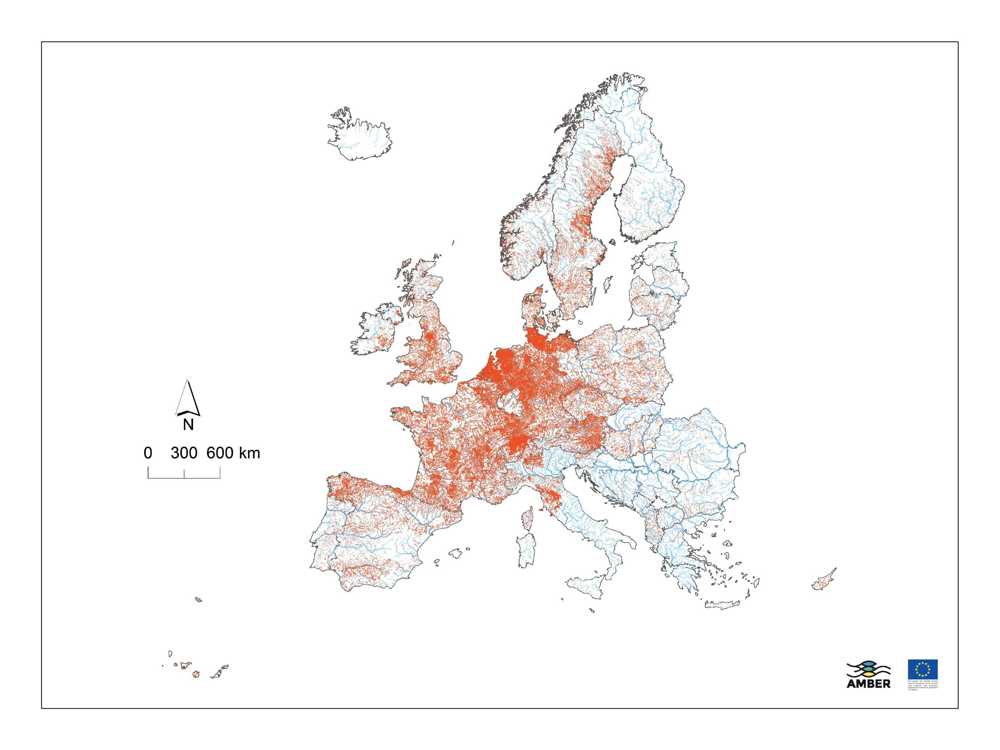
One of the main outputs of AMBER is the Pan-European Atlas of In-Stream Barriers. It contains information on 630,000 barriers including not only large dams, but also hundreds of thousands of smaller weirs, ramps, fords and culverts. However, AMBER researchers have found that more than one third of barriers are unrecorded, bringing the total to well over 1 million. Of these 1 million, over 100,000 are obsolete barriers deteriorating Europe’s rivers. This scale of river fragmentation is alarming and makes Europe the most fragmented river landscape in the world, with hardly any unfragmented, free-flowing rivers left. more : https://amber.international/our-research-finds-at-least-100000-obsolete-barriers-are-fragmenting-and-deteriorating-europes-rivers/
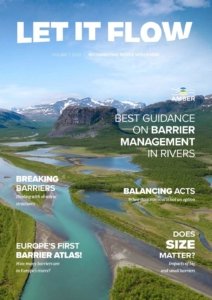
To finish the 4-year AMBER project, EU-funded under the Horizon 2020 initiative, a magazine Let it flow | Reconnecting People with Rivers was produced. Throughout this magazine, the Amber project shares results, thoughts, and ambitions for the future. Inside, is illustrated the issues of river fragmentation and restoration in Europe and abroad and what can be done to tackle these challenges.
For France, EDF (national electricity compagny) and CNSS (National Conservatory of Wild Salmon) were partners in the project, notably to study the smolt downstream migration the reservoir. The reconfiguration of the Poutès dam and its stakes are widely presented in the video presentation of the AMBER program (2min out of the 4.50min video). Video soon available and preview at 3h’42min’40sec of the webinar video.
The goal that unites the Dam Removal Europe Partner (ERN is a co-founding member) since 5 years is the removal of obstacles in rivers, for free and living rivers. The movement, thanks to these partners with a rich diversity of skills from engineering and policy, conservation and field biology, to science, has grown rapidly and is now well established within European nature conservation.
As the Dam Removal Europe coalition expands and looks to the future, the team has created a strategy document outlining past, current and future goals for the upcoming decade. The mission aims to scale up the dam removal movement to all European countries and to help free Europe’s rivers from more than 100,000 obsolete and out-of -use barriers.
We know the benefits of dam removal (significant positive environmental impacts, cost effectiveness, support for job creation, etc.) and we want more people across Europe to know and choose this option for river restoration.
See our strategic report 2020 – 2030 which describes how we will increase our efforts and achieve our new goals.
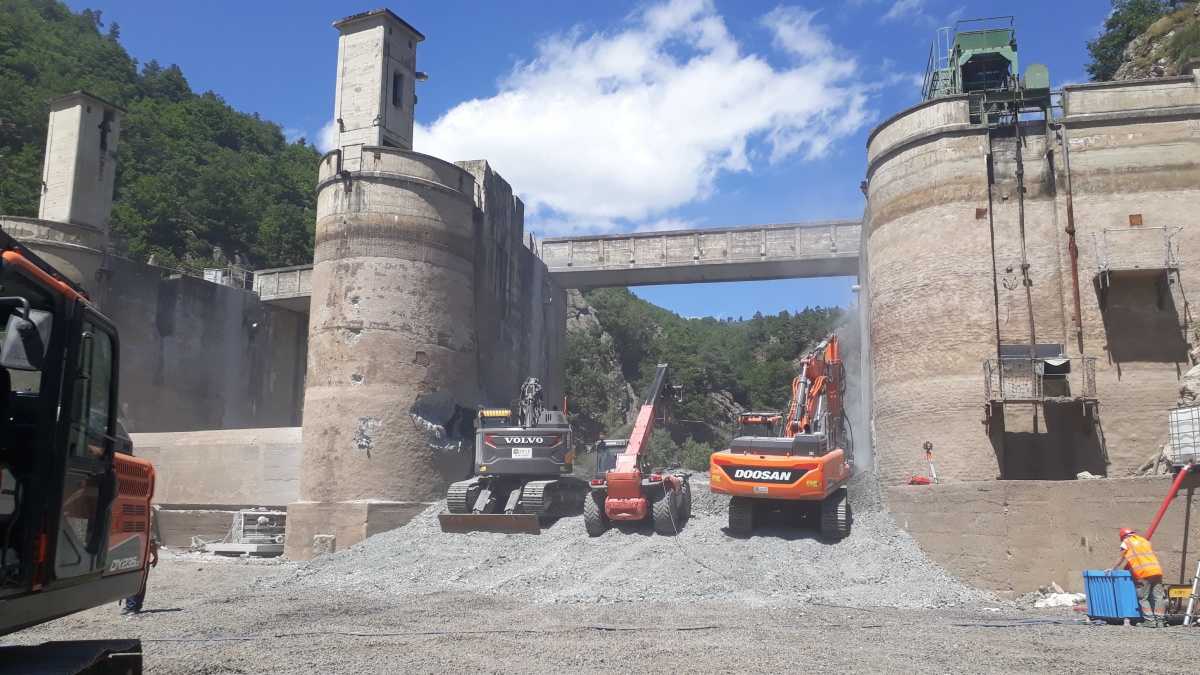
This year, the 3 weirs and the 2 piers will be lowered and the footbridge removed. A notch on the left bank will be created and will allow the circulation of water, fish and sediments without hindrance until the summer of 2021 ! The devices for upstream and downstream migration will start to be modified to correspond to the new coasts and standards of the dam (digging under the elevator in particular).
All the details in the video below
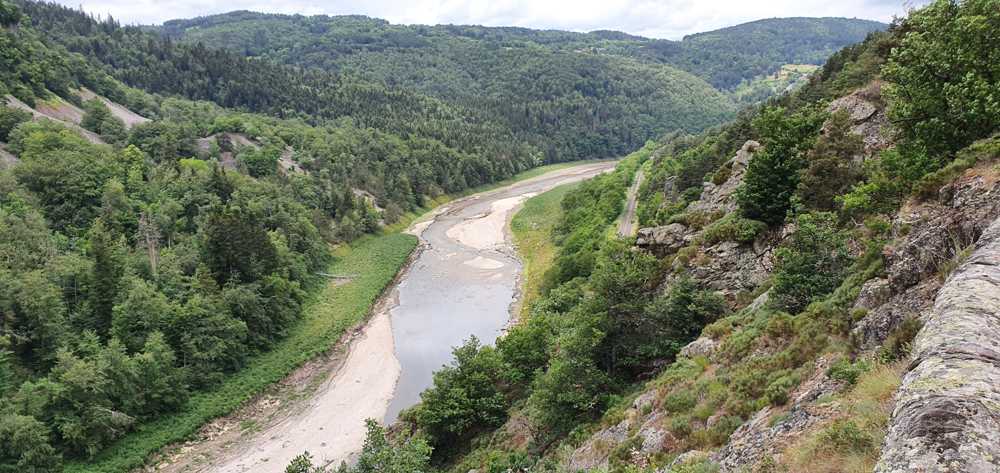
The Allier has already recovered its natural profile, as shown by the photo taken in the old reservoir after the emptying.
On the 12 of June, a major flood occurred on the Allier (400m3/s at Poutès against 16m 3/s for the module), it crossed the dam without constraint. The warning systems of the Cristal network were effective. The works were suspended and the platform created to work at the foot of the Poutès dam could be evacuated in time without affecting the equipment or the men!
https://www.ern.org/wp-content/uploads/sites/52/2018/06/NouveauPoutesOptimise_-e1528387626184.jpg500809Corinne Ronothttp://www.ern.org/wp-content/uploads/sites/52/2017/03/ERN_logo.pngCorinne Ronot2020-07-01 08:52:502020-07-06 16:40:07Poutès Dam on the Allier river : Deconstruction ongoing !
On the 29th of June from 10:00 to 13:40, will take place the AMBER (Adaptive Management of Barriers in European Rivers) final webinar on Zoom plateforme. Over 800 confirmed attendees to date. The AMBER project unveils Europe’s first map of river barriers and what that means for the state of our rivers.
This webinar will include presentations from both the AMBER and FIThydro projects with 12 speakers from around Europe who will discuss river fragmentation and better ways to manage and mitigate barrier impacts. The programme is structured around facilitated discussions on three pressing topics: 1) the need to reconnect rivers; 2) the innovations, the tools and solutions available for better barrier management and 3) the applications, a framework for reconnecting Europe’s rivers.
https://www.ern.org/wp-content/uploads/sites/52/2017/04/Logo-AMBER-e1472810101382.png113200Corinne Ronothttp://www.ern.org/wp-content/uploads/sites/52/2017/03/ERN_logo.pngCorinne Ronot2020-06-22 09:20:382020-06-22 09:27:03AMBER webinar on the 29th of June : register
Dam Removal Europe and WWF Netherlands launched just two years ago a crowdfunding platform for dam removal in Europe.
Since 2018, seven projects on the Danube, in Lithuania and the UK have been completed thanks to this fundraising.
The possibilities to submit a project (see conditions) and to participate financially are still open.
The current campaign is taking place in Ukraine for three dams in the Carpathians. 40% of the objective has been reached (out of the 31 000€)! Participate in fundraising. More info on the project and donate : https://crowdfunding.wnf.nl/project/three-dams-in-ukraine.
https://www.ern.org/wp-content/uploads/sites/52/2020/06/crowdfunding_DRE_bd.jpg3661170Corinne Ronothttp://www.ern.org/wp-content/uploads/sites/52/2017/03/ERN_logo.pngCorinne Ronot2020-06-18 11:09:482020-06-23 15:28:00Do you know the crowdfunding platform for dam removal?
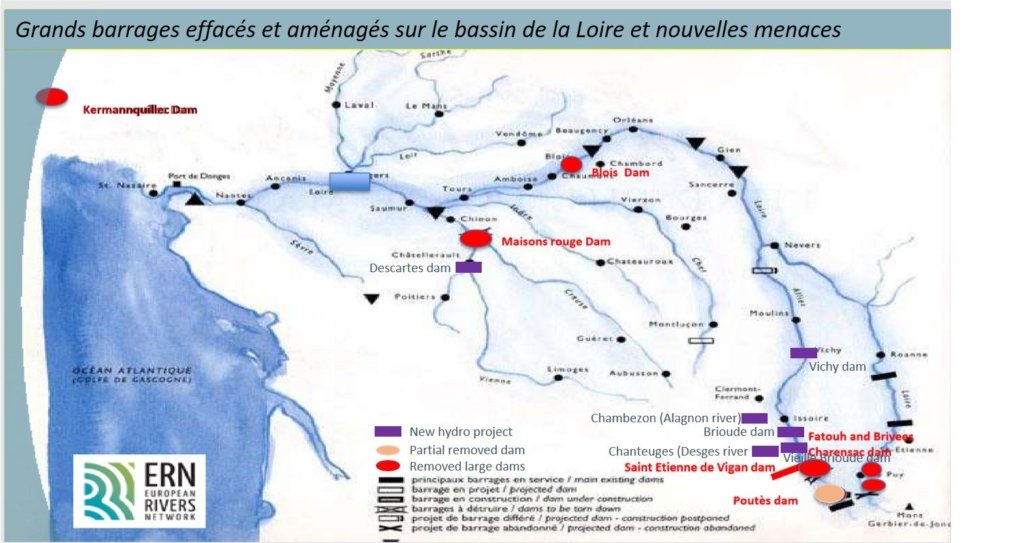
The Loire-Allier basin is one of the main migration routes for wild Atlantic salmon. NGOs have been working for more than 30 years to protect and restore ecological continuity on this axis. Several successes have been achieved. Large dams have been removed (e.g. Maison-Rouge, Saint-Etienne-de-vigan), the Poutès dam is being completely restructured (partial removal) to reduce its impacts on upstream and downstream migration. Wild Atlantic salmon were saved in extremis on this axis.). (more infos)
In spite of these victories and the strong biodiversity issue in the basin, at least 6 hydropowerplants are in project on existing weirs and dams with no real uses (see map).
Some projects would worsen the ecological continuity because they would prevent the removal of the dam. There is no denying that the development of renewable energies has entered into competition with biodiversity. What about the basin vision . Who takes care of it in these projects?
To take stock of the situation, avoid certain developments, reduce impacts, compensate as a last resort, SOS Loire Vivante – ERN France and several basin associations will lead in the coming months a series of Webinars and debates which will hopefully lead to a strategic vision for the basin conserving the interests of biodiversity and the river. Upcoming events, see the webinars page (in french only)
Big dam removed or retrofit and new threats on the Loire basin.
https://www.ern.org/wp-content/uploads/sites/52/2020/05/Vichy_IMG_5534lowrecadre.jpg6321200Corinne Ronothttp://www.ern.org/wp-content/uploads/sites/52/2017/03/ERN_logo.pngCorinne Ronot2020-06-16 14:15:472020-06-16 15:46:59How far will the hydroelectic equipment of weirs in the Loire – Allier basin go?
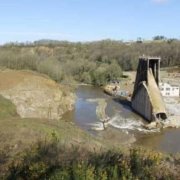
Since March, and in view of the health crisis, the Vezins works carried out by the DDTM 50 has been at a standstill. Only the central pier and the foundations remain today. With some delay, the work will resume until September so that the Sélune can finally be reopened. On the La Roche-qui-boit dam downstream, the only one remaining to date, EDF, the project manager for the site, will launch the sediment management work in June 2020. The final emptying of the reservoir is scheduled for April 2021 and the deconstruction of the dam at the end of 2021-early 2022.
https://www.ern.org/wp-content/uploads/sites/52/2020/03/SeluneBarrageSud-143027-CR-SnipImage_DDTM50-Auteurs-de-Vues-recadre_bd.jpg346998Corinne Ronothttp://www.ern.org/wp-content/uploads/sites/52/2017/03/ERN_logo.pngCorinne Ronot2020-05-28 10:25:392020-06-02 10:44:42Sélune: the work on the Vezins dam is coming to an end!
On Wednesday 20 May, Frans Timmermans, Executive Vice-President for the Green Deal, and Environment Commissioner Virginijus Sinkevicius unveiled the Biodiversity Strategy for 2030. Linked to the Green Deal, this strategy aims to halt the loss of terrestrial, lake and marine biodiversity.
Within this framework, strong announcements concern rivers and the restoration of ecological continuity. In 2021 the Member States will have to list the obstacles to the free movement of rivers and the restoration of flood plains. By 2030, the 27 will have to have freed up 25 000 km of rivers. The work of the NGOs, and the Dam Removal Europe coalition, to achieve these announcements has been effective.
With the Water Framework Directive (which we hope will be kept as ambitious by the European Commission despite the pressures – see our Living Rivers Europe page for more information) and now the Biodiversity Strategy and the Green Deal, all is there: the objectives, public policies and tools. So let’s get to work!
https://www.ern.org/wp-content/uploads/sites/52/2020/06/eclogo.jpg189300Corinne Ronothttp://www.ern.org/wp-content/uploads/sites/52/2017/03/ERN_logo.pngCorinne Ronot2020-05-22 15:24:462020-07-02 15:28:47Europe unveils its Biodiversity Strategy for 2030 : by 2030, the 27 will have to have freed up 25 000 km of rivers
is a day dedicated to solidarity – when diverse communities around the world come together with one voice to say that our rivers matter. That communities having access to clean and flowing water matters. That everyone should have a say in decisions that affect their water and their lives. That it’s our time to stand up for these rights, now more than ever.
This year’s Day of Action for Rivers theme focuses on Women, Water, and Climate Change. Last year, 100 women from 32 countries who are leading efforts to protect and defend rivers gathered at the first Women and Rivers Congress .
More information on all events. Some has bee canceled (Coronoa)
https://www.ern.org/wp-content/uploads/sites/52/2020/03/intldayofaction-e1646960708510.png10001000Roberto Epplehttp://www.ern.org/wp-content/uploads/sites/52/2017/03/ERN_logo.pngRoberto Epple2020-03-15 15:18:522020-03-15 15:33:1114 March – The International Day of Action for Rivers
 ERN France
 ERN is the official WWF Freshwater Partner in France and cooperates with WWF Switzerland, Austria, Netherlands and others