Dams have had their day: EU governments must ramp up ambition on their removal
Brussels – 19 April 2018
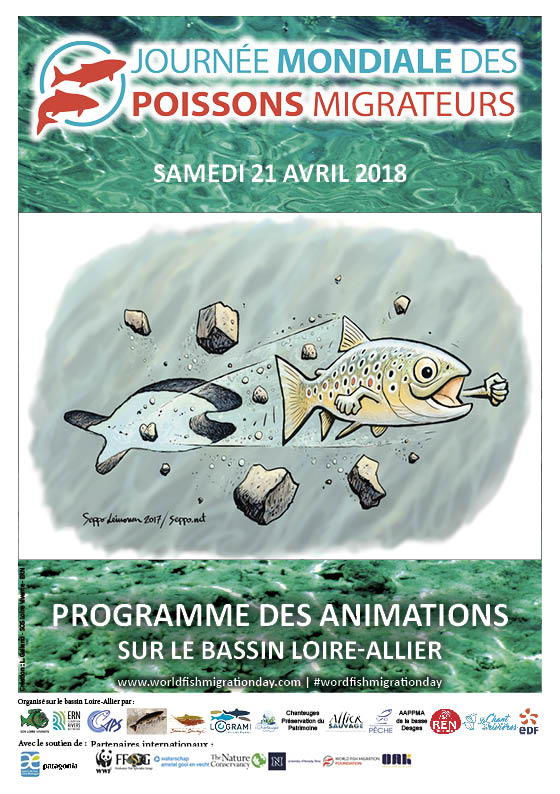
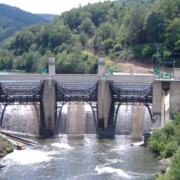
World Fish Migration Day – which takes place on 21 April – is a day to celebrate the incredible journey migratory fish undertake to mate. But many never reach their final destination due to tens of thousands of large and small dams, which have been wrecking Europe’s rivers and blocking fish migration routes for generations. And if that weren’t enough, plans for thousands of additional dams are still in the pipeline.
Sergiy Moroz, Senior Policy Officer for Water and Biodiversity at the European Environmental Bureau (EEB) said: “Fragmenting rivers with dams, barrages and other infrastructure is a key reason for the significant losses of fish and other freshwater species across Europe, as well as for the poor state of many of our water bodies [1]. Removing old or obsolete dams helps to restore a river’s connectivity, bringing hope for migratory fish species, such as salmon, eel and sturgeon. This is also one effective way for Member States to meet their legal commitments under the EU Water Framework Directive.”
Despite the destructive effect they have had on our rivers, thousands of hydropower dams are projected to be built all across Europe. Eastern Europe and the Balkans, which hold some of Europe’s most pristine and last few remaining free flowing rivers, are especially vulnerable. However, there has also been a worrying surge in hydropower in parts of Central and Western Europe, where rivers have been heavily modified and degraded for centuries – in Austria alone, around 200 additional hydropower plants are projected to be built.
And there are even plans to resuscitate projects that have been repeatedly declared dead. For instance, the Acheloos River in Greece has been the site of a battle against a water transfer project dating back to the 1980s, which would involve the construction of four dams. The destructive scheme has been blocked through six court rulings, most recently thanks to the Water Framework Directive [2], but the Greek government still hopes to complete the construction of the partly-built Sykia dam – the key point for the completion of the project.
“Dams have had their day in Europe – we must now focus on bringing life back to our rivers”, said Andreas Baumüller, Head of Natural Resources at WWF’s European Policy Office, “It is crucial that EU governments now fully commit to their legal obligations under the Water Framework Directive. It’s time for them to shape up, start taking dam removal seriously, and put a firm stop to any damaging projects that are in the pipeline.”
Dam removals have slowly started to pick up the pace in Europe, and the Water Framework Directive’s ambitious goals, timeline, and visionary approach to water management have been instrumental. It is estimated that around 4,500 obstacles of varying sizes have so far been removed in Europe [3] and, just last year, the French government announced the largest dam removal in Europe to date [4]. Work also began last week on removing the Yecla de Yeltes dam in Spain [5] and the demolition of a number of obstacles in Finland, Spain and the Netherlands are also on the cards.
“These removals are a step towards bringing Europe’s rivers back to life, but there is still a long way to go”, said Mark Owen of the European Anglers Alliance “Dams have dire consequences for migratory fish species, and they also degrade the biodiversity in and around these rivers. We need fewer obstacles and more free flowing rivers, otherwise the EU will never be able to halt biodiversity loss by 2020, as required by its own biodiversity strategy [6].”
_____________________________________________________________________________________
Notes to the editors:
[1] The State of Nature in the EU, European Commission, 2015
[2] The Water Framework Directive was the basis for the latest ruling from the Greek Supreme Court on the Acheloos water transfer project in 2014
[3] ‘INTERVIEW with Dam Removal Europe’, Sustain Europe, 2018, http://www.sustaineurope.com/interview-with-dam-removal-europe-20180224.html
[4] ‘River revolution in Europe as France launches largest dam removal project on the continent’, WWF, 2017, http://www.wwf.eu/?uNewsID=317032
[5] ‘La CHD inicia el derribo de la presa de Yecla de Yeltes’, Salamanca RTV al día, 2018, http://salamancartvaldia.es/not/177064/chd-inicia-demolicion-presa-yecla-yeltes/
[6] EU Biodiversity Strategy, European Commission, 2011
> Link to Living Rivers Europe’s position paper
>About the Water Framework Directive
- The Water Framework Directive is one of the EU’s most progressive pieces of environmental legislation. It requires the protection, enhancement and restoration of our rivers, wetlands, lakes and coastal waters, but Member States are currently failing make it work on the ground;
- Under the Water Framework Directive, EU governments have committed to ensure no deterioration and achieve good status for the vast majority of all water bodies by 2015, and at the very latest by 2027;
- Where implemented, the Water Framework Directive has proved to be effective in achieving its goals of good water status and non-deterioration, successfully balancing environmental, social and economic requirements.
For more information please contact:
Sophie Bauer, Communications Officer (Freshwater), WWF European Policy Office
sbauer@wwf.eu
+32 471 05 25 11
Download the Press Release in pdf