Water governance by the government and the Department of Agriculture won’t work

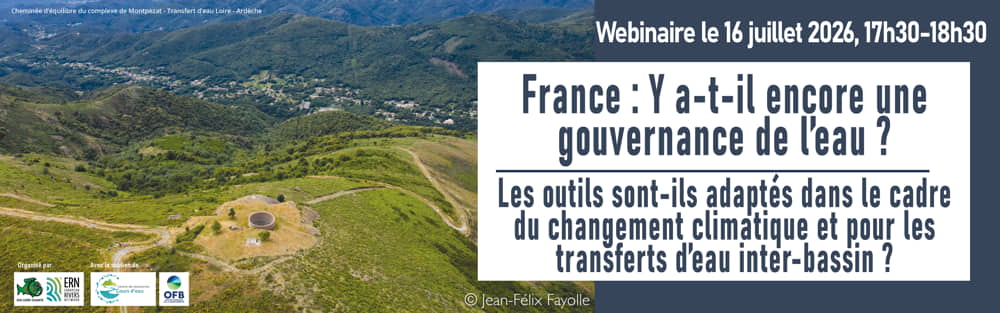
During the webinar on water governance and sharing, Thierry Burlot, President of the Loire-Bretagne River Basin Committee and President of the Cercle Français de l’Eau, discussed the measures needed to defuse the debate and improve governance and financing of the small and large water cycles.
>> REPLAY

Key moments from the webinar, summary points (first part, from 5:00 to 33:00):

A recognition that the general public has failed to grasp the issues at stake: the goals we set for our rivers in the SDAGE plans are no longer understandable to the general public and elected officials; “the water sector has become too technical.”
The achievements of the 1964 law (recognition of hydrographic boundaries, participatory democracy, the “water pays for water” principle) have not held up:
There is no political legitimacy for the river. The hydrographic boundary is used to divide municipalities, intermunicipal communities, departments, and regions.
Water democracy does not exist. There is no “water parliament.” The parliament consists of the Senate and the National Assembly. Water governance—that is, the river basin committees—technically exists, but it is weak. It is ignored, given little attention, and sometimes even scorned, especially when it begins to make strong statements about the river.
Funding for the small water cycle (the “polluter pays” principle) worked well as long as we lived in abundance and focused primarily on drinking water and sanitation systems. But now that the government has called for funding to improve water quality, protect water catchments, carry out restoration projects, and implement agri-environmental and climate measures—in other words, the large water cycle—things are becoming more complicated. According to a study by the Cercle Français de l’Eau, if we are to adequately address the full water cycle and its financing, we are short about 15 billion euros per year. Should the small water cycle be expected to finance the full water cycle?
Even though it’s the same water, even though we’re talking about an essential resource, the governance and financing of the large and small water cycles are not at all the same.
Today we must realize that without water, we can do nothing, and that we need to make decisions collectively—through listening, empathy, and collaborative decision-making. But above all, we must not act as is currently done in the National Assembly or the Senate—or, more precisely, by declaring an “absolute emergency,” taking what I need, helping myself, and discussing it afterward.


We should certainly consider a new water law that is commensurate with the challenges at hand. We have to start from scratch when it comes to the water cycle. By properly managing this common good, we will foster development, but only to the extent of our regional capacities. The environment is not a constraint; it is an ambition. We must support those who protect the common good. When there is no more water left, that is when we will truly face a recession.
Droughts make us realize just how fragile we are. The economy, urbanization, the development of cities and rural areas, and agriculture all require water. We’ll need to foster solidarity among regions through bodies organized around watersheds, move beyond self-interest, and understand that water quality will depend on the efforts each of us makes.
The problem of floods and droughts is addressed through conservation, slowing the flow of water, storing water in the soil, and other measures that we’ll have to implement on the ground—even in areas that won’t necessarily benefit from them immediately. That’s where we need to show solidarity. The pressure on farms today can lead to frustration, which is understandable, but now is the time to look beyond our immediate concerns and think together—and it is a mistake to think that the government, acting alone with farmers, could solve this problem.
How to improve governance: watersheds, shared governance, solidarity among institutions, and funding. We have used rivers to separate people, to separate municipalities, to separate departments, and to separate regions. And today, rivers must bring us closer together.

The rest (Inter-basin water transfers: the debate must belong to the regions and citizen democracy) will be covered in an upcoming news update or is already available to listen to on the >> REPLAY 
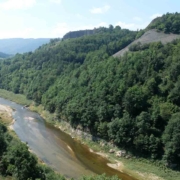
The exhibition “The Journey of a Grain of Sand” has just opened

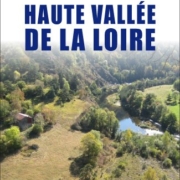
This exhibition, organized by SOS Loire Vivante – ERN with support from the Loire-Bretagne Water Agency as part of the Haut-Allier territorial contract, invites you to follow the journey of rocks and grains of sand from the headwaters of the Allier to the Atlantic Ocean. You’ll learn about their role in how rivers function and the vital role that flooding plays in maintaining healthy rivers. You’ll see how human activities can disrupt sediment transport. Many restoration projects are possible, from upstream to downstream, and have in fact been carried out on the Allier and the Loire. Come check out the six panels! (in french only) :

Panel 1: Discovering Sediments
Panel 2: From the Mountains to the Ocean
Panel 3: “From Station to Station” to the Rhythm of Floods…
Panel 4: The River: The Largest Sand Transport Company!
Panel 5: A Journey Full of Pitfalls…
Panel 6: Letting Travelers Pass

View the exhibition in PDF ; a printed version on an 85×200 roll-up banner is available for loan upon request—please contact us


European laws that protect our environment are under threat. Sign the petition

Our nature and our health are under attack. European laws that guaranteed clean water, pure air and diverse ecosystems, including the Water Framework Directive, are being quietly dismantled under the pretext of ‘simplification’ and ‘reducing red tape’.

More infos about the petition launched by the European NGO coalition #HandsOffNature, which requires our national and European leaders to uphold laws that protect people and nature.

  Together, let’s protect the EU law on Water! 

 Petition :


France : Resilience Day : SOS Loire Vivante – ERN publishes a video on the anti-floods developments in Brives-Charensac

France : National Resilience Day will be held on 13 October 2025. Its aim is to raise public awareness and promote safe behaviour in the event of natural disasters (fires, floods, etc.).
The effects of climate change are already showing us that extreme events are increasing in number and intensity, as evidenced by the recurrence of severe floods and devastating fires in recent years.

Being alerted in time and learning the right actions to take are essential for saving lives. Preparing our environment and making it resilient to these hazards has become essential for long-term action.

> National Resilience Day (government)

Fortunately, nature already offers us many solutions. With regard to flood risk, for example, the infiltration of water directly into the soil, natural flood expansion areas with log jams, and open spaces along watercourses can reduce the impact of flooding in urbanised areas. The key is to integrate the functioning of the river with its floodplain.

In Brives-Charensac, this method was tested over 30 years ago. During the recent floods in October 2024, it once again proved its worth.
Following the devastating and deadly floods of 1980, a dam project was devised to protect Brives-Charensac from flooding. SOS Loire Vivante – ERN was  strongly opposed the flooding of the Haute-Loire Gorges and the loss of its rich biodiversity, proposing instead to give space back to the river upstream and in Brives-Charensac over several kilometres.

Discover the developments carried out in the 1990s in a drone video

> video 3,5 min in French available on our YouTube channel

> Listen again to the webinar organised in December 2024 retracing the history of these developments and the evolution of the alert system with Yvan Cordier, Prefect of Haute Loire, Jean-Paul Bringer, Deputy Mayor of Brives-Charensac, Michel Cantal-Dupart, Urban Planner and Architect, and Tatiana Gontier, DDT 43 Head of the Risk Prevention Office.

A look back at the exchange and training days on the voluntary protection of private natural areas

Since 1989, the association SOS Loire vivante – ERN has successfully protected the Upper Loire Valley between Mont Gerbier de Jonc and Le-Puy-en-Velay, 60 km of gorges and valleys, the wildest in the entire Loire region. Its civic and activist victories have enabled its preservation, but in a context of agricultural decline and a desire to pass on the land, a new approach complementary to regulatory protection must be initiated to ensure long-term protection.

By including landowners in the process, SOS Loire Vivante – ERN aims to create the ” Collective Protection of the Upper Wild Loire Valley,“ a project that will rely on voluntary commitments from each landowner across a valley or large area, using, in particular, Environmental Real Obligations (ORE) [1], as the ”voluntary nature reserve” tool no longer exists.

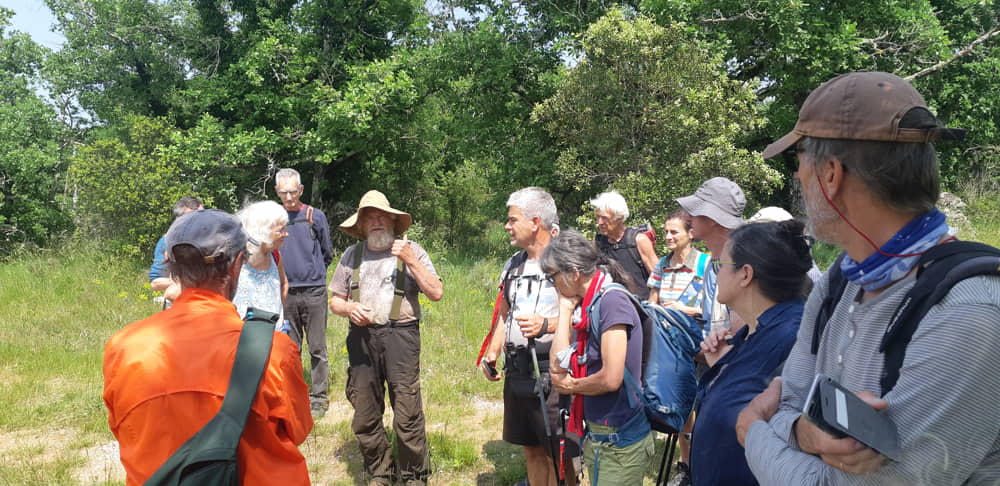
In order to strengthen the sharing of experiences between landowners in other basins, SOS Loire Vivante – ERN, with around twenty members, visited the Vis Valley in early June to study the case of the Lo Ranquas “voluntary reserve,” a 250-hectare site that is particularly interesting due to its size and the presence of golden eagles. The program included a visit to the reserve with a presentation of the management choices implemented over the past 40 years and a round table discussion with SOS Loire Vivante-ERN, the president of Euronatur, the Horizons Séranne association, and the owners of Ranquas, highlighting the similarities and differences between the situation in the Upper Loire Valley and the Vis Valley in terms of the means for ensuring the long-term sustainability of the ecological management of the sites.

It emerged that Real Environmental Obligations (ORE) are a key tool for ecosystem conservation and sustainable property management. However, in the context of coherent management of large areas and/or with several owners, the associations considered complementary tools, in particular the possibility of creating an endowment fund. This fund would provide additional protection for the areas by offering owners more options and support, such as donations and bequests, and organizing fundraising to ensure the management of the sites. The fund could also play a role in the co-contractualization of OREs and guidance towards appropriate management structures. In the medium term, the coordination of the network of landowners would enable new owners to join a global and regional project. Finally, the fund would make it possible to promote large entities that are collectively and voluntarily protected, whether on the Vis, in the Haute Loire, or elsewhere.

These are very promising discussions, which will naturally be followed up:

More information on the two territories involved in the experiment: Review of the exchange and training days on the voluntary protection of private natural areas

Horizons Séranne | Gîte L’ Aire de la Séranne – Home

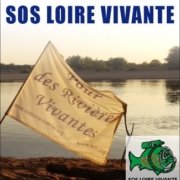
Haute Vallée de la Loire – Un lieu à découvrir


[1] The ORE is a voluntary land-based environmental protection mechanism that is unique in that it is contractual and can be invoked by any landowner. Codified in Article L. 132-3 of the Environmental Code and included in a contract signed by a notary, it commits the owner of a property (including in the event of a change of ownership) to implement environmental management and protection measures for a period of up to 99 years.


Reserve naturelle du Ranquas ©Corinne Ronot – SOS Loire Vivante


Christian, propriétaire et fondateur de l’association Horizon Séranne, explique les outils de gestion et suivi mis en place ©Corinne Ronot – SOS Loire Vivante

Goldman Prize 2025 : Eco Albania rewarded for his work for the Vjosa

Since 1989, the Goldman Environmental Prize has been awarded to environmental “heroes” around the world. In Europe, and in the “fresh water” category, two Albanian activists from Eco Albania were rewarded for their defense of the Vjosa, one of the continent’s last wild rivers. Through their campaign, they succeeded in preventing the construction of multiple dams and in designating the Vjosa and several of its tributaries a national park.

In 1992, France and Loire Vivante also won an award for Christine Jean, who coordinated the national campaign to prevent the construction of dams on the Loire at Serre de la Fare, Le Veurdre and Chambonchard.

Plus d’infos

Disparition de Philippe Auclerc et Laurent Roy : hommage

En ce début mars 2025, nous avons appris avec tristesse la disparition brutale de deux hommes passionnés et engagés pour les rivières : Philippe Auclerc, Rédacteur en chef pendant 25 ans de « La Loire et ses Terroirs » et de la lettre « Les Nouvelles du bassin de la Loire » et Laurent Roy, ancien Directeur de l’Eau et de la Biodiversité au Ministère de 2013 à 2015 et ancien Directeur de l’Agence de l’Eau Rhône Méditerranée Corse jusqu’en 2023. Notre association a eu la chance de travailler avec eux, ils ont souvent partagé les visions de notre association et leurs compétences ont fait avancer la cause des rivières.

Philippe Auclerc était un fin connaisseur du territoire ligérien et de ses acteurs. Son engagement pour la préservation de la Loire et de ses affluents était profond et sa plume était sincère et souvent aiguisés sur la description du jeu d’acteur et le sens de la gestion de l’Eau du bassin. Son travail a plusieurs fois croisé les actions de l’association SOS Loire Vivante, il est venu nous voir dès les débuts de notre combat dans les années 1990 et a encore récemment été le modérateur de notre dernier colloque « Des Saumons et des Hommes » à Brioude en 2023, un sujet qui l’animait fortement. À travers ses écrits, il a su sensibiliser un large public aux enjeux environnementaux et patrimoniaux de ce fleuve. La disparition de Philippe marque la fin d’une époque pour les passionnés de la Loire, c’était le seul encore aujourd’hui à informer de la vie du fleuve, avec un sens critique, de la source à l’estuaire. Nous espérons que son projet de relier les ligériens perdurent. Nos pensées vont à sa famille et ses proches.

Laurent Roy a également joué un rôle important en faveur des politiques de gestion de l’eau et de préservation de la biodiversité en France tout au long de sa carrière. Avec European Rivers Network nous avons pu le rencontrer plusieurs fois lorsqu’il était au Ministère et à l’Agence de l’Eau, notamment au sujet du rétablissement de la continuité écologique sur le Rhin ou en lien avec le projet du label « Sites Rivières Sauvages ». Homme de conviction, sa capacité à dialoguer et échanger de manière constructive en faisait une personnalité respectée dans le milieu. Nous présentons nos sincères condoléances à sa famille.

Post-flood work in the Haute Loire: Stop indiscriminate management and clear-cutting

In an open letter to those responsible for planning, delegating or carrying out work to remove logjams, SOS Loire Vivante welcomes the rapid decision by the French government to provide financial support to communes and communities of communes, but is also surprised at the way in which the work has been carried out.

In some sectors, clear-cutting was carried out without any distinction being made between vegetation that poses a problem for the flow of water and vegetation that is useful for the proper functioning of the environment and for maintaining the banks. Riverside vegetation is a habitat for numerous species, including the emblematic beaver, the otter and many birds. The lack of training or guidelines for the companies to whom the work is delegated is no longer possible.

In its letter, the association also asked that future logjam removal and, above all, maintenance projects in the Allier region be subject to precise specifications to take account of biodiversity issues, while respecting the environment and species protection laws.

Read letter (in French only)

Fontgombault (in operation), Bénavent, Saint-Gaultier, Ruffec – the number of micro-power projects on the Creuse River continues to grow

At the end of October, the investigating commissioner issued a favorable opinion on the project to authorize the Moulin de Bénavent hydroelectric power station, brushing aside the five opinions of environmental protection associations, experts in the field of water and rivers. They had demonstrated that the project did not meet the challenges of restoring ecological continuity and migratory fish on a river classified as a priority axis and biological reservoir by the SDAGE and the national biodiversity strategy. Despite all the existing literature on the impact of weirs and received ideas, we can still read in the conclusions of the report that the structure “will protect the homes of towns and villages located downstream from the mill”!

Read the report of Bénavent public enquiry (french)

Read our views on the projects Bénavent, Saint- Gaultier (french)

New cycle of Tuesday Webinars: REGISTRATION OPEN

Public debate – also via videoconferencing and webinars

Register and take part in our next webinars. Already 3 new dates.

Programme details and registration here (in french only)

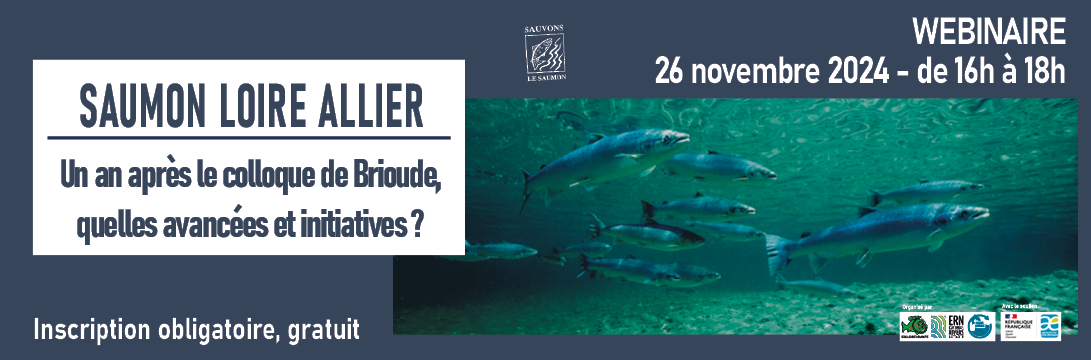
  • 26 novembre 2024 de 16h à 18h : « Saumon Loire Allier : où en est-on ?

  • 3 décembre 2024 : Les aménagements urbains de protection contre les inondations de Brives-Charensac à l’épreuve!

  • 21 janvier 2025 : La pollution microplastique sur le bassin de la Loire.