6 obstacles removed and more than 26 kilometres of rivers reconnected
This summer, and particularly since September, 26 kilometres of French rivers have been reconnected upstream thanks to six weir‑removal projects supported by ERN and (co)funded by the Open Rivers Programme. On the occasion of #DamRemovalDay, here is an update on these projects:
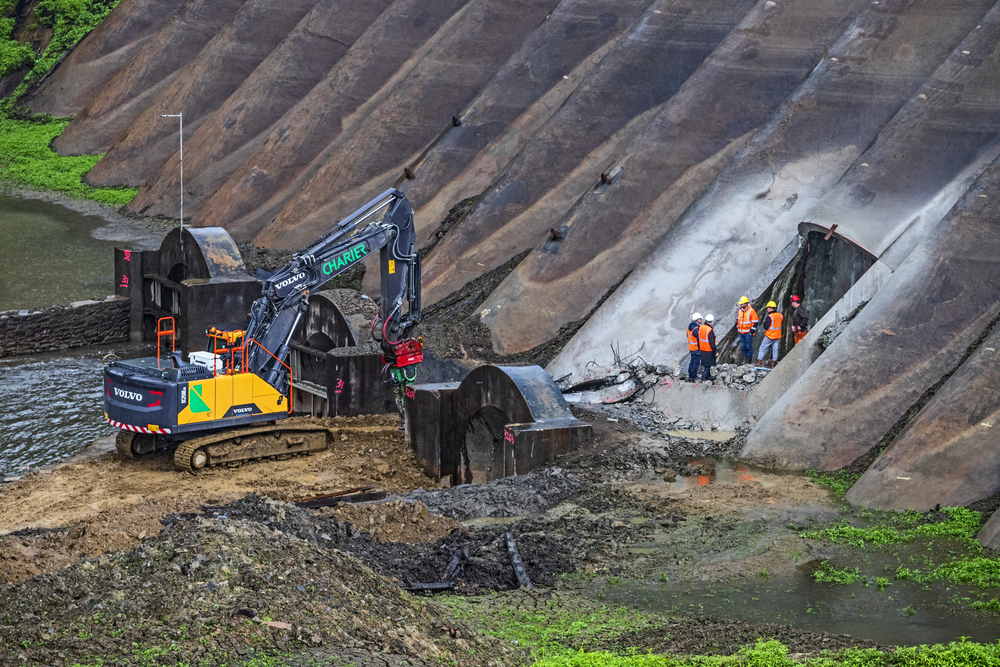
– The Souvigne (Corrèze): This is a major project underway on this tributary of the Dordogne: the removal of the Moulin Bas weir, an imposing structure 1.7 metres high and 12 metres wide. The works, led by the SMDMCA, will be completed this autumn. La Souvigne, listed in categories 1 and 2, is the last significant tributary of the Dordogne before the Sablier dam. Restoring this river is crucial for Atlantic salmon. Six additional upstream structures will also be improved, ultimately reopening nearly 27 kilometres of river on the Souvigne and its tributaries. More info
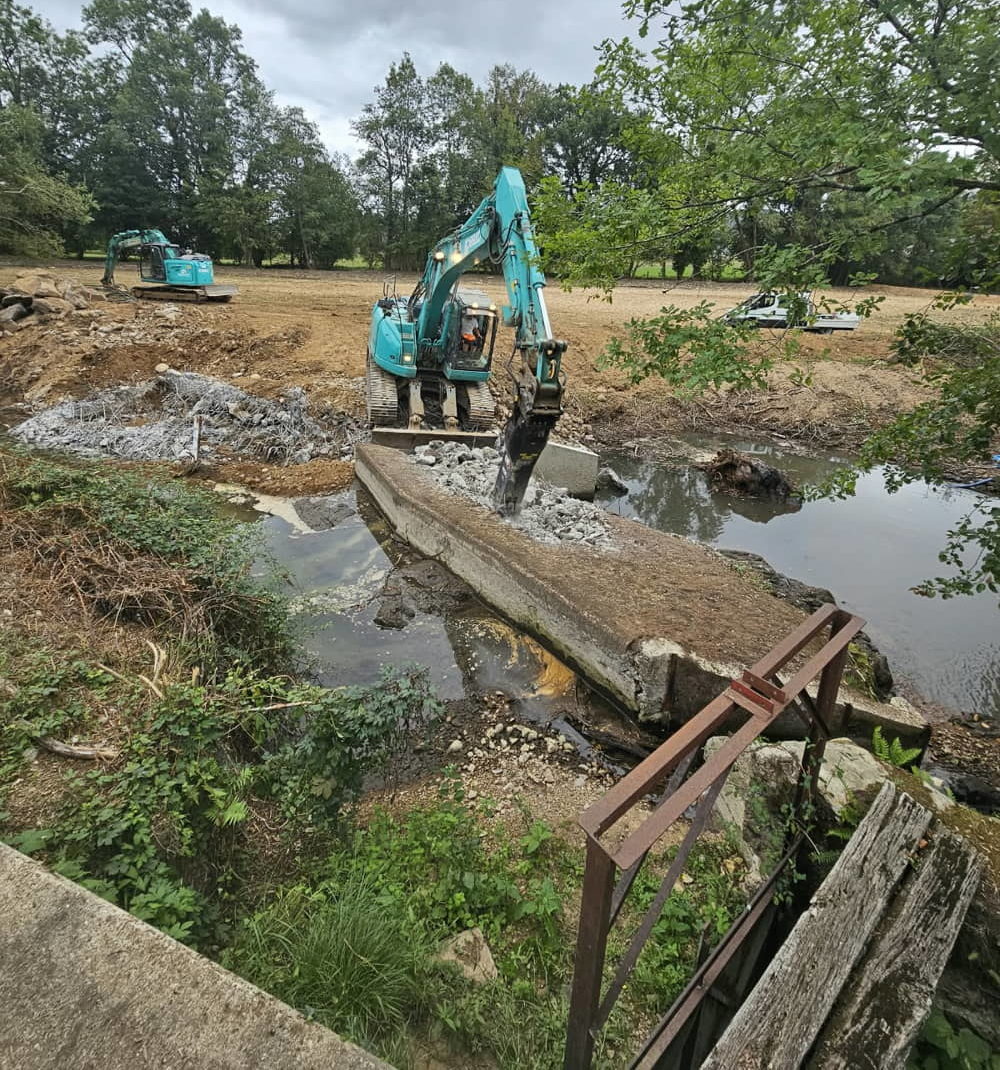
© SMDMCA, Moulin-Bas weir (september 2026)
– The Gave d’Azun (Hautes‑Pyrénées): Reopening this river, listed in categories 1 and 2, is a major objective for ensuring the success of the “salmon” recovery plan in the Gave de Pau basin. Two downstream obstacles on the Gave d’Azun are currently being removed: the Pont de Sailhet weir, led by the municipality of Argelès‑Gazost, and the fish‑farm weir, led by the Hautes‑Pyrénées Fishing Federation. In total, 11 kilometres of main river will be made accessible on the Gave d’Azun as part of a coordinated operation that also includes improvements to additional upstream structures. Work on the two weirs is scheduled to be completed during November. More info
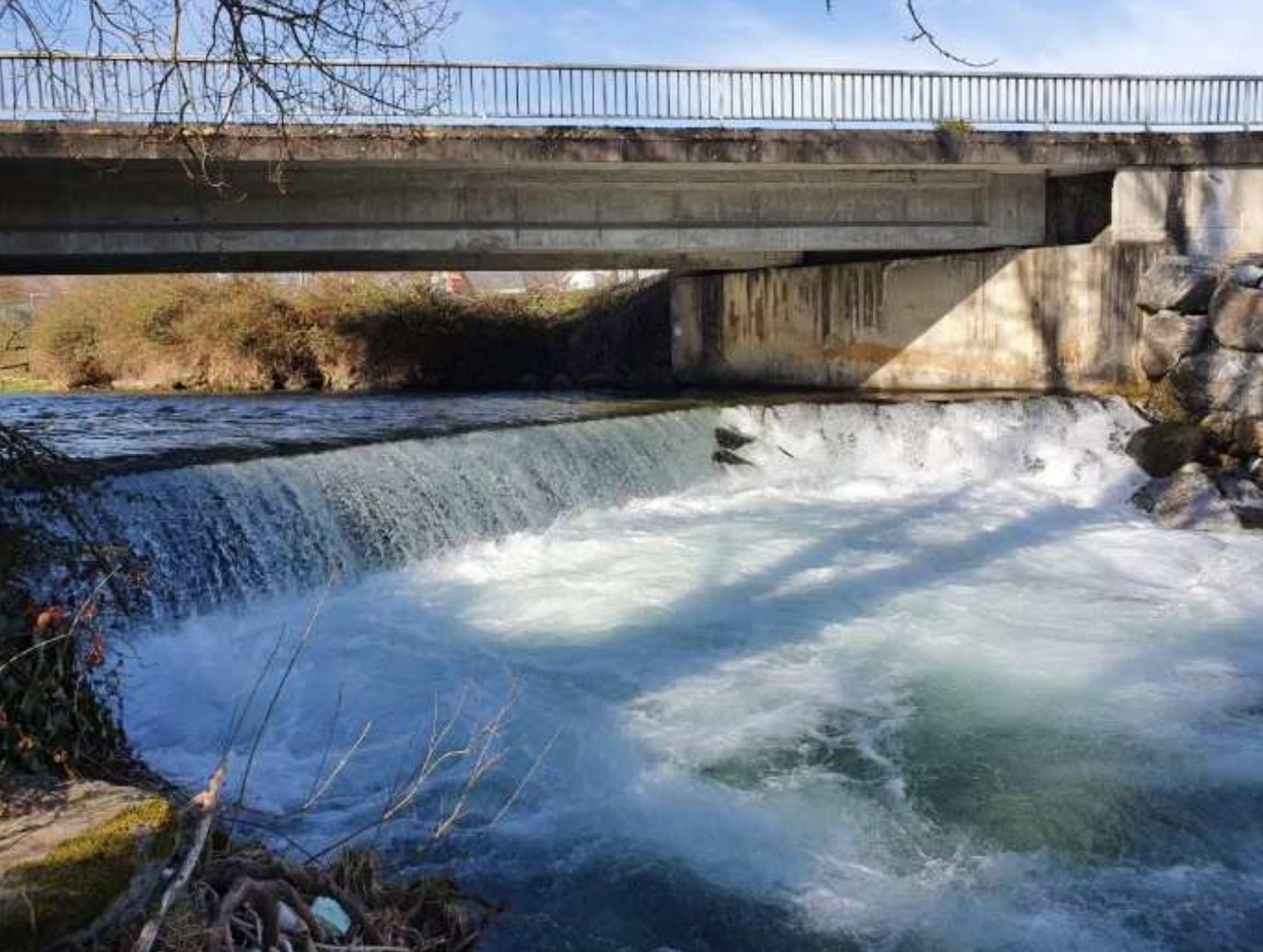
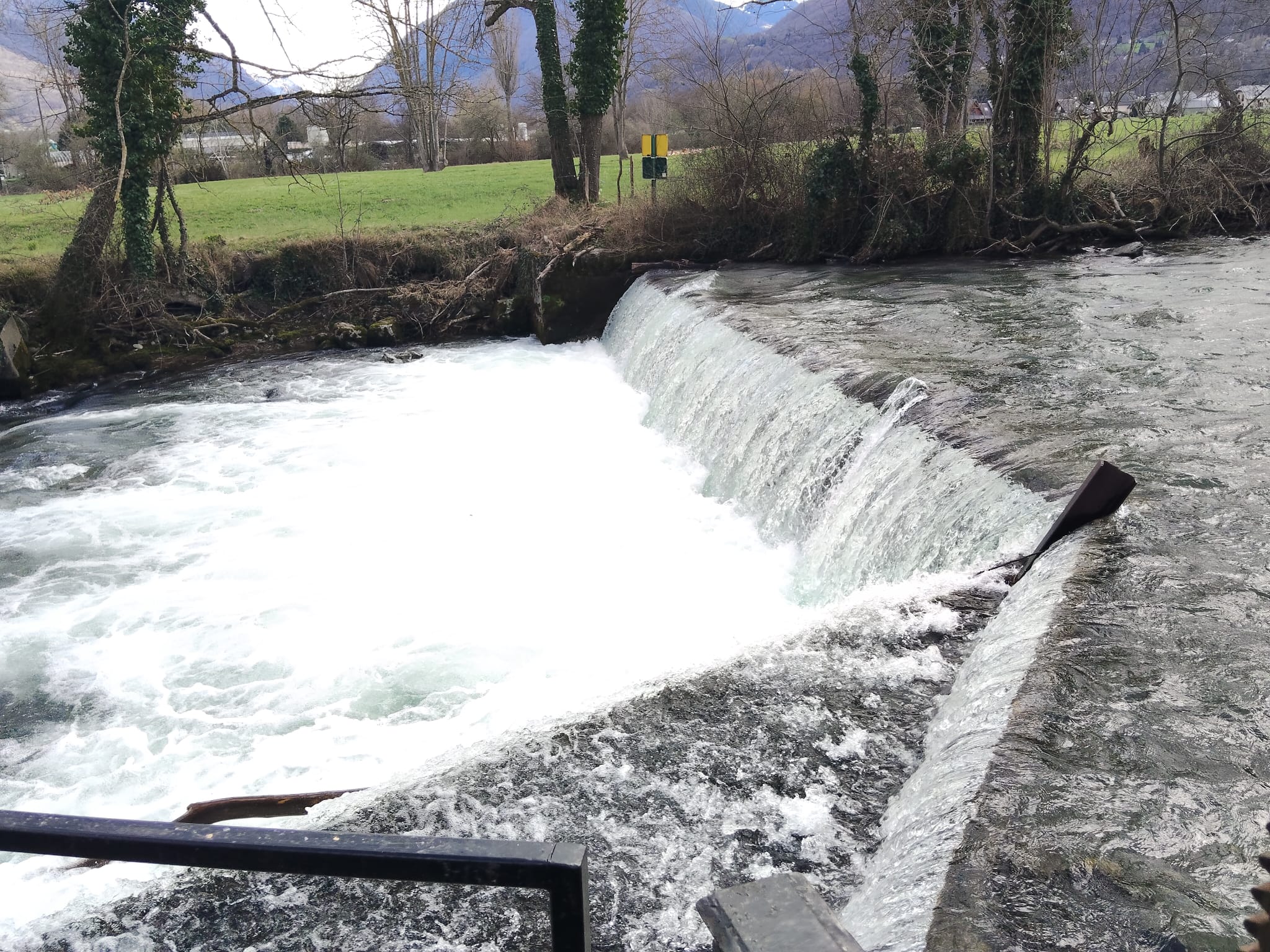
© ECOGEA, Seuil du Pont de Sailhet et seuil de la pisciculture sur le Gave d’Azun avant travaux
– The Daronne (Ardèche): The Sibila ford is a submersible road structure made up of eleven concrete culverts, located about 100 metres upstream from the confluence of the Doux and the Daronne. It is a priority structure under the Rhône–Mediterranean basin Eel Management Plan, on a river classified as a biological reservoir. The structure is currently being demolished under the project management of the SMBVD. A temporary road has been put in place for the duration of the works, and a new bridge is now under construction to maintain road access. More info.
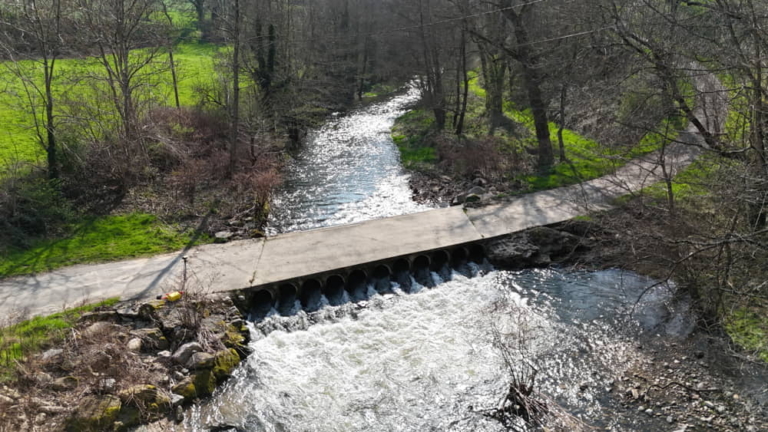
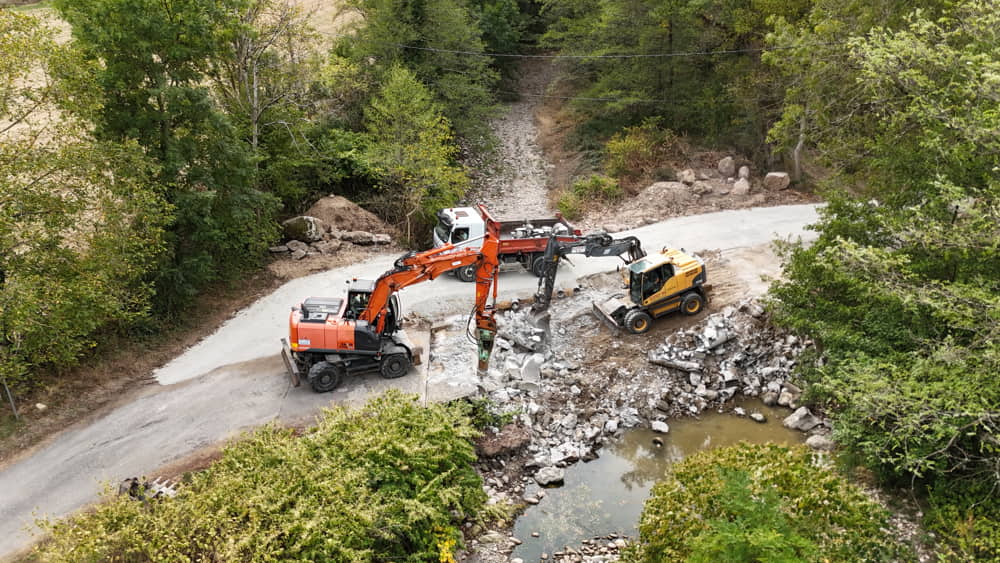
© SMBVD
–Le Lignon (Haute‑Loire): The Eyres weir on the Lignon was dismantled under the direction of SISMAE in July, after verifying the presence of the freshwater pearl mussel in the work area and taking all necessary precautions. Located in the heart of the Natura 2000 site “Haute Vallée du Lignon du Velay”, this disused weir created a 1.40‑metre drop and degraded habitats for sensitive clear‑water species such as trout and the freshwater pearl mussel. The restoration has reopened 10.5 km of free‑flowing river in a single continuous stretch on this section. More info.

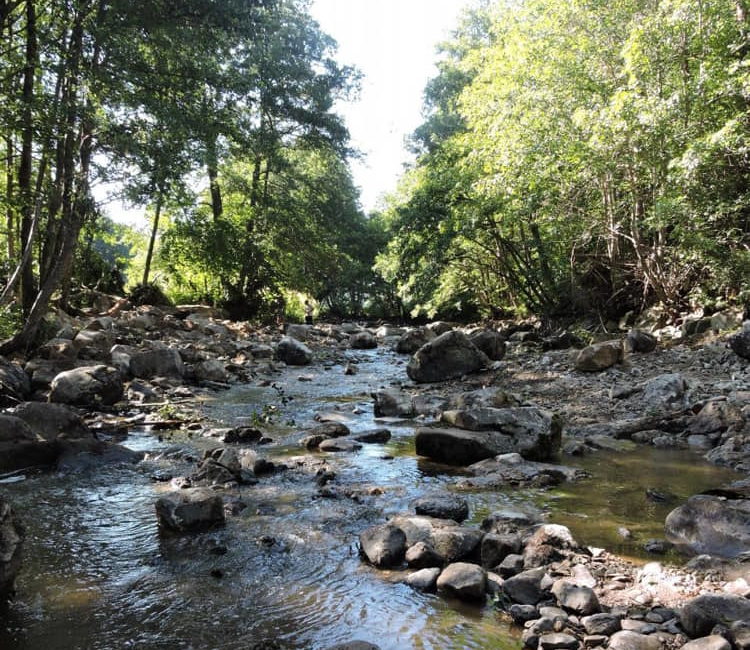
© SISMAE
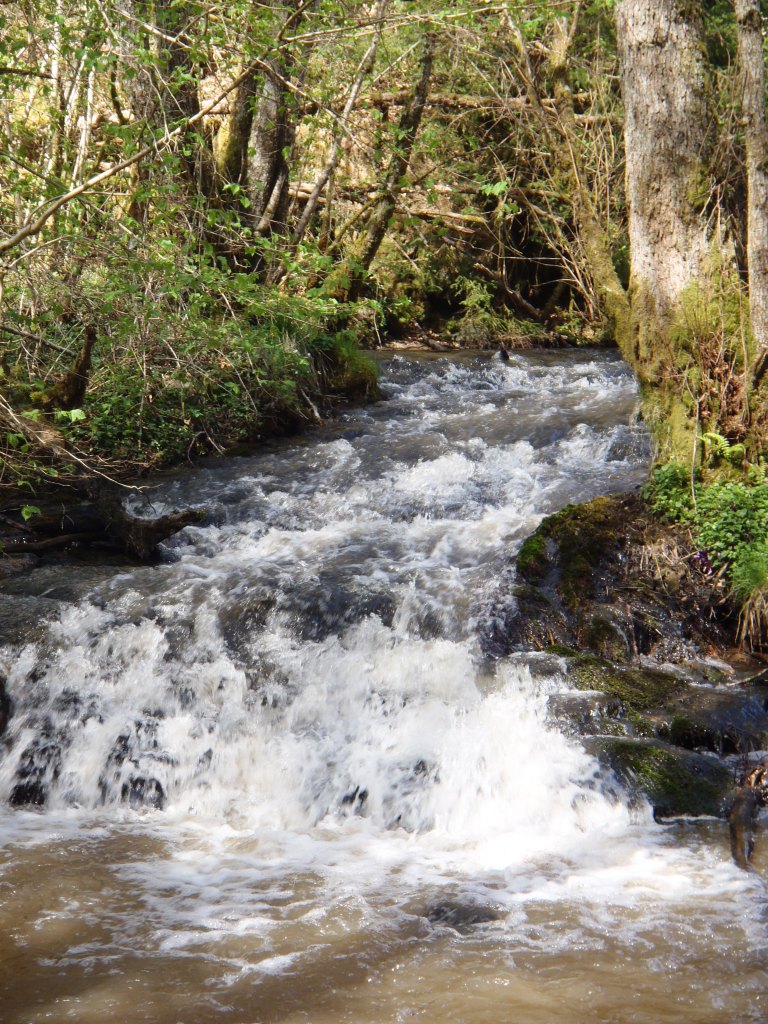
-The Branugues (Cantal): About 800 metres upstream from its confluence with the Cère, ecological continuity on the Branugues stream was blocked by the Batitan weir. This stream, classified as a biological reservoir and already the focus of several restoration actions, is identified as a favourable spawning area for trout. Removing the weir will reopen more than 9 kilometres of river within a Natura 2000 site, restoring continuity along 87% of the stream. The works, carried out by the SMDMCA, are due to be completed in the coming days. More information.
© SMDMCA
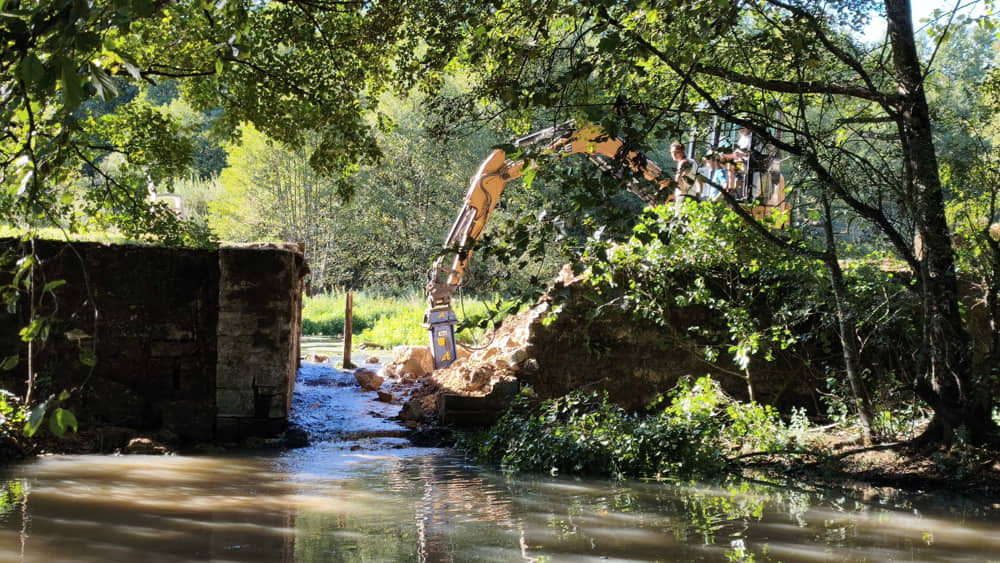
-The Boivre (Vienne): Seven small structures will be removed by the end of 2027 on the Boivre to restore the headwater sector of this tributary, classified in List 1. The first works began this summer with the breaching of the Moulin de l’Étang dam. The two branches leading to the Boivre’s two sources will be fully restored in 2027, once the pond sediments have dried. This operation is led by the SCA and will continue over the coming years. More information
© SCA
*Dam Removal Day : is an annual celebration of free-flowing rivers and the work being done to remove obsolete barriers across Europe and beyond. Led by Dam Removal Europe, the day brings together organisations, practitioners, policymakers, communities and river champions to showcase the benefits of reconnecting rivers for nature and people. Across Europe, more than 9,000 barriers have now been removed, helping restore river connectivity, improve habitat for freshwater species, strengthen climate resilience and support healthier river systems.
#DamRemovalDay #FreeFlowingRivers #RiverRestoration #DamRemovalEurope