Save the “Nature Restauration Law”

The Nature Restoration Law, which will be shortly put to vote in the European Parliament, sets the target of restoring at least 25,000 km of free-flowing watercourses by 2030 (Article 7) in order to improve the natural longitudinal and lateral connectivity of watercourses. These objectives complement the obligations of the Water Framework Directive and is necessary given the significant degradation of aquatic ecosystems.

Read our note for Members of the European Parliament  in french  and english.

We should even go further and set a target of 178,000 km by 2030.

But even more, there is a high risk that it will be fully rejected as several parties went as far as calling to completely denied it back this past May.  This next Thursday 15 June the ENVI Committee of the European Parliament must be strong.

Send a message easy and quick message to your decision-maker to be ambitious : https://www.restorenature.eu/en/take-action #RestoreNature


The Nature Restoration Law proposal lays out plans to restore thousands of kilometers of rivers.

More info about fragmentation by dams

More info about Nature Restauration Law (anglais)
Patagonia launches a campaign to save the oceans!

To mark World Oceans Day on 8 June, Patagonia is launching a global campaign to protect and restore the oceans.

While this is a global campaign for Patagonia, we have a clear and specific ask for our leaders across Europe:

“Bottom trawling is bulldozing our ocean floor, undermining small-scale fisheries, and deepening the climate crisis. We call on European leaders to end this destructive practice, starting with an immediate ban in marine protected areas and inshore zones.  Sign the petition to end bottom trawling at patagonia.com/oceans.

More infos : https://eu.patagonia.com/…/eu-marine-protected-areas.html

DRE launch today the dam removal progress report for 2022

The latest report uncovers a surprising figure of (at least) 325 barriers have been removed in 16 European countries – a new record! As in 2021, most of the removed barriers were weirs, as these structures have a high probability of being old and obsolete and can be removed in a cost-efficient way. But large dams such as the Roche-qui-boit dam in France (16m high) are also among the 2022 achievements.

Several factors have contributed to the new numbers such as newly available funding opportunities, like the Open Rivers Programme, the coordinated efforts of national and regional public authorities to report removed barriers, and the hype created by findings of last year’s report disseminated all around Europe.

Given the latest developments in European climate policy and the Commission’s proposal for a Nature Restoration Law, it is important to keep highlighting dam removal as a crucial tool to accomplish ecosystem restoration and celebrating success stories across Europe. Moreover, barrier removal also contributes to the global Freshwater Challenge to restore 300,000km of degraded rivers by 2030, a goal launched at the UN Water Conference held in New York in March. Besides pollution, habitat degradation, and over exploitation of natural resources, freshwater ecosystems face one major issue: dams.

It has been found that over 1,2 million barriers fragment European rivers, with many being obsolete. Among the several harmful consequences is biodiversity loss, with a decline of 93% in freshwater migratory fish populations in Europe and 76% on a global level. The alarming numbers ask for costeffective and efficient solutions to restore rivers. Dam removal has been paving its way in nature
restoration tools – a trend has been confirmed across Dam Removal Europe’s annual reports.

Read the press release

Read the report

logo Living Rivers Europe

Open letter: Counting on new hydropower to accelerate Renewable Energy deployment in Europe is irresponsible

ERN and more than 100 NGOs write to EU negotiators asking them to protect Europe’s rivers from new hydropower deployment in the revised Renewable Energy directive.
Already in 2020, 150 NGOs signed a manifesto asking EU decision-makers to stop new hydropower development in Europe.

Read the WWF press release:

 Ahead of the nextpolitical trilogue on the revision of the Renewable Energy Directive, more than 100 NGOs are sending an open letter to co-legislators from the European Parliament, European Commission and Council Presidency, asking them to exclude new hydropower from go-to areas as well as to include sustainability criteria recognizing that hydropower has direct impacts on freshwater ecosystems which must be mitigated.

 Because hydropower potential has been so exploited already in Europe, new hydropower would only make a small contribution to the energy transition, while causing immense damage to our waterways. According to WWF’s Living Planet Report 2022, freshwater species populations have seen the greatest overall global decline (83%), and within this species group, on average, monitored migratory fish populations have declined by 93% in Europe, making our continent the most affected.

Contact
Florian Cassier
Climate Communications Officer
fcassier@wwf.eu
+32 479 33 92 11

Loire / Rhone-Ardèche basins in France : Watertransfer by solidarity ? Webinary 15 nov 16h-18h

This online webinar, the 2nd episode, out of a total of 4, will explain, using the example of the particularly dry summer of 2022, how the Montpezat hydroelectric complex and the diversion of around 200 million M3 of water from the Loire to the Ardèche worked. How was the support of low water levels and the sharing of water between the two basins organised? Who decided what?
1 hour of debate + 1 hour of questions and answers live.

>  Infos and  subscribing  in FRENCH ONLY

> more information o,n the Hydropower complex of Montpezat

Living Rivers Coalition publishes its briefing paper on the natural connectivity of rivers and natural functions of the related floodplains

Freshwater ecosystems are one of the most degraded in Europe, with freshwater molluscs and fish the two most threatened animal groups  and 60% of surface waters failing to reach good ecological status. The fitness check of the Water Framework Directive concluded that the main reasons for failure are for a large part connected to insufficient measures to tackle diffuse pollution coming from agriculture, and the hydromorphological changes affecting water bodies. Restoring freshwater ecosystems is therefore a necessity to sustain the natural functions of rivers, lakes and wetlands. Only with healthy, biodiverse water bodies can we allow nature to thrive, ensure clean and sufficient water supply, and resilience to climate change impacts.

read the complet document : > FINAL LRE briefing – freshwater – NRL

Logo ERN, petit format

Next days : World Rivers day and European River Summit

In the next few days, rivers will once again be in the international spotlight.
On 25 September, a large number of river events will be organised in over 100 countries and the European River Summit will take place frim Sept 29 – Oct 1 in Brussels. ERN will also be part of the programme.

> more info World Rivers Day
> more info European Rivers Summit

Everything that happens in our lives is found in our rivers

Emma Haziza, hydrologist on France inter: “Everything that happens in our lives is found in our rivers”

Finally global information on water and rivers, far from the usual dogmatism and shortcuts … 22 exciting minutes that show without ambiguity that the 6th planetary limit is crossed: that of water with the degradation of its quality and shortages just about everywhere, including in France!

To see this interview again, click here !

Emma Haziza is not at her first interview, in 2020 she was already on France inter. Did you know that agricultural consumption can account for 80% of water use in France in summer? To know more about it, it’s here.


Visit of the “Nouveau Poutès” dam organized by SOS Loire Vivante on May 21

On the occasion of the World Migratory Fish Day on May 21, SOS Loire vivante and EDF invite you to explore this exemplary site.
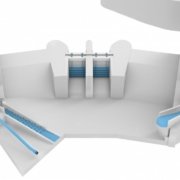
After many years of partial leveling and reconfiguration work, the result of our struggle, the site is now finished. By opening two huge gates, it allows migratory fish to pass through for 3 months a year, the rest of the year the water is turbined while respecting a minimum flow of 5m3/s for the Allier between Poutès and Monistrol d’Allier.
Reserve your place as soon as possible

Join the International Day of Action for Rivers! March 14, 2022

The International Day of Action for Rivers cofounded by IR, ERN and others is a day dedicated to solidarity – when diverse communities around the world come together with one voice to say that rivers matter. That communities having access to clean and flowing water matters. That everyone should have a say in decisions that affect their water and their lives. That it’s our time to stand up for these rights, now more than ever.

We’re celebrating the 25th Anniversary of this Day for Rivers by also highlighting the importance of Rivers to Biodiversity.

> More information