Register “Barrier Removal for Flood Prevention and Safety” webinar
WWF Netherlands and ERN – on behalf of DRE – in collaboration with McMillen are organizing this Barrier Removal for Flood Prevention and Safety webinar.

For a quarter of a century, the Water Framework Directive (WFD) has been the cornerstone of #EU water management. It protects rivers, lakes, groundwater, coastal waters and establishes the principle that clean water is a shared public good.
📝 To celebrate this milestone, Friedrich Barth, former team leader for the European Commission, takes us back to the day it was adopted.
𝐘𝐞𝐭 𝐭𝐨𝐝𝐚𝐲, 𝐭𝐡𝐞𝐫𝐞 𝐢𝐬 𝐫𝐞𝐚𝐬𝐨𝐧 𝐟𝐨𝐫 𝐜𝐨𝐧𝐜𝐞𝐫𝐧.
The European Commission has taken a dangerous step back and promised to reopen the #WFD, which would undermine decades of effort and put Europe’s ability to address pollution, biodiversity loss, and climate impacts on #water at risk.
The Living Rivers Europe coalition is worried.
⚠️𝐑𝐞𝐨𝐩𝐞𝐧𝐢𝐧𝐠 𝐭𝐡𝐞 𝐖𝐚𝐭𝐞𝐫 𝐅𝐫𝐚𝐦𝐞𝐰𝐨𝐫𝐤 𝐃𝐢𝐫𝐞𝐜𝐭𝐢𝐯𝐞 𝐭𝐡𝐫𝐞𝐚𝐭𝐞𝐧𝐬 𝐰𝐡𝐚𝐭 #𝐄𝐮𝐫𝐨𝐩𝐞 𝐡𝐚𝐬 𝐰𝐨𝐫𝐤𝐞𝐝 25 𝐲𝐞𝐚𝐫𝐬 𝐭𝐨 𝐬𝐚𝐟𝐞𝐠𝐮𝐚𝐫𝐝 𝐚𝐧𝐝 𝐫𝐞𝐬𝐭𝐨𝐫𝐞!⚠️
Mor info see the news from 4 december
Interview with Friedrich Barth by Wetlands International
Registration is now open (in French only)
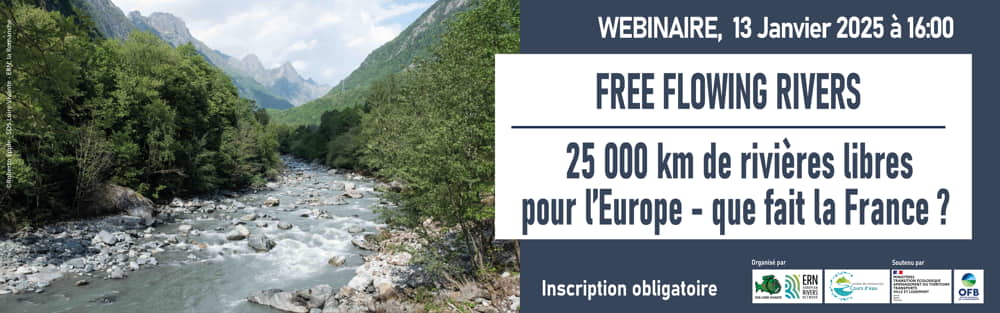
The European Union has set itself an ambitious target: to restore at least 25,000 km of free-flowing watercourses by 2030. Under Article 9 of the Nature Restoration Law (NRL), officially adopted on 18 August 2024, Member States must contribute to this target and propose their own contributions. Article 9 of the Nature Restoration Regulation aims to reverse the decline in biodiversity in Europe by 2030 and achieve healthy and resilient ecosystems, with a clear objective of reducing pressures. For watercourses, for example, removing obsolete obstacles is a priority.
But what is Europe’s definition of a free-flowing river? What methodology should be used to characterise them? What actions should be taken to contribute to the objective? What ambitions should we set ourselves?
1h de présentations, 1h round table / Q&A with public participation
by ERN- SOS Loire Vivante (Roberto Epple, Président, Corinne Ronot, Co-directrice)
with
Claire-Cécile Garnier, Cheffe du Bureau de la ressource en eau, des milieux aquatiques et de la pêche en eau douce, Direction de l’Eau et de la Biodiversité
Claire Baffert, Senior EU Policy Officer, Water & Climate Change Adaptation| WWF European Policy Office
Karl Kreutzenberger, OFB, Chargé de mission « Migrateurs amphihalins et hydromorphologie », membre ECOSTAT
Registration is now open (in French only)
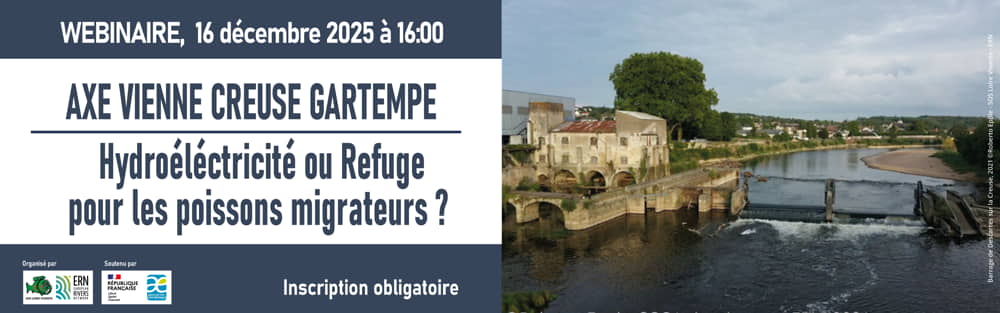
The Creuse has been identified as a key area for migratory fish in the context of climate change. Restoring watercourses and water quality, removing pressures, reconnecting rivers and providing access to refuge areas will facilitate the resilience of watercourses and the return of migratory fish to our rivers.
However, due to the energy transition in particular, there has been an increase in projects to equip weirs with micro-hydroelectric power stations, perpetuating the fragmentation of waterways on strategic routes.
Can these rivers be both sources of hydroelectric power and refuges for biodiversity and endangered migratory fish?
Should we sacrifice biodiversity and water quality in the name of renewable energy, or demand radical solutions to restore the free movement of species and the health of our rivers?
Programme : 1h de présentations, 1h round table , Q&A
by ERN-SOS Loire Vivante (Roberto Epple, Président, Corinne Ronot, Co-directrice)
Speakers
Table ronde / Questions – réponses
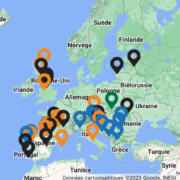
Once lagging behind Southeastern Europe is now seeing growing action to dismantle outdated dams, weirs, and culverts that fragment rivers, disrupt fish migration, degrade water quality and pose risk of failure. A new report reveals that river restoration through barrier removal—a critical tool to revive Europe’s freshwater ecosystems—is gaining unprecedented traction in Southeastern Europe (Figure 1). The breakthrough comes as EU Member States prepare their National Restoration Plans under the EU Nature Restoration Regulation, which requires 25000 km of rivers to be restored to free-flowing conditions by 2030.
The Southeastern Europe Barrier Removal Movement Progress Report 2024–2025, documents 135 activities, including 33 barrier removals across seven countries in just 18 months, signaling a turning point for a region long behind the rest of Europe in reconnecting its rivers. The activities presented in the report were classified into: (1) those contributing to scaling up the implementation of barrier removal (e.g., seminars, stakeholder engagement, knowledge dissemination, efforts to influence policy and legislation), (2) the preparatory works (e.g., barrier mapping and assessment, and hydrological, archaeological, etc. surveys), and (3) the actual barrier removals (Figure 1).
Restoration Success Stories
“Southeastern Europe holds some of Europe’s most ecologically valuable rivers, yet they remain heavily fragmented. With the EU Nature Restoration Regulation now in force, there has never been a better moment to scale up barrier removals, unlock funding, and prioritize free-flowing rivers as natural solutions to biodiversity loss and climate impacts.” said Jelle de Jong, CEO WWF-Netherlands
A Call to Action
Despite this progress, less than 1% of all barrier removals in Europe to date have taken place in Southeastern Europe. Extra support is needed to assist the launch of pilot projects, to promote awareness about the benefits of free-flowing rivers, to create networks for practitioners to exchange methods and lessons learned, and to shift existing policies that will enable the implementation of this practice.
More info :
Read the SEE Progress Report 2024-2025
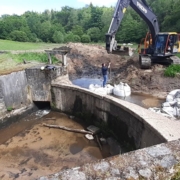
“On Dam Removal Day, 8 October 2025, NGOs in France and Europe reaffirm their commitment to restoring waterways and removing obsolete artificial barriers. More than 1.2 million structures block the free flow of European rivers and weaken the biodiversity and resilience of aquatic ecosystems. It is estimated that more than 200,000 of these structures are unused, abandoned or obsolete. Most are small structures less than 3 metres high, such as sluice gates, weirs and culverts, which bear witness to past uses. Their cumulative impact on biodiversity and the functioning of watercourses is significant. These obstacles isolate vulnerable freshwater species already weakened by the effects of climate change, impact fish migration, and promote the deposition of fine sediments that clog the riverbed upstream of the structures, etc.”
(read press release , in french only)
To reaffirm the advantages of removing obsolete structures that have a significant impact, ERN has published two fact sheets on experiences of removal in France:
– Removal of large dams on the Sélune, 4 pages, May 2025, ERN (french only)
For over a century, the Vezins and La Roche-qui-Boit dams interrupted the natural course of the river. Their removal allowed the Sélune to return to its original bed and natural dynamics. The result of many years of debate and scientific studies, this project restored ecological continuity and improved water quality throughout the watershed. Supported by numerous organisations, it will be scientifically monitored until 2027.
The initial results are already very promising. Atlantic salmon, European eels and sea lampreys have returned, natural sediment transport has resumed and biodiversity is increasing.
– Removal of the Rhodes Bridge weir, 4 pages, May 2025, ERN (french only):
This document summarises the main stages and challenges of the project to remove the Rhodes Bridge weir, which has reconnected nearly 29 km of free-flowing rivers, benefiting local biodiversity and the quality of aquatic environments.
Vidéos and cases sutides on youtube chanel : Rivières Vivantes – Laisser Couler – YouTube
 On October 8th, Europe will come together to celebrate Dam Removal Day, a day to honour the power of free-flowing rivers and the growing movement to remove obsolete barriers.
Before Dam Removal Day, a new short film calls governmental authorities, barrier owners, practitioners and the general public to take action and restore river connectivity. Watch the video on Dam Removal Europe YouTube channel
Participate in or follow the events taking place around 8 October :
Take a look at the events map to find something close to you. Don’t miss this chance to be part of something bigger, something meaningful. Every action, big or small, helps highlight the importance of restoring rivers and bringing life back.
8 October 2025 will mark the very first Dam Removal Day.
Across Europe, visits and meetings will highlight the same message: free rivers bring life back.
Everyone can get involved: organise an event, share a local story, spread the word on social media.
👉 Register your action atdamremoval.eu/dam-removal-day
After the summer break, restoration work on the Laussonne (43), the Eyrieux (07) and Malencourie (24) rivers will begin this autumn.
The aim of this work is to ensure the continuity of the river and reconnect several kilometres upstream, increasing access to refuge areas and restoring the white-water habitats needed by sensitive species that inhabit these environments, such as trout, white-clawed crayfish and pearl mussels. Follow the progress of the work on the dedicated page
These projects were submitted by the European Rivers Network to the Open Rivers Programme for co-financing.
During the last application cycle, ERN received support for the Malencourie project aimed at removing an old reservoir and the Clain project for the removal of seven small structures on the upper Boivre, bringing the number of projects supported by the association (studies and works) to 15. During the last cycle, at least three other projects in France, led by fishing federations or unions, received support from the Open Rivers Programme: more info
The programme’s next call for projects will be open from 6 October 2025 to 31 October 2025 (decision in March 2026). Contact us for more information or to help you apply.
The next call for Open rivers Programme* applications is coming soon (from the 6th to the 31st of October 2025).
Need ideas and advice to prepare your projects and activities, or you just want to know more about Dam Removal in Southeastern Europe ?
Join our webinar on September 23, 2025 from 11:00 to 13:00 CEST. Organized by ERN and WWF NL, the webinar will highlight 3 successful projects completed and implemented in Eastern Europe. We’ll have 3 presentations from different ORP grant categories. Speakers will present their project as well as lessons learnt and best practices, and it will be followed by a Q&A session :
Introduce, and moderate by Corinne Ronot ERN and Kerry Brink, WWF Nl
Registration is required: https://us02web.zoom.us/webinar/register/WN_GBqXlSOeQZKO_YuY47vYiA
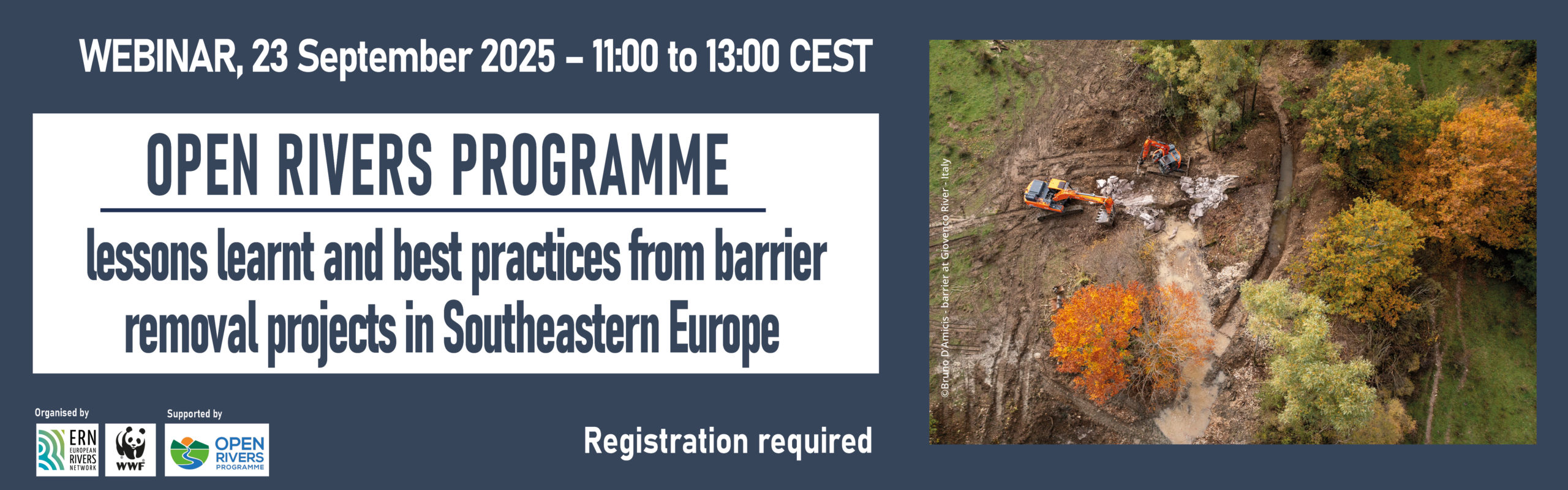
* The European Open Rivers Programme is a Dutch grant giving foundation funded by Arcadia. The foundation aims to restore endangered European rivers by supporting interventions that lead to the removal of small dams and the restoration of river flow and biodiversity.
 ERN France
 ERN is the official WWF Freshwater Partner in France and cooperates with WWF Switzerland, Austria, Netherlands and others