International conference “Salmons & people “: Registration now open

The salmo salar – extinction or restoration?
We need a shared roadmap!

Salmon is in decline in France, as is biodiversity in general. Migration statistics are clear: fewer and fewer migratory fish are reaching their best spawning grounds, particularly those on long rivers, such as the Loire-Allier axis….
All hope is not yet lost, however, as there are promising examples where rigorous, jointly-developed measures have resulted in an upward trend. Despite climate change.
Ten years after the last meeting, SOS Loire Vivante – ERN is organizing a new event in an attempt to unite the players around a common roadmap. Probably the last chance!

> More info and registration


Nature Restoration Law voted by the european parliament but text weakened

The Nature Restoration Law, which sets targets for the restoration of lands and marine areas, is a key text for the European Green Deal. Already under threat in the Environment Commission at the end of June, the parliamentary vote in Strasbourg was awaited.

On Wednesday 12 July, MEPs voted against the motion for rejection tabled by the European People’s Party (EPP), which called for the text to be rejected outright (324 against, 312 in favour and 12 abstentions), before adopting a compromise text that was less ambitious than the Commission’s initial proposal (336 in favour, 300 against and 13 abstentions). Many essential objectives and obligations have been sacrificed, including those relating to agriculture and the restoration of peatlands. The text also contains other derogations and exemptions that weaken the text. This text, gutted of its substance, is not up to the urgent task of tackling climate change and biodiversity loss. The co-legislators must now focus on improving the Nature Restoration Law in the trilogue negotiations to make it fit for tackling the challenges.

More infos, read WWF press release : Weber fails to derail EU Green Deal, but Parliament agrees to a weakened Nature Restoration Law | WWF

Today , the European Parliament voted in favour of the Nature Restoration Law and the EU Green Deal, despite an unprecedented – and often outright absurd – disinformation campaign aiming to destroy it, led by conservative and right-wing politicians and agriculture and fisheries lobbies. 

This win, however, came at a very high cost – to reach a compromise, MEPs sacrificed many critical obligations and targets, ending up with a position substantially weaker than the original Commission proposal [1]. This flies in the face of the urgency of the climate and biodiversity crises. 

In particular, the Parliament’s position scrapped the proposed article on the restoration of agricultural lands, which includes peatland restoration, thereby foregoing an essential lever for increasing Europe’s ability to sequester carbon and addressing intensive agriculture as the main driver for biodiversity loss. In addition, Parliament adopted an amendment which would delay the implementation of the law until an assessment of the law on Europe’s food security has been conducted – responding to the scare-mongering campaign conducted by Weber’s EPP as well as the far-right groups. A further element of weakening is the removal of the article guaranteeing the fundamental right of access to justice, risking more violations of the Aarhus Convention and an uneven playing field across Member States. The text also contains multiple other weakening derogations and exemptions.

[…] Ioannis Agapakis, Nature Conservation lawyer at ClientEarth: “Although the European Parliament adopted the NRL today, the law has been ransacked by the vested interests of many of our lawmakers and we’ve been left with a shell of a law. Today’s vote should have been about securing a pathway to restore our environment for the future survival of people and the planet. Instead, the outcome of the vote means citizens have been left to defend a law that we fear will be profoundly inadequate to tackle the urgent biodiversity and climate crises. Over a million citizens, civil society, businesses and scientists demanded more of their decision-makers – today’s vote shows the European Parliament shied away from meeting those demands.”
[…]

The vote followed strong public mobilisation to defend the law and the integrity of the EU Green Deal and cut through the fake news, with over a million signatures and messages from citizens, repeated calls from 6,000 scientists, 100+ businesses, and civil society from across numerous sectors to support the Nature Restoration Law.

We are now calling on all EU institutions to make constructive use of the trilogue negotiations to ensure a final law that is fit for addressing the global climate and biodiversity emergency.

Logo Openrivers

Open Rivers : Fourth weir removed on the Tardoire

The citizens’ march for water has just ended and the dialogue between the players is beginning

After 6 days of walking and 2 days of canoeing, the citizens’ walk for the fair sharing of water resources came to an end on Sunday 9 July after the Big Jump.

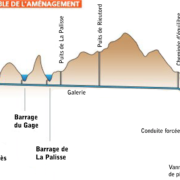
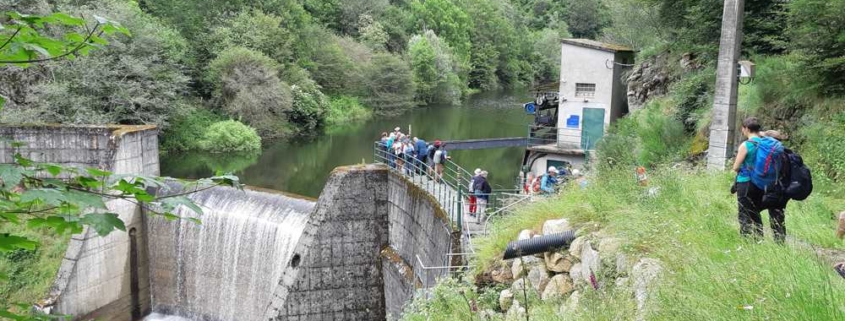
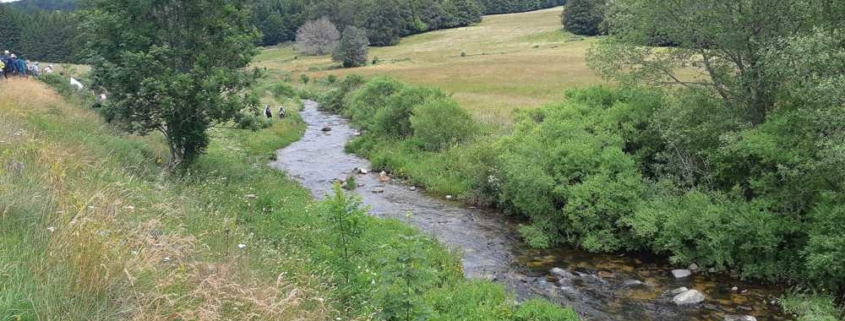
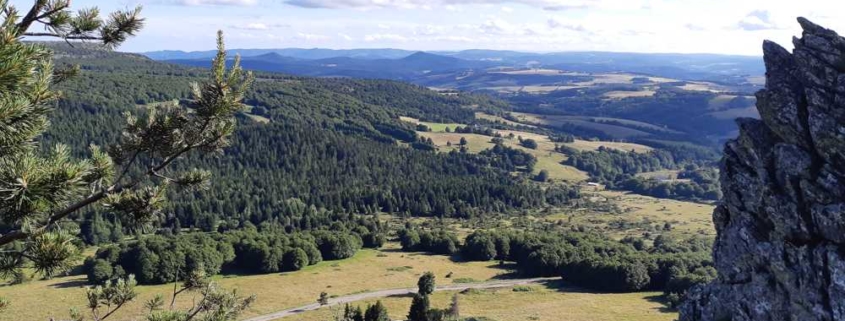
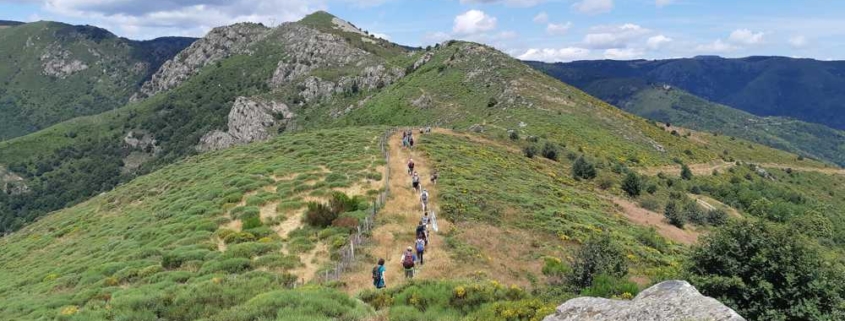
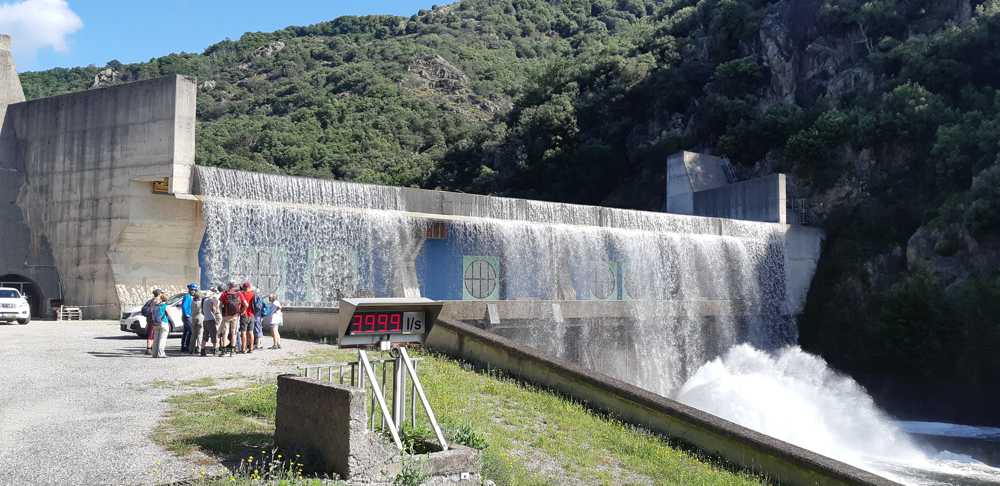
The forty or so walkers who took part between 1 and 9 July discovered all the facilities that make up the Montpezat hydroelectric complex in the Loire catchment area: the Veyradère water intake, the Issarlès lake, the Gage dam and the Lapalisse dam on the Loire. After climbing back up to the source of the Loire in magnificent surroundings and visiting the Atlantic/Mediterranean watershed, they followed the route of the gallery that leads to the equilibrium chimney, then to the underground hydroelectric power station at Monptezat. Finally, they were able to discover the Pont de Veyrières demodulator dam, which was exceptionally flooded that day. The walk ended at the confluence of the Fontaulière and Ardèche rivers. Admiring the technical prowess, the folly of man and questioning the sharing of water between man and the environment summed up the impression left by these structures on the walkers.

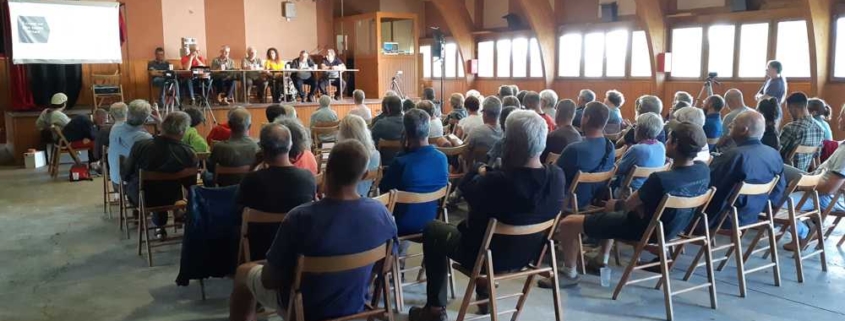
Along the way, meetings and 2 evening debates with EDF, as well as the main players impacted by the management of this structure (Issarlès lake town hall, members of the Loire Amont and Ardèche SAGEs, Water Agency, 43 Fishing Federation, FRAPNA Ardèche, local residents) provided an opportunity to continue but also to initiate interactive discussions and to identify the problems and visions of the two basins (increasing scarcity of resources, Lake Issarlès as the lung of Montpezat and angry local residents, committed water saving, impact of tourism on drinking water and the environment, etc.). These moments of exchange, welcomed by all the stakeholders, are the beginning of a story that will soon be written as part of the renewal of the complex’s concession. Getting to know each other and the state of the resource, discussing needs and problems is a prerequisite for finding a new compromise and solutions that meet the needs of people, environments and uses.

2 days of canoeing on the Ardèche and a Big Jump rounded off this week of learning and discovery.

More information about walking

More information on the Montpezat complex

The recordings of the two evening debates will be available shortly.

Marche citoyenne pour l'eau - 2023

Prise d’eau de la Veyradère © ERN

Marche citoyenne pour l'eau - 2023

Débat Le Lac d’Issarlès

Marche citoyenne pour l'eau - 2023

La Loire près de sources © ERN

Marche citoyenne pour l'eau - 2023

Mont Gerbier de Jonc © ERN

marche citoyenne pour l'eau 2023 - Burzet, prox cheminée d'équilibre

© ERN

Marche citoyenne pour l'eau - 2023, barrage démodulateur

© ERN

Nature Restauration Law : Encouraging but fragile results from the ENVI Commission

June 15 MEPs from ENVI Comission saved the Nature Restauration Law project, the amendment to reject the legal proposal did not pass, although with the smallest margin possible (44/44).

Compromise amendment 6 on Article 7 (river connectivity) was approved, which means that the 25,000 barrier removal target is – so far – still in the ENVI report. Although an encouraging result, it does not mean much, as there is a chance that the ENVI report ends up being rejected. MEPs will continue the voting of the last individual amendements during the next ENVI Committee meeting end of June, and then will vote on the full ENVI report.

So nothing is certain at this stage, advocacy efforts will need to continue until the plenary vote on the week of 10 July.

More infos : Save the “Nature Restauration Law” – European Rivers Network (ern.org)

Read the Press release from EEB

European People’s Party fails with disinformation campaign

Nature and the ever-growing list of stakeholders supporting the Nature Restoration Law can breathe a sigh of relief as the Environment, Public Health and Food Safety (ENVI) Committee of the European Parliament rejected attempts by conservative and right-wing groups to kill the proposed law in a very tight vote on Thursday morning.

[…]

Sergiy Moroz, Policy Manager for Water and Biodiversity at the European Environmental Bureau, said: “Recent weeks have seen a growing chorus of unprecedented support for the Nature Restoration Law [2], including from the scientific community, as this law offers a solution to tackle both the climate and biodiversity crises. Science is clear: the biggest threats to food security and to farmers are climate change and the degradation of nature. We urge the MEPs to resist the misinformation campaigns and continue negotiating constructively towards the adoption of a strong Nature Restoration Law in the lead committee and plenary without further delay.”

read Press release in full : https://eeb.org/the-nature-restoration-law-lives-to-fight-another-day/ 

Save the “Nature Restauration Law”

The Nature Restoration Law, which will be shortly put to vote in the European Parliament, sets the target of restoring at least 25,000 km of free-flowing watercourses by 2030 (Article 7) in order to improve the natural longitudinal and lateral connectivity of watercourses. These objectives complement the obligations of the Water Framework Directive and is necessary given the significant degradation of aquatic ecosystems.

Read our note for Members of the European Parliament  in french  and english.

We should even go further and set a target of 178,000 km by 2030.

But even more, there is a high risk that it will be fully rejected as several parties went as far as calling to completely denied it back this past May.  This next Thursday 15 June the ENVI Committee of the European Parliament must be strong.

Send a message easy and quick message to your decision-maker to be ambitious : https://www.restorenature.eu/en/take-action #RestoreNature


The Nature Restoration Law proposal lays out plans to restore thousands of kilometers of rivers.

More info about fragmentation by dams

More info about Nature Restauration Law (anglais)

Patagonia launches a campaign to save the oceans!

To mark World Oceans Day on 8 June, Patagonia is launching a global campaign to protect and restore the oceans.

While this is a global campaign for Patagonia, we have a clear and specific ask for our leaders across Europe:

“Bottom trawling is bulldozing our ocean floor, undermining small-scale fisheries, and deepening the climate crisis. We call on European leaders to end this destructive practice, starting with an immediate ban in marine protected areas and inshore zones.  Sign the petition to end bottom trawling at patagonia.com/oceans.

More infos : https://eu.patagonia.com/…/eu-marine-protected-areas.html

Big Jump 2023 is approaching : July 9

On July 9, 2023

from source to sea, citizens will take a giant plunge by joining convivial events, demonstrating their commitment to bringing Europe’s rivers back to life. It is a symbolic act to make our voices heard and protect our rivers. By participating we are sending a strong signal to European leaders that much more needs to be done to protect and restore our rivers

> more information


DRE launch today the dam removal progress report for 2022

The latest report uncovers a surprising figure of (at least) 325 barriers have been removed in 16 European countries – a new record! As in 2021, most of the removed barriers were weirs, as these structures have a high probability of being old and obsolete and can be removed in a cost-efficient way. But large dams such as the Roche-qui-boit dam in France (16m high) are also among the 2022 achievements.

Several factors have contributed to the new numbers such as newly available funding opportunities, like the Open Rivers Programme, the coordinated efforts of national and regional public authorities to report removed barriers, and the hype created by findings of last year’s report disseminated all around Europe.

Given the latest developments in European climate policy and the Commission’s proposal for a Nature Restoration Law, it is important to keep highlighting dam removal as a crucial tool to accomplish ecosystem restoration and celebrating success stories across Europe. Moreover, barrier removal also contributes to the global Freshwater Challenge to restore 300,000km of degraded rivers by 2030, a goal launched at the UN Water Conference held in New York in March. Besides pollution, habitat degradation, and over exploitation of natural resources, freshwater ecosystems face one major issue: dams.

It has been found that over 1,2 million barriers fragment European rivers, with many being obsolete. Among the several harmful consequences is biodiversity loss, with a decline of 93% in freshwater migratory fish populations in Europe and 76% on a global level. The alarming numbers ask for costeffective and efficient solutions to restore rivers. Dam removal has been paving its way in nature
restoration tools – a trend has been confirmed across Dam Removal Europe’s annual reports.

Read the press release

Read the report

Montpezat and water sharing: a hot topic

On the occasion of World Water Day on 22 March and with a particularly dry spring and tensions on the resource already high, the media in the Haute Loire did not fail to talk about water sharing and the project we are proposing around the renewal of the Montpezat concession. Read the special report and Roberto Epple’s interview in the Eveil de la Haute Loire newspaper (in french).

About our campaign on “water sharing”. Study case of the Upper Loire and Ardèche basins :
The Montpezat hydroelectric complex (138MW) takes water from the Loire which is turbined in a powerplant to the Ardèche basin. This case of interbasin water transfer, about 220 million m3/year from the Loire basin to the Rhône basin, is unique in Europe. Beyond the energy aspect, water sharing is an issue. An important question that could emerge elsewhere in future. The Montpezat hydroelectric complex will reach the end of its concession in 2029. EDF must not be the only actor around the negotiating table and the public debate must take place as soon as possible to understand and considerate the issues. Thus, ERN wishes to inform, raise awareness, and prepare citizens for better water resource sharing, drought management and energy production.

More info about Montpezat