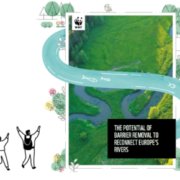
Cover of the WWF report

New WWF analysis reveals the possibility of freeing 50’000 km of rivers in Europe (8’130 km in France) !

A report released on 19 April 2021 by WWF shows that 935 river obstacles present a strong potential for removal in France.

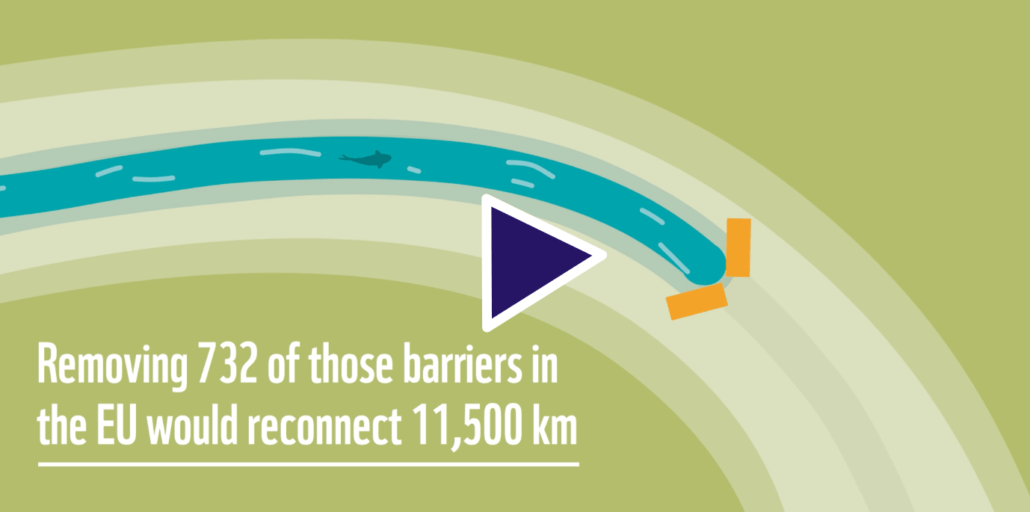
The study demonstrates the massive potential of barrier removal to restore free-flowing rivers in Europe.

The report ‘The potential of barrier removal to reconnect Europe’s rivers’ analyses a sample of 30,000 barriers on large and medium-sized rivers in Europe, and assesses their reconnection potential for the whole continent, the EU27, and by country, based on the length of river which could be reconnected and the ecological quality of reconnected rivers which could be achieved through barrier removal.

>> Read our April 21 press release in full

> Read the WWF report

>>Video :

Report cover page

Hydropower in Europe : Transformation – not development (WWF Report)

European rivers are the most fragmented in the world, contributing to the rapid decline in freshwater biodiversity.
As a result, a drastic transformation of the hydropower sector is urgently needed to reduce its environmental
impact. This can be achieved through several steps: the first one is to stop building new hydropower plants which worsen the fragmentation of rivers and lead to the loss of precious habitats and species.

The second step is to lessen the environmental impact of existing plants through plant environmental refurbishment. From ecological flows to acquiring knowledge on fish migration patterns, hydropower plants can be adapted and managed in a more nature- sensitive manner, as illustrated by a case study on the Allier River in the Loire Valley, France.

The third step is the restoration of the rivers’ natural functions,
in particular continuity and habitats. The case study on the construction of a reproduction channel next to the Imatra hydropower plant in Finland, illustrates active restoration measures that should be taken to complement mitigation measures at the plant itself.

download the WWF Report :  https://www.wwf.eu/what_we_do/water/?uNewsID=2329866 


Join the global call to protect rivers !

Whether you are an individual, association, or other organization, you can join International Rivers’ call for river conservation. ERN has signed it.

To learn more, and possibly sign, click on: https://www.rivers4recovery.org

Petition to sign against a micro-power plant project on an alpine torrent, in Italy (Valsesia, Piemont)

Another micro-power plant project on an alpine torrent, this time in Italy … What a shame!

Let’s act by signing the petition launched by the committee for the defense of the Sesia and its tributaries, which has been fighting for 30 years – successfully so far – against any hydro project in the wonderful Sesia valley. Unfortunately, in the valley tributary of the Sorba torrent, the small village of Rassa – 67 residents (!) – has managed to get authorization for a 226KW power plant. An absurd project, doomed to be in deficit and above all devastating for the entire surrounding ecosystem. This must be avoided at all costs…
=> See the petition

Manifesto : STOP new hydropower in Europe

Photo : Hydroelectric power station in Arribes del Duero called Mirador de Iberdrola in Salamanca © Jose Luis Vega _ Shutterstock.jpg

Alongside 150 NGOs, ERN signed a manifesto calling on Europe to stop supporting hydropower.
SEE HERE FOR THE FULL MANIFESTO AND LIST OF SIGNATORIES

To learn more, read below the WWF press release issued on Monday 26 October.

Following World Fish Migration Day, 150 NGOs have banded together to call on the EU institutions to end public financing for new hydropower projects in Europe.

Building more hydropower flies in the face of the European Green Deal’s biodiversity goals, given the small contribution new plants would bring to the energy transition weighted against the environmental damage they cause [1]. WWF, along with signatories such as Climate Action Network Europe and BirdLife ask for public investments to be redirected towards upgrades of existing plants, energy efficiency measures, and lower impact renewable energy alternatives like wind and solar power.  

The mobilisation by NGOs comes a few months after new analysis found that 93% of European freshwater migratory fish had been lost since 1970, partly due to hydropower [2]. While 91% of existing and planned plants in Europe are considered ‘small’ – meaning they have, a capacity below 10MW – and contribute little to the energy mix, their environmental impacts are dramatic.  If these plants go ahead, they will destroy Europe’s last free-flowing rivers and further degrade increasingly vulnerable freshwater ecosystems.

Andreas Baumüller, Head of Natural Resources, WWF European Policy Office said: “The European Commission and the European financial institutions’ continued financing of new hydropower projects completely contradicts the ambitions of the EU Biodiversity Strategy and its goal of restoring 25,000km of free-flowing rivers. Removing financing tools and incentives to new hydropower projects is an increasingly urgent step towards reversing biodiversity loss in the EU, meeting the targets set by the Water Framework Directive, and supporting the European Green Deal.”

Alex Mason, Senior Policy Officer, Climate & Energy, WWF European Policy Office added : “We urgently need to move to a 100% renewable energy system. But the contribution new hydropower could make is trivial compared to the massive ecological damage it would cause. We should be investing in wind and solar instead, combined with demand flexibility and storage.” 

The manifesto calls for:

  • An end to EU subsidising new hydropower plants of all sizes, including via regional policy and Projects of Common Interest funds.
  • An end to European Investment Bank and European Bank for Reconstruction and Development financing for all new hydropower plants in Europe.
  • All new hydropower to be excluded from the list of renewable energies eligible for State Aid.
  • Public finance for new hydropower plants to be reallocated to ecological refurbishments, dam removal projects especially where the dams are now obsolete, and towards other renewable energies like wind and solar power.

SEE HERE FOR THE FULL MANIFESTO AND LIST OF SIGNATORIES

Notes to the editor:

[1] If all the 5,500+ planned hydropower plants in the EU were built, the share of the EU electricity generation provided by hydropower would go from 10% to 11.2-13.9%. Eurostat, 2017; EuroNatur, GEOTA, RiverWatch, WWF, Hydropower pressure on European rivers: The story in numbers, 2019.
[2] IUCN, WFMF, WWF, TNC, ZSL, The Living Planet Index (LPI) for migratory freshwater fish, 2020
[3] Mapping a faster route to zero emissions Europe

Contact:

Alexandra Chevalier
Senior Communications Officer, Water
achevalier@wwf.eu
+32 484 49 43 54

Claire Baffert
Senior Policy Officer, Water
cbaffert@wwf.eu
+32 492 73 10 92

Infografie

Worldwide more than 500 dams planned inside protected areas: Study

More than 500 dams planned inside protected areas: Study (source Mongabay)

by  on 5 August 2020

  • More than 500 dams are either under construction or planned within protected areas over the next two decades, according to a new study.
  • The study found that more than 1,200 large dams already exist within protected areas.
  • The authors strongly encourage governments to avoid constructing dams in or near protected areas and instead to look toward renewable energies such as wind and solar.
  • The researchers express concerns about ongoing rollbacks to environmental protections, especially amid the COVID-19 pandemic.

Hundreds of dams are planned within global protected areas, a prospect that threatens people, plants and animals that rely on the lifegiving waters of free-flowing rivers.

According to a first-of-its-kind global analysis published in the journal Conservation Letters, 509 dams, or 14% of the total currently under construction or planned for the next two decades, are set to be built in protected areas.

“The sheer number of dams that are planned within protected areas is alarming,” said Michele Thieme, lead author of the study and lead freshwater scientist at WWF. “Rivers are the lifeblood of ecosystems. Any policy that aims to conserve nature must prioritize the free flow of rivers.”

The researchers overlaid data on planned dams from the Global Dam Watch database onto maps from the World Database on Protected Areas to arrive at the number. The team also identified 1,249 large dams already in place within existing protected areas using the Global Reservoir and Dam Database (GRanD).

Worldwide, rivers aren’t what they used to be. A 2019 study revealed that two-thirds of the world’s longest rivers are no longer free-flowing. These long rivers (more than 1,000 kilometers or 621 miles long) are blocked by dams and infrastructure. This fragmentation blocks the flow of water and nutrient-carrying sediments to downstream habitats, altering ecosystems and impeding the migration and reproduction of fish and other freshwater species

read the complet article (Mongbay Website)


Great Big Jumps in many places despite Covid .

Good news. Despite the official cancellation of the Big Jumps 2020 on July 12th due to the Covid 19 epidemic, some very original events took place. We already have knowledge of Big Jumps in Belgium, Bosnia Herzegovina, France, Italy, Poland, Portugal, Spain. In a few days we will be able to publish photos and videos

EU water law will NOT be changed, confirms European Commission

In a landmark day for Europe’s rivers, lakes and wetlands, the European Commission has announced, 22nd of June,  that the EU’s strong water legislation — the EU Water Framework Directive (WFD) — will not be changed. We welcome this excellent news after more than two years of fitness check.

In a statement to POLITICO, the EU’s Commissioner for Environment, Ocean and Fisheries, Virginijus Sinkevičius, confirmed the need to focus on supporting implementation and enforcement “without changing the directive”.The message from the Commission is clear: the WFD is an essential piece of EU environmental legislation and is here to stay in its current form.

The European Commission must now work with all stakeholders to speed up implementation and ensure that the WFD objectives are achieved by 2027 at the latest. Gaps in implementation, highlighted by the evaluation, will need to be addressed while putting in place the European “Green Deal”.

Below Press release from Living Rivers Europe coaltion 

In a landmark day for Europe’s rivers, lakes and wetlands, the European Commission has announced that the EU’s strong water legislation — the EU Water Framework Directive (WFD) — will not be changed.

In a statement to POLITICO, the EU’s Commissioner for Environment, Ocean and Fisheries, Virginijus Sinkevičius, confirmed the need to focus on supporting implementation and enforcement “without changing the directive”.The message from the Commission is clear: the WFD is an essential piece of EU environmental legislation and is here to stay in its current form.

The decision comes six months after the law was concluded to be “fit-for-purpose”, following a thorough two-year evaluation. Over the course of this process, more than 375,000 citizens demanded that the law be kept in its current form and better implemented by their governments.

The Commission’s decision is welcomed by WWF, EEB, the European Anglers Alliance, European Rivers Network and Wetlands International, who together form the Living Rivers Europe coalition and led the #ProtectWater campaign to safeguard the WFD.

The WFD is one of the EU’s most ambitious and holistic pieces of environmental legislation, setting the target of having 100% of the EU’s freshwater ecosystems in good health by 2027 at the very latest [1], up from just 40% currently [2]. The EU must meet this target in order to preserve its water resources and ensure Europe can adapt to climate change. But implementation from Member States has been weak and political will to make the law work in practice low. There has also been much pressure to weaken the legislation, including from industry lobby groups.

Ester Asin, Director of WWF’s European Policy Office, said:

“Good legislation is not something to be tampered with. The EU needs the Water Framework Directive to safeguard its water supply, halt and reverse biodiversity loss and tackle climate change. We congratulate the Commission for standing by the strong evidence, taking the views of EU citizens on board, and following up on the ambitions of the European Green Deal and EU Biodiversity Strategy. But with 2027 right around the corner, better implementation needs to start right now. We look forward to working with the Commission on ensuring the law works not just on paper but in practice to bring life back to our rivers at last.”

With this announcement, it is clear that there can be no further delays from Member States. The European Commission must now work with all relevant stakeholders to fast-track implementation and ensure that the WFD’s objectives are reached by 2027 at the very latest. Member States will need to pull out all the stops in the next cycle of River Basin Management Plans (RBMPs).

Since the launch of the fitness check, the WFD has received public support from hundreds of thousands of EU citizens and scientists. The critical role of the WFD in halting the decline in freshwater biodiversity was highlighted in a letter from close to 6,000 scientists, which was sent to the Commission at the end of last year. The WFD also has the public support of a group of businesses, who have urged the Commission and EU Member States to preserve this groundbreaking law in its current form.

Roberto Epple, President of ERN France, said :

“This is a great victory after two years of evaluation of the directive, a success of the #protectwater campaign led by the Living Rivers Europe coalition, of which ERN is a member, and supported by thousands of citizens and hundreds of NGOs. France made no mistake when it asked in March 2020 that the Directive should not be modified. Having taken this step, we must now focus on accelerating efforts to restore and protect our freshwater ecosystems. The current context, the covid19 crisis , repeated droughts, etc., but also the European green deal, the EU biodiversity strategy no longer leaves us with a choice, all the players, including industry, must respond now and be equal to the challenges to be met to make water protection a reality.”

Sergiy Moroz, Policy Manager for Water and Biodiversity at the EEB, said:

“The coronavirus crisis has highlighted the importance of healthy ecosystems as an insurance against pandemics, in addition to the countless other benefits that healthy, resilient water environments provide. By giving the EU’s groundbreaking water legislation the final sign-off, the European Commission and Member States can now get on with the job at hand: Bringing our rivers, lakes and groundwater aquifers to ecological health by 2027 at the latest. The gaps in the implementation of this law that the two-year evaluation highlighted will need to be addressed while putting in place the European Green Deal.”

Steven Weiss, Associate Professor at the Institute of Zoology, Karl-Franzens University of Graz and signatory of the letter from scientists, said

“As one of nearly 6,000 scientists who signed a letter of support to the Water Framework Directive, I am delighted to see that the European Commission has taken on board the views of the scientific community. Freshwater species are currently the most vulnerable in Europe. Full implementation of the Water Framework Directive is vital in reversing this trend, and in protecting the diversity of life and processes that freshwater ecosystems support.”

ENDS

Contact:
Sophie Bauer
Communications Officer (Freshwater)
WWF European Policy Office
sbauer@wwf.eu 
+32 471 05 25 11

References:

[1] The original deadline for meeting this final objective was 2015, and was missed by a long shot. With 60% of EU waters still not healthy, the European Commission and Member States need to pull out all the stops to boost implementation and meet the final 2027 deadline.

[2] The latest data from the European Environment Agency shows that 60% of EU fresh waters are currently not healthy and fail to meet the WFD’s standards (EEA, European waters — Assessment of status and pressures 2018)

Notes to the editor:

European Commission stands strong in the face of pressure to weaken the EU’s water legislation:

  • Since the launch of the European Commission’s evaluation, the Water Framework Directive has been under significant pressure from business lobby groups, who have been pushing for a weakening of the legislation. Many of these groups represent sectors which exert huge pressure on freshwater ecosystems, including the hydropower industry and industrial agriculture.
  • In March this year, the lobby organisation BusinessEurope attempted to influence an exchange of views on the follow-up to the directive’s evaluation taking place at the Environment Council, calling for less stringent water protection requirements. A majority of Member States expressed their support for the fitness check conclusions on the Water Framework Directive ahead of/on the day of this meeting. Several – including France, Austria, Denmark and Greece – stated that the WFD needs to be maintained in its current form.

What we need now:

  • The European Commission must now work with Member States and all relevant stakeholders to fast-track implementation and ensure that the WFD’s objectives are reached by 2027 at the very latest. Concretely, we will be looking out for the following implementation gaps to be tackled:

On dam removal:

  • In the past, Member States’ River Basin Management Plans (RBMPs) have missed the opportunity to improve river health by tackling hydromorphological pressures (changes to the physical shape and/or flow of a water body), including through dam removal. Dam removal has large economic benefits, in terms of job creation, and is cost-efficient when compared to the costs of maintaining obsolete dams, and increases resilience to extreme weather events.
  • Whilst the EU’s Biodiversity Strategy includes the concrete commitment to restore 25,000 km of free-flowing rivers (including through dam removal), it is neither clear from this nor from the Recovery Package how the Commission will financially support this target. Dedicated funding is needed to turn this commitment into a reality, and the Natural Capital and Circular Economy Initiative proposed under the Recovery Package could be an opportunity for this. Freeing up money for this initiative is a win-win, helping meet the Biodiversity Strategy’s targets and the objectives of the WFD.

On drought:

  • Drought management strategies need to be developed as part of Member States’ River Basin Management Plans and as a preventative response to climate change, rather than solely as an emergency response when droughts have already hit. Water management is not an isolated issue and must be tackled holistically, as required under the WFD.

On financing:

  • The European Commission’s WFD implementation report and fitness check conclusions highlighted lack of funding as a significant obstacle to the law’s implementation. If Member States were to fully implement cost recovery under the WFD, they would not be depriving themselves from a source of revenue. Moreover, they would ensure that the costs of implementing the measures were not solely borne by consumers, while at the same time incentivising good practices.

On hydropower:

  • The pressure of hydropower dams on Europe’s rivers is immense, with more than 20,000 existing plants and more than 8,000 additional ones on the cards. With the costs of solar and wind plummeting, the EU must invest in these renewable options rather than giving the green light to more hydropower plants, and invest in the refurbishment of existing hydropower plants.

21 July 2020: 1000th day of the revision process of the WFD! It is time for the European Commission to conclude this debate!

ACT NOW !!

July 21 will mark the 1,000th day since the launch of the independent review of our water legislation the Water Framework Directive.

From now until the beginning of July, European citizens, through the “Protectwater” campaign, are called upon to mobilise once again with the Commission to stop an endless debate on possible changes that could weaken this unique law. Write personally, via a form to the European Commission to express to it in your own words this incomprehension and the urgent need to take a decision to protect our rivers in Europe. The form allows you to send a message from your own mailbox directly to Virginijus Sinkevičius, European Commissioner for Environment, Oceans and Fisheries, and Frans Timmermans, Executive Vice-President.

We have already shown that citizens can mobilise in numbers (375,386 to be precise! with the public consultation). Now write personal and authentic messages, whether it is a story about your river, or why you took part in the public consultation, etc.

more infos

23 companies signed a joint business statement of support for the WFD

23 large companies taking a stand for the EU water law & calling on the EU to uphold it ! Fantastic !

We hope EU Commission will bear this in mind as it finalises its #BiodiversityStrategy.

Euractiv published the announcement of this statement made this morning. The statement is available on Coca-Cola’s website.

“DON’T WATER DOWN THE RULES (Read complet article on euractiv.com)

“Why Europe’s rules on protecting our water are working – and why we should stick with them.

There has never been a greater need for us to protect and restore our freshwater resources in Europe. […] Coca-Cola, as the world’s largest beverage producer, recognizes the need to protect freshwater resources for people, nature and business. It’s why effective water management is one of our key business priorities. […]. That’s why Coca-Cola and two of its biggest bottling partners in Europe (Coca-Cola European Partners and Coca-Cola Hellenic), along with 20 other companies who have signed a joint business statement stand with the 375,000 European citizens who have urged the European Commission – and governments across the EU – to maintain the EU’s Water Framework Directive in its current form. We want to see this Directive kept intact and fully implemented and enforced, as called for by numerous environmental groups through the #ProtectWater campaign. This EU wide law is vital.  It sets a much-needed deadline for us to protect and restore Europe’s freshwater ecosystems by 2027. […] In fact, other countries outside of Europe, including India and China, have been so inspired by the governance model provided by this Directive, they have adopted similar principles when drafting their own legislation. To maintain its credibility globally, the EU cannot and must not change the current legal requirements of the Water Framework Directive.  The rules are working and we should stick with them.