World Migratory Fish Day: Watch and share our videos

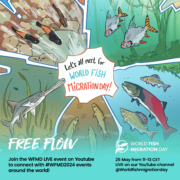
To mark World Migratory Fish Day on Saturday 25 May, ERN-SOS Loire Vivante is launching three videos about Atlantic salmon and ecological continuity.

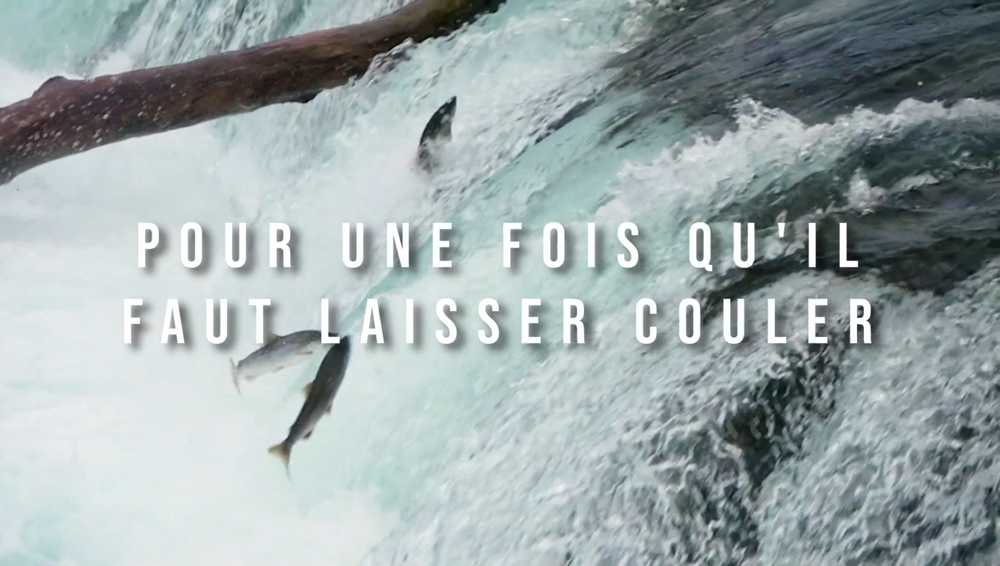
These videos are previews of remixed extracts from the documentary entitled “Pour une fois qu’il faut laisser couler”, which will be released shortly.

The 2-minute portrait and landscape modules presented here, in French and English, plunge you into the life of the Atlantic salmon in the Allier and Sélune rivers and present 2 major innovative and far-reaching actions that France has taken to restore access to the upstream areas of rivers and streams, the historic breeding grounds of the Atlantic salmon.

Discover these videos :

The New Poutès, the dam that opens for wild salmon 
watch the French version / watch the English version

Allier River : An obstacle course for salmon
watch the French version / watch the English version

France: The largest dam removal project in the world, 2017-2022
watch the French version / watch the English version


All the videos can also be viewed on our new YouTube channel: “Rivières Vivantes – Laisser Couler”: https://www.youtube.com/channel/UCjokCmOpXMcgD4ag3UY3ctg

Note :

  • France is the European leader in the restoration of ecological continuity, particularly through the removal of small and large transverse structures. Since 1997, it has built up recognised expertise through innovative policies and major international projects. At a time when the decline in populations of migratory fish and fish at the head of river basins, such as trout, is alarming, we need to pursue innovative actions that provide the most effective response to the challenges of biodiversity.
  • To publicise France’s experience, you will soon be able to watch the full documentary produced by ERN – SOS Loire Vivante as part of the OFB’s Mobbiodiv call for projects. The 3-part film, told from the point of view of our association, traces the history of the major events and projects that have marked the restoration of free movement of rivers in France from 1997 to the present day.
    “For once it’s time to let things flow
    part 1/3: Reopening river routes to large migratory species
    part 2/3: Reconnecting small and medium-sized rivers
    part 3/3: Rethinking and reconfiguring major blocking structures

A new report from WWF France warns of the decline in biodiversity in French rivers

Every two years, the WWF publishes a report measuring the state of biodiversity. In 2024, we are presented with the state of France’s rivers.

The report states that “Despite spending an estimated €500 billion on water policies over the past 20 years, freshwater bird and fish populations are stagnating at a worrying rate, and only 43.1% of rivers and water bodies in France are in good ecological condition”. It also highlights “a slight decline in bird and fish populations observed in rivers (-0.4% in 20 years), with emblematic species such as the river trout and the great crested grebe particularly threatened. This virtual stagnation masks an overall deterioration in the quality of small rivers in rural areas, offset by an improvement in the water quality of rivers downstream of large towns”. River trout populations, which depend on upstream areas of rivers, are a good illustration of this phenomenon, with a 44% drop in populations in 20 years, as a result of serious deterioration in many rivers at the head of the basin.

With 3 years to go before the deadline set by the WFD, we need to think again and give a major boost to improving the resilience of the water cycle (preserving wetlands, overhauling the agricultural system).

Read Roberto Epple interview in the newspaper “Liberation

Read report (french)

81% average decline in migratory fish populations since 1970

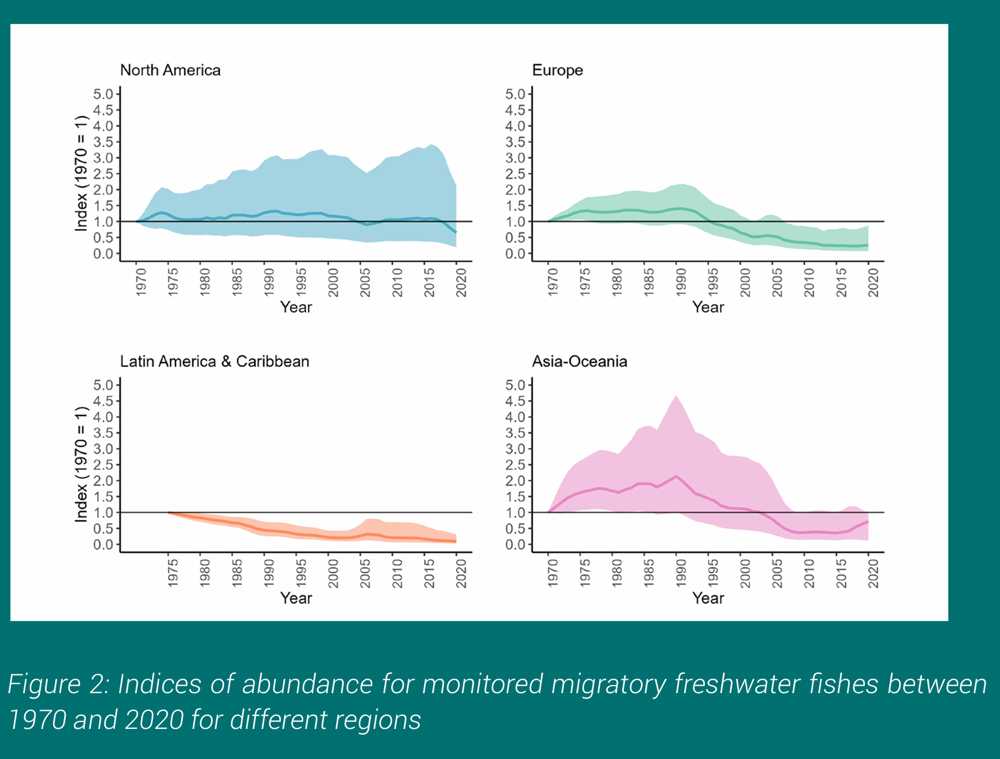
The new Living Planet Index (LPI) report on migratory freshwater fish published today by the World Fish Migration Foundation (WFMF), ZSL, IUCN, The Nature Conservancy (TNC), Wetlands International and WWF has highlighted an 81% decline in the size of monitored populations on average between 1970 and 2020, including catastrophic declines of 91% in Latin America and the Caribbean and 75% in Europe.

Populations of migratory freshwater fish species continue to decline across the globe, risking the food security and livelihoods of millions of people, the survival of countless other species, and the health and resilience of rivers, lakes and wetlands. Habitat loss and degradation – including fragmentation of rivers by dams and other barriers and conversion of wetlands for agriculture – account for half of the threats to migratory fishes, followed by over-exploitation. Increasing pollution and the worsening impacts of climate change are also fuelling the fall in freshwater migratory fish species, which have now been declining consistently for 30 years.
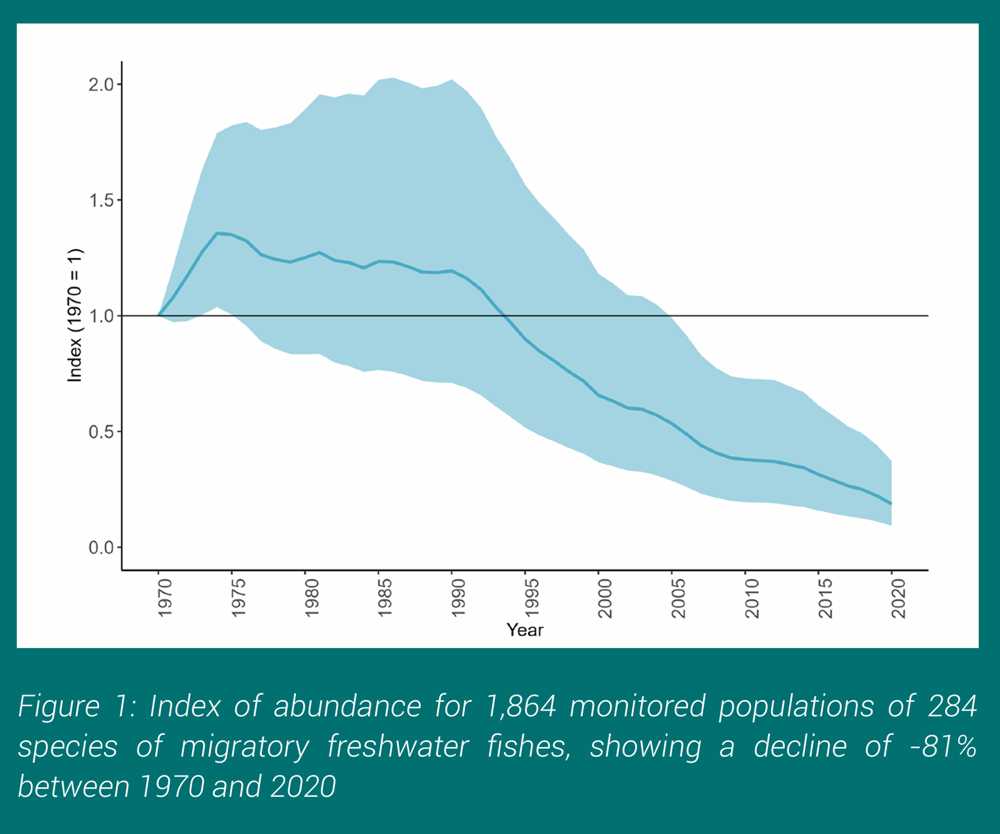
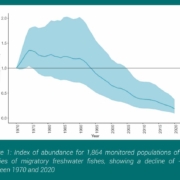
The index reports on population trends of 284 monitored freshwater f ish species, representing 1,864 populations (Figure 1). Globally, the index shows a decline of -81% between 1970 and 2020, or an annual decline of 3.3%. This downward trend has been consistent over the last 3 decades. In terms of global species trends, 65% of species have declined on average, while 31% have increased.

In a press release Herman Wanningen, founder of the World Fish Migration Foundation said Herman Wanningen, fondateur de la World Fish Migration Foundation a déclaré “The catastrophic decline in migratory fish populations is a deafening wake-up call for the world. We must act now to save these keystone species and their rivers. Migratory fish are central to the cultures of many Indigenous Peoples, nourish millions of people across the globe, and sustain a vast web of species and ecosystems. We cannot continue to let them slip silently away.”

The report is not all doom and gloom. Nearly one third of monitored species have increased, suggesting that conservation efforts and improved management can have positive impacts. Some promising strategies include the improved and/or species-focused management of fisheries, habitat restoration, dam removals, the creation of conservation sanctuaries, and legal protection.

For example, in Europe and the United States, thousands of dams, levees, weirs and other river barriers have been removed in recent decades, and momentum for such actions is growing*. Dam removals can be cost-effective, job-producing solutions that help reverse the disturbing trend of biodiversity loss in freshwater systems as well as solutions that improve river health and resilience for people, too.

While scaling up dam removals is a key solution to reversing the collapse in freshwater migratory fish populations, there are more. Decision makers across the globe must urgently accelerate efforts to protect and restore free-flowing rivers through basin-wide planning, investing in sustainable renewable alternatives to the thousands of new hydropower dams that are planned across the world as well as other measures that contribute to the ambitious goals in the Kunming-Montreal Global Biodiversity Framework to protect 30% of inland waters and restore 30% of degraded inland waters. Rising to the Freshwater Challenge’s goal of restoring 300,000 km of degraded rivers will contribute enormously to reversing the trend in migratory fish populations.

Along with protecting and restoring healthy rivers, there is an urgent need to strengthen monitoring efforts; better understand fish species’ life-history, movement and behaviour; expand international cooperation, such as adding more freshwater migratory fish species to the Convention on Migratory Species (CMS); and promote greater public and political engagement.

There are many initiatives around the world supporting the recovery of migratory fish species and freshwater biodiversity in general. The Emergency Recovery Plan for Freshwater Biodiversity highlights a variety of measures that could transform the management and health of rivers, lakes and wetlands to improve the health of freshwater systems and biodiversity.

Read the executive summary

Read the study 

*In 2023, Europe removed a record 487 barriers – a whopping 50% increase over the previous high reported in 2022. Meanwhile, in the United States, the largest dam removals in history are currently underway along the Klamath River in California and Oregon.

Read press release (en anglais) 
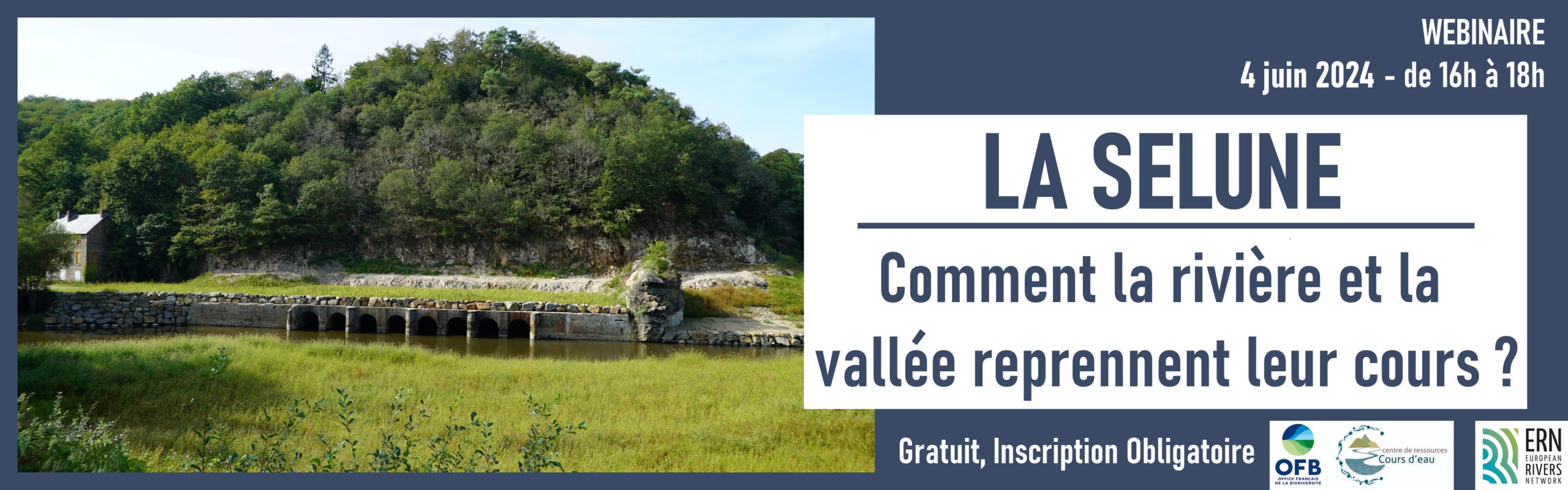
Save the date: Tuesday 4 June from 4pm to 6pm Webinar Sélune – how do the river and the valley get back into flow?

In the series of Tuesday webinars organised by ERN- SOS Loire Vivante, book your Tuesday 4 June trip to the Sélune.

ERN France in partnership with the OFB is organising a webinar on the Sélune on Tuesday 4 June from 4pm to 6pm.

We will be welcoming 3 researchers. They will present the latest results of their work. Focusing on the post-effacement phase, we will try to understand how the river and the valley are resuming their course. The presentations will be followed by an hour of discussion.

Programme:

Alain Crave: Restoration of sedimentary, hydric and chemical continuity and changes in water quality
François Martignac: Recolonisation of the Sélune valley by migratory fish
Marie-Anne Germaine: What project for the region after the dismantling of the Sélune dams? A social approach to ecological restoration


If you are interested, register to take part in the webinar (in french) : https://us02web.zoom.us/webinar/register/WN_ytrz6dxMQUCAhysM6DCCVw

All replays of our webinars (french only) :  Webinaires – European Rivers Network (ern.org)

The “Vote Nature” alliance unveils its scoreboard for the European Parliament

A new in-depth study carried out by five major climate and environmental organisations, brought together under the “Vote Nature” alliance and comprising BEE, CAN Europe, BirdLife Europe, Transport & Environment and the WWF European Policy Office, reveals that only a minority of MEPs during the 2019 – 2024 mandate acted to protect Europe’s climate, nature and air quality. The majority of MEPs acted instead as either “procrastinators” or “prehistoric thinkers”, delaying real action with patchy and inconsistent voting records, or worse, completely failing to rise to the challenge of the crises Europe is facing.

The Scoreboard provides a comprehensive assessment of MEPs’ voting behaviour between 2019 and 2024 across 30 policy files on climate, nature, pollution, and circular economy.

It categorises political parties into three types:

🦸‍♀️ Protectors: A small yet vital group who have staunchly supported the European Green Deal.
🐌 Procrastinators: Those with inconsistent voting records, often delaying necessary actions.
🦖 Prehistoric Thinkers: Those who opposed progressive measures, obstructing crucial progress.

Access the scoreboard : EU Elections: EU Parliament Scoreboard 2019-2024 (caneurope.org)

This June, citizens will be able to hold their representatives accountable for their recent parliamentary performance and demand higher ambition from the European Parliament in the years to come.

*The scores are based on the voting recommendations of the five European environmental organisations.

Logo Openrivers

Open Rivers Programme selects a new project submitted by ERN

Following the successful removal of 4 weirs on the Tardoire in 2023, ERN will have the pleasure of supporting, as part of the Open Rivers programme, the removal of the Pont de Rhodes weir being carried out by the Syndicat Mixte de la Dordogne Moyenne et de la Cère Aval, on the Ressegue, a sub-tributary of the Cère (BV Dordogne). The water pearl mussel, which is on the IUCN red list, is present in this basin. The restoration work will reconnect 12.3 km, i.e. 96% of the length of the Ressegue, and 23 km of watercourses throughout the catchment area.

The work will be 100% funded by the Open Rivers programme, for which ERN and the SMDMCA applied in 2023. The study phase was also financed by the Open Rivers programme with the ERN/SMDMCA partnership.

The next call for applications is set for 29th October 2024 (grant categories A: Programme-supported dam removals and B: Enabling others to remove dams).

More infos : https://www.ern.org/fr/openrivers/


Coming soon: Advocacy videos for ecological continuity

With the support of the OFB as part of the Mobbiodiv call for projects, ERN will shortly be publishing a documentary on the restoration of ecological continuity in France from 1997 to the present day. Entitled “Pour une fois qu’il faut laisser couler”, the 3-part film traces the history of the major events and projects that have marked the restoration of the free movement of rivers in France. It is told from the point of view of our association. English version will aslo be available

Short modules will soon be available on the web.

part 1/3: Reopening river routes to large migratory species
part 2/3: Reconnecting small and medium-sized rivers
part 3/3: Rethinking and reconfiguring major blocking structures

At the end of 2023, the Water and Biodiversity Ministry published a video on ecological continuity, answering questions on the subject and deconstructing preconceived ideas.

Watch the video (in french) Le Vrai / Faux de la continuité écologique des cours d’eau

The removal of the Urrutienea dam in France, finalist in the European prize for the removal of dams 2023, votes are open

The removal of the Urrutienea dam on the River Nivelle in France has been selected to compete for the European prize for the removal of dams.

3 projects have been shortlisted: “Removal of the Urrutienea dam on the River Nivelle in France”, “Removal of the Garlogie dam in Scotland” and “Removal of the Vaqueiros weir in Portugal”. You can now vote for your favourite. Voting is open until 22 March at 11:59. Vote now! Dam Removal Award Nominees 2023 – Dam Removal Europe 

Focus on the project on the Nivelle, the other projects can be found on the DRE website.

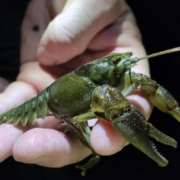
At the heart of a cross-border landscape between Spain and France, the Nivelle is a river rich in biodiversity and is a major centre of interest for this tourist region in summer. The 5-metre-high dam had been out of action for 10 years! An impassable barrier for migratory fish, in particular salmon, eels and other emblematic species (freshwater pearl mussels, Pyrenean Desman, European otters, white-clawed crayfish and others). The fishing federation, which initiated the project, bought the site in order to dismantle it completely. On the Spanish side, their partners had already worked on removing the obstacles, and they knew that this dam was the last completely impassable dam on the Nivelle.

Their main obstacle was to convince the local authorities that economic development (hydroelectricity) could not be achieved at the expense of local biodiversity. All in all, it took 20 years to break the deadlock!

Just two months after completion of the work, the results are extraordinary. The first Atlantic salmon spawning grounds located 6 km upstream of the dam were observed in Spain – for the first time in several centuries!

The work carried out in parallel since 2020 to conserve and restore the freshwater pearl mussel on the Nivelle has also been decisive. This species, the only one genetically unique in the Pyrenees, lives in symbiosis with salmon. These actions include reproduction to boost the natural population, which was threatened with extinction within the next 10 years. Removing the dam was therefore essential to restoring the habitat and reclaiming the whole of the upstream catchment.

Numerous partners were involved in the project: scientific research bodies (INRAE), associations (AAPPMA Nivelle, CEN Nouvelle Aquitaine, MIGRADOUR), the Government of Navarre, the vocational college (which houses the facilities for the ex-situ pearl mussel rearing project), and foundations (Fondation française des pêcheurs, Fondation Arcadia – Open Rivers Programme).


The Dam Removal Award is organised by Dam Removal Europe, the World Fish Migration Foundation, the European Investment Bank, and The Nature Conservancy, supported by the Dutch Postcode Lottery, Forest Peace Foundation and ABN AMRO Bank. The most inspiring project will be awarded a special trophy and 15.000 Euros towards the team’s next removal project, and the winner will be revealed during the upcoming Free Flow Conference in Groningen, The Netherlands. 


logo Living Rivers Europe

Open letter: Nature-based water resilience cannot wait

The 🇪🇺 has dropped an essential plan to make Europe more water resilient 🤯

Floods & droughts are worsening, we must be prepared!

Today, 28 organisations, including NGOs, city networks, sustainable farmers, trade unions and professional associations, are calling on the @EUCommissionto put a nature-based EU Water Resilience Initiative back on the agenda before the 2024 🇪🇺 elections.

Presented as an end-of-term priority by the President of the European Commission, this communication was announced for 12 March, before finally being postponed to an unknown date. However in the face of more intense and frequent extreme weather events related to climate change, the EU should accelerate its action to address recurrent water scarcity and protect society against the effects of droughts, floods, wildfires and sea level rise. Achieving water resilience through nature based solutions should be a political priority under the next European Commission, with healthy freshwater and marine ecosystems – rivers, lakes, wetlands, deltas and coastal areas – at its core.

Read our open letter to @vonderleyen

Adoption of the European Nature Restauration Law

We have some very good news from Brussels. The European Nature Restauration Law has been adopted.

The opposite was to be feared, as it had become one of the targets of farmers’ protests in the Member States. Farming unions had urged members of the parliament to support the agricultural sector by rejecting the text. Lawmakers passed the law with 329 votes in favor, 275 against, and 24 abstentions.

According to the new law, the EU must put in place restoration measures for at least 20% of the EU’s land and sea areas by 2030 and all ecosystems by 2050. As far as RIVERS are concerned, among others, the objective of 25,000 km of free-flowing RIVERS!

Our NGOs and allied coalitions (including LRE ) fought very hard. It deserves a big bravo.


Background:

Over 80% of European habitats are in poor shape. The Commission proposed on 22 June 2022 a nature restoration law to contribute to the long-term recovery of damaged nature across the EU’s land and sea areas, to achieve EU climate and biodiversity objectives and to reach the EU’s international commitments, in particular the UN Kunming-Montreal Global Biodiversity framework. According to the Commission, the new law would bring significant economic benefits, as every euro invested would result in at least 8 euro in benefits.