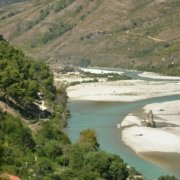
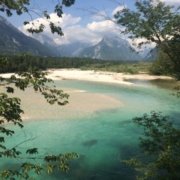
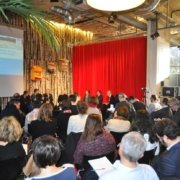
25,000 km of open waterways?

Registration is now open (in French only)

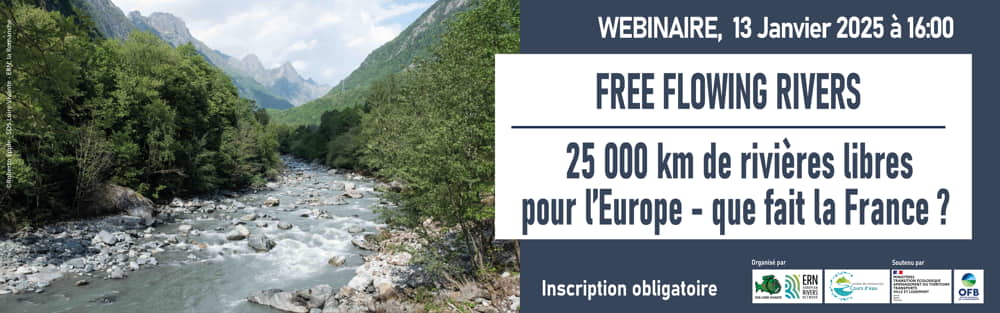
  • 13 January from 4pm to 6pm: 25,000 km of free-flowing rivers for Europe – what is France doing?


registration (in French only)

The European Union has set itself an ambitious target: to restore at least 25,000 km of free-flowing watercourses by 2030. Under Article 9 of the Nature Restoration Law (NRL), officially adopted on 18 August 2024, Member States must contribute to this target and propose their own contributions. Article 9 of the Nature Restoration Regulation aims to reverse the decline in biodiversity in Europe by 2030 and achieve healthy and resilient ecosystems, with a clear objective of reducing pressures. For watercourses, for example, removing obsolete obstacles is a priority.
But what is Europe’s definition of a free-flowing river? What methodology should be used to characterise them? What actions should be taken to contribute to the objective? What ambitions should we set ourselves?


1h de présentations, 1h round table / Q&A with public participation 

by  ERN- SOS Loire Vivante (Roberto Epple, Président, Corinne Ronot, Co-directrice)

with

  • Andrea Goltara, CIRF – Italian Centre for River Restoration,
  • Claire-Cécile Garnier, Cheffe du Bureau de la ressource en eau, des milieux aquatiques et de la pêche en eau douce, Direction de l’Eau et de la Biodiversité

  • Claire Baffert, Senior EU Policy Officer, Water & Climate Change Adaptation| WWF European Policy Office

  • Karl Kreutzenberger, OFB, Chargé de mission « Migrateurs amphihalins et hydromorphologie », membre ECOSTAT

France : Resilience Day : SOS Loire Vivante – ERN publishes a video on the anti-floods developments in Brives-Charensac

France : National Resilience Day will be held on 13 October 2025. Its aim is to raise public awareness and promote safe behaviour in the event of natural disasters (fires, floods, etc.).
The effects of climate change are already showing us that extreme events are increasing in number and intensity, as evidenced by the recurrence of severe floods and devastating fires in recent years.

Being alerted in time and learning the right actions to take are essential for saving lives. Preparing our environment and making it resilient to these hazards has become essential for long-term action.

> National Resilience Day (government)

Fortunately, nature already offers us many solutions. With regard to flood risk, for example, the infiltration of water directly into the soil, natural flood expansion areas with log jams, and open spaces along watercourses can reduce the impact of flooding in urbanised areas. The key is to integrate the functioning of the river with its floodplain.

In Brives-Charensac, this method was tested over 30 years ago. During the recent floods in October 2024, it once again proved its worth.
Following the devastating and deadly floods of 1980, a dam project was devised to protect Brives-Charensac from flooding. SOS Loire Vivante – ERN was  strongly opposed the flooding of the Haute-Loire Gorges and the loss of its rich biodiversity, proposing instead to give space back to the river upstream and in Brives-Charensac over several kilometres.

Discover the developments carried out in the 1990s in a drone video

> video 3,5 min in French available on our YouTube channel

> Listen again to the webinar organised in December 2024 retracing the history of these developments and the evolution of the alert system with Yvan Cordier, Prefect of Haute Loire, Jean-Paul Bringer, Deputy Mayor of Brives-Charensac, Michel Cantal-Dupart, Urban Planner and Architect, and Tatiana Gontier, DDT 43 Head of the Risk Prevention Office.

logo Living Rivers Europe

Living Rivers Europe recommendations to foster the implementation of the Water Framework Directive

Lobbies from the business, agriculture, and mining sectors – and even some Member States – are actively trying to weaken EU water laws.

They argue these laws are too costly, hinder economic activity, and complicate permitting processes.

These claims are unfounded and put the Water Framework Directive (WFD) in jeopardy.

We’re urging Commissioner Jessika Roswall to safeguard the EU water acquis and reject ANY attempt to include the WFD in the upcoming simplification Omnibus package!

Europe’s water security depends on a fragile hydrological cycle – already destabilised by pollution, land use, over-abstraction, and climate change.

Protecting water means access to safe drinking water, safe rivers and healthy food production.

Strong water laws are essential. Weakening them is simply NOT an option.

Read the letter

logo Living Rivers Europe

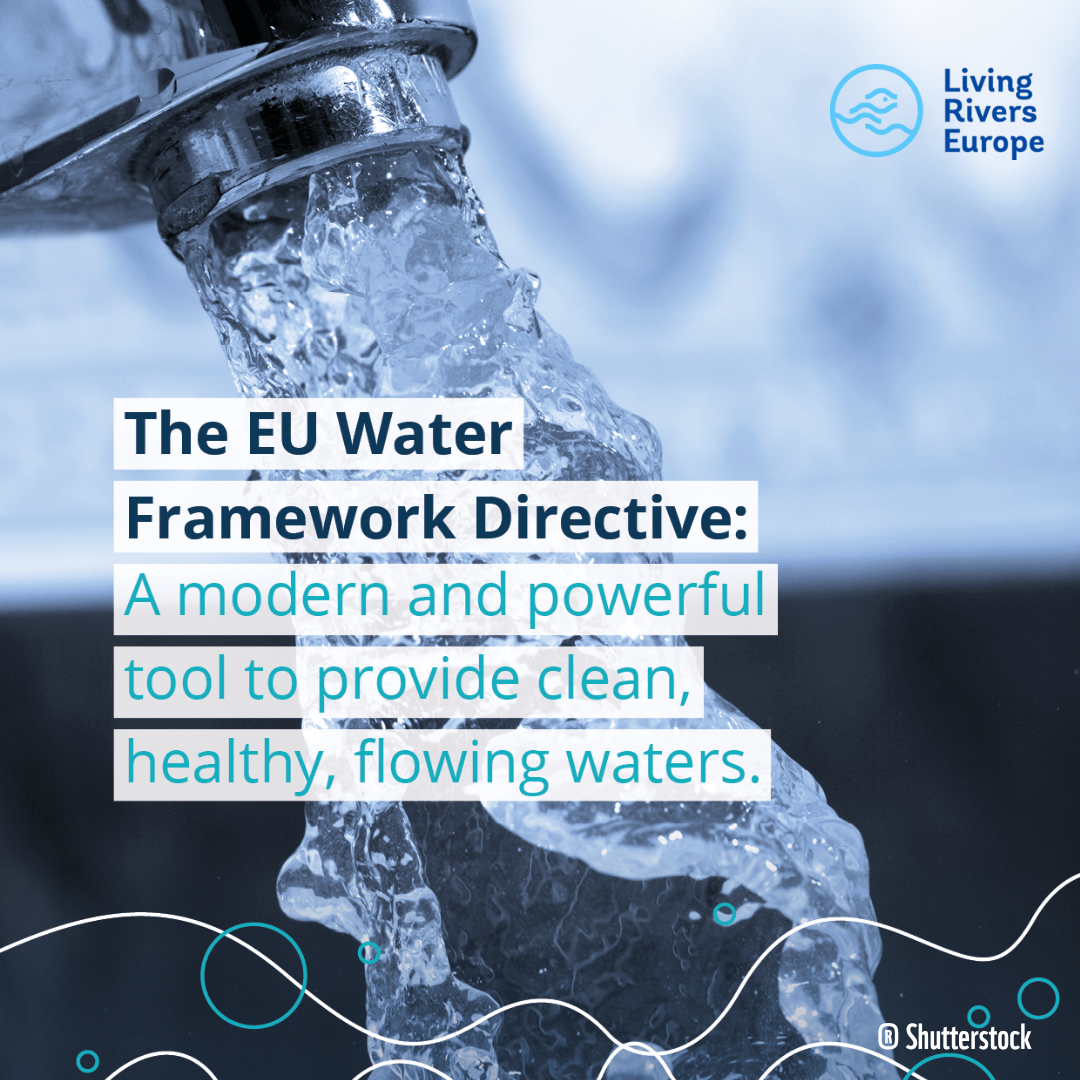
EU Water Framework Directive: A modern and powerful tool to provide clean, healthy, flowing waters

This summer, the Living Rivers Europe coalition published a new report emphasising that 2027 does not mark the end of the WFD. The directive will remain fully in force beyond that date. The report explains why and how Member States must continue to comply with their fundamental legal obligations.

The Water Framework Directive (WFD), adopted in 2000, is the legal basis for freshwater protection. It requires all Member States to achieve good status for water bodies by 2027 – a target that is far from being met. Today, only 39.5% of surface waters are in good ecological condition. This weighs heavily on the state of ecosystems and their resilience to climate change.

At the same time, climate impacts, pollution and economic risks are increasing. According to the World Economic Forum, five of the top ten global business risks are now water-related.

Also identified as a cornerstone of the EU’s water resilience strategy, the coming years will be decisive. Faced with the growing water crisis in Europe, which is resulting in reduced access to drinking water, drying rivers, floods, droughts and pollution, existing European water legislation must be fully implemented.

The WFD provides the legal tools needed to address these risks: pollution control, abstraction permits, ecological flow standards, etc.

Download report


13 myths about WFD 

The Living Rivers Europe coalition brings together six major environmental and fishing organisations: WWF’s European network, the European Anglers Alliance, European Environmental Bureau, European Rivers Network, Wetlands International Europe, and The Nature Conservancy, representing more than 40 million people.

💧 EU Water Pollution Standards: Time to Act 💧

EU representatives were due to reach an agreement on updating water pollution standards on 15 July, but negotiations have once again been postponed until 23 September.

We’re nearing 3 years since the European Commission proposed long-overdue updates to regulate pharmaceuticals, more pesticides, and PFAS in surface and groundwater. This delay is becoming something of a record… 

These #RulesToProtect would rightly require Member States to monitor and act on these substances to urgently protect both people’s health and precious ecosystems on which we all depend.

Meanwhile, alarming reports continue to surface:

🧪 Toxic industrial discharges into rivers

💩 Raw sewage spreading antimicrobial resistance

🚱 Pesticides contaminating drinking water


As scientists did a few months earlier, a broad coalition of environmental and health organisations, healthcare professionals, social partners, recreational fishing associations, and water-dependent businesses is calling on the @Danish Presidency of the Council of the EU 2025, which kicked off in July, to conclude the negotiations without delay.

We urging the Danish Presidency of the Council of the EU to oppose attempts by some states to lower the ambition of the text and to take a position against an extension of the transition period or the introduction of new exemptions to the Water Framework Directive.

We must uphold ambition, adopt strong new quality standards, and legally ensure that Member States include targeted measures in the next River Basin Management Plans (2028–2033).

The health of Europe’s water – and its people – can’t wait 🌍

read the letter

logo Living Rivers Europe

The Living Rivers Europe Coalition urges Environment Ministers to support the upcoming Council conclusions on the European Water Resilience Strategy

 In light of increasing water scarcity, pollution, floods, and ecosystem degradation, the coalition calls for prioritising the restoration of the natural water cycle and ensuring access to clean water.

The success of the Strategy depends on fully implementing existing EU water and nature laws, particularly the Water Framework Directive, and on integrating water resilience into all relevant sectors – such as agriculture, energy, and transport. Nature-based solutions, such as wetland and floodplain restoration, must be prioritised over technological fixes, with clear, dedicated funding to support them.

The coalition also highlights the need for stronger governance, pollution prevention, and financial tools to drive systemic change. They call for targeted investments, conditionality in EU agricultural policy, and robust accountability measures.

Key requests:

  • Endorse the objectives of the European Water Resilience Strategy

  • Prioritise restoration of natural water cycles and ecosystems

  • Fully implement existing legislation, especially the Water Framework Directive

  • Mainstream water resilience across sectors and funding programmes

  • Prioritise nature-based solutions over technological infrastructure

  • Ensure dedicated funding in the next EU budget (2028–2034)

  • Enforce the Polluter Pays Principle and strengthen accountability

  • Apply strict environmental conditionality under the Common Agricultural Policy

  • Direct European Investment Bank funding toward ecological water retention projects


read the letter


SNB 2030 remains an ambitious framework, but its success will depend on the ability to remove the obstacles identified by the CNB.

The National Biodiversity Strategy 2030 aims to translate France’s commitment under the global biodiversity framework adopted in Montreal in December 2022 into concrete actions. Its ambition is clear: to halt and then reverse the collapse of biodiversity by 2030, in line with European and international objectives. The strategy is structured around four main areas and is based on a participatory approach involving public and private actors, associations and scientists.

At its meeting on 24 June 2025, the National Biodiversity Committee adopted a critical opinion on the 2024 progress report on the SNB 2030. It includes a detailed analysis and recommendations to strengthen the strategy’s effectiveness.
In summary, the SNB 2030 remains an ambitious framework, but its success will depend on the ability to overcome the obstacles identified by the CNB: financial resources, policy coherence and the involvement of all stakeholders.

Indeed, the CNB raises serious questions about France’s ability to meet its commitments, particularly in light of ongoing political and budgetary decisions. It emphasises that the resources allocated and the consistency of public policies remain insufficient to achieve the objectives set.
In particular, it recommends programming dedicated multi-year funding and ending subsidies that are harmful to biodiversity, as well as strengthening the convergence between climate and biodiversity policies in order to give them the same level of priority in public action.

The CNB highlights a gap between the stated ambitions and the concrete resources implemented, particularly in terms of ecosystem protection and the fight against invasive alien species.
It stresses the need for better territorialisation of the strategy, involving regions and local actors more closely, and for regular assessment of progress made.

The strategy must now be implemented at the regional level (regional COPs) and monitored annually by the CNB until 2030. The coming months will be crucial in assessing whether the committee’s recommendations are being taken into account and whether the resources allocated are sufficient to meet the challenges.

See NGO’s press release.

European water resilience strategy: ambition hampered by a lack of concrete commitments

On June 4, 2025, the European Commission presented its EU water resilience strategy, a much-anticipated document at a time when shortages, floods, and pollution are increasingly threatening aquatic ecosystems.

But behind the stated intentions, the content is disappointing.

This document, which is supposed to respond to the call made by the Living Rivers Europe coalition in its recommendations, falls short in several respects. It lacks concrete commitments, clearly identified funding, and truly operational governance tools. After the European Parliament vote on May 7, several NGOs had already expressed doubts about Europe’s ability to provide itself with the means to respond to the water crisis. The strategy reflects the Commission’s view that “the legislative framework is already in place,” based on the Water Framework Directive, the Floods Directive, and the newly adopted Nature Restoration Regulation, yet “persistent implementation failures are holding back progress.”

The text highlights nature-based solutions, but without setting legally binding targets or providing specific budgets for their implementation. The incentives proposed remain too vague to bring about real change. In two separate responses, the EurEau federation and the Living Rivers NGO coalition regretted the absence of targets to reduce water abstraction in the strategy. Such a target was included in a draft version of the communication—which Contexte had published—but was ultimately replaced by a target to improve “water use efficiency” in the final version presented by the Commission on June 4. The efficiency target is vaguely defined: it “provides no baseline, no sectoral roadmap, and no implementation mechanism to achieve it.” The NGO coalition also deplores the fact that the target is not binding in any case.

On pollution, the measures are still too weak, particularly on prevention at source and the application of the polluter pays principle. Yet PFAS, nitrates, and other harmful substances continue to pollute waters across Europe.

The lack of a roadmap for the agricultural sector, combined with the absence of quantified targets by area, weakens the strategy.

As Living Rivers Europe points out, without concrete means or a precise plan, this ambition risks remaining unfulfilled. Meanwhile, pressure on rivers and wetlands continues to worsen.

The coming months will tell whether the Commission and Member States will be able to turn promises into action and take decisions that are commensurate with the challenge.

More infos : read Living Rivers Europe press release

logo Living Rivers Europe

Living Rivers Europe recommendations to strengthen the EU Water Resilience Strategy

The European water resilience strategy will be voted on at the beginning of June.

But following the recent report voted by the European Parliament on 7 May, and media reports on the Commission’s draft, the NGO coalition Living Rivers Europe fears that the forthcoming strategy lacks the tools needed to make Europe truly water resilient. The strategy is intended to respond to the growing urgency of water scarcity, floods, pollution, and ecosystem degradation across the continent.

Based on recent media reports, the draft text lacks the binding commitments, dedicated funding, and governance tools needed to ensure meaningful implementation and systemic change. Without those, ambition will remain on paper and will not be able to tackle growing pressures on Europe’s rivers and wetlands. On 20 May, the NGO coalition Living Rivers Europe sent a letter to the European Commission outlining their recommendations to ensure that the strategy can help Europe and citizens thrive.

At the beginning of May, the Living Rivers Europe coalition had already indicated that the European Parliament’s recommendations were a step in the right direction, but lacked ambition, with the text focusing on ‘grey infrastructures’ – i.e. systems and structures created by man – to the detriment of nature-based solutions.

In their report, adopted on 7 May by 470 votes to 81 with 92 abstentions, MEPs called for an ambitious strategy to enable the EU to better manage its water resources and respond more effectively to current challenges in this area. The text stresses that water is not only essential for health and life, but is also central to the European economy, its competitiveness and its efforts to adapt to climate change. The recommendations are aimed at water efficiency targets, pollution reduction and better disaster preparedness, but without any real tools. More info

Tuesday, May 20 from 4 to 5:30 p.m.: ERN webinar “Learn more about the Open Rivers Programme” (in French).

The Open Rivers Programme continues to found barriers removal projects, preparatory studies and works. ERN – SOS Loire Vivante, can help and advise you if you wish to apply. To prepare the next call for projects, a webinar to present the program, eligibility criteria and ask your questions is organized on May 20 from 4 to 5:30 pm (in french). registration required.