Are there still rivers for migratory fish?

Registration is now open (in French only)

  • 16 December from 4pm to 6pm: Axe Vienne Creuse Gartempe – Hydroelectricity or Refuge for Migratory Fish ?
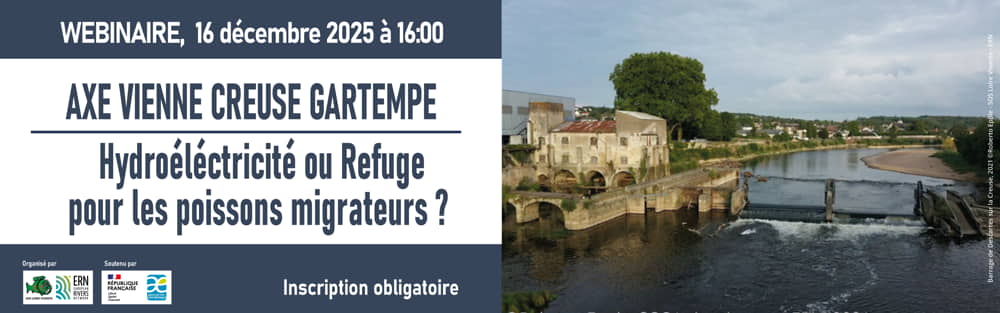
Registration (in French only)

The Creuse has been identified as a key area for migratory fish in the context of climate change. Restoring watercourses and water quality, removing pressures, reconnecting rivers and providing access to refuge areas will facilitate the resilience of watercourses and the return of migratory fish to our rivers.
However, due to the energy transition in particular, there has been an increase in projects to equip weirs with micro-hydroelectric power stations, perpetuating the fragmentation of waterways on strategic routes.
Can these rivers be both sources of hydroelectric power and refuges for biodiversity and endangered migratory fish?
Should we sacrifice biodiversity and water quality in the name of renewable energy, or demand radical solutions to restore the free movement of species and the health of our rivers?


Programme : 1h de présentations, 1h round table , Q&A 

by ERN-SOS Loire Vivante (Roberto Epple, Président, Corinne Ronot, Co-directrice)

Speakers

  • Bruno Bordeau, Président LOGRAMI : L’axe Vienne-Creuse-Gartempe, un refuge pour les poissons migrateurs ?
  • André Berne, Avocat du barreau de Paris : Le droit français au secours de la biodiversité ou de la production d’énergie renouvelable ?

Table ronde / Questions – réponses 

  • Gilles Deguet, représentant FNE au comité de bassin Loire Bretagne
  • Bruno Barbey, Directeur FDAAPPMA 36
  • Joël Herbach, Président Allier Sauvage
  • Lionel Martin, Président de la Fédération de Pêche de la Haute Loire
  • un représentant du secteur de la production hydroélectrique (sous réserve)
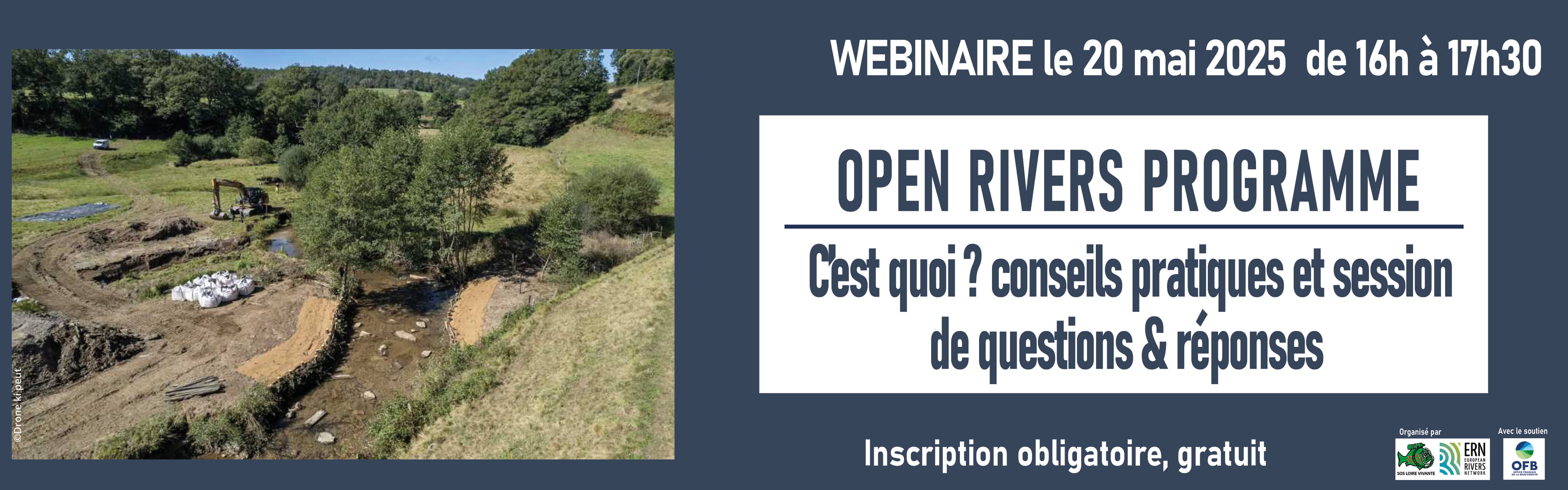
Tuesday, May 20 from 4 to 5:30 p.m.: ERN webinar “Learn more about the Open Rivers Programme” (in French).

The Open Rivers Programme continues to found barriers removal projects, preparatory studies and works. ERN – SOS Loire Vivante, can help and advise you if you wish to apply. To prepare the next call for projects, a webinar to present the program, eligibility criteria and ask your questions is organized on May 20 from 4 to 5:30 pm (in french). registration required.


La loire à Champtoceau

Disparition de Philippe Auclerc et Laurent Roy : hommage

En ce début mars 2025, nous avons appris avec tristesse la disparition brutale de deux hommes passionnés et engagés pour les rivières : Philippe Auclerc, Rédacteur en chef pendant 25 ans de « La Loire et ses Terroirs » et de la lettre « Les Nouvelles du bassin de la Loire » et Laurent Roy, ancien Directeur de l’Eau et de la Biodiversité au Ministère de 2013 à 2015 et ancien Directeur de l’Agence de l’Eau Rhône Méditerranée Corse jusqu’en 2023. Notre association a eu la chance de travailler avec eux, ils ont souvent partagé les visions de notre association et leurs compétences ont fait avancer la cause des rivières.

Philippe Auclerc était un fin connaisseur du territoire ligérien et de ses acteurs. Son engagement pour la préservation de la Loire et de ses affluents était profond et sa plume était sincère et souvent aiguisés sur la description du jeu d’acteur et le sens de la gestion de l’Eau du bassin. Son travail a plusieurs fois croisé les actions de l’association SOS Loire Vivante, il est venu nous voir dès les débuts de notre combat dans les années 1990 et a encore récemment été le modérateur de notre dernier colloque « Des Saumons et des Hommes » à Brioude en 2023, un sujet qui l’animait fortement. À travers ses écrits, il a su sensibiliser un large public aux enjeux environnementaux et patrimoniaux de ce fleuve. La disparition de Philippe marque la fin d’une époque pour les passionnés de la Loire, c’était le seul encore aujourd’hui à informer de la vie du fleuve, avec un sens critique, de la source à l’estuaire. Nous espérons que son projet de relier les ligériens perdurent. Nos pensées vont à sa famille et ses proches.

Laurent Roy a également joué un rôle important en faveur des politiques de gestion de l’eau et de préservation de la biodiversité en France tout au long de sa carrière. Avec European Rivers Network nous avons pu le rencontrer plusieurs fois lorsqu’il était au Ministère et à l’Agence de l’Eau, notamment au sujet du rétablissement de la continuité écologique sur le Rhin ou en lien avec le projet du label « Sites Rivières Sauvages ». Homme de conviction, sa capacité à dialoguer et échanger de manière constructive en faisait une personnalité respectée dans le milieu. Nous présentons nos sincères condoléances à sa famille.

SAVE THE DATE : 26 November 2024: ‘SALMON LOIRE ALLIER’ webinar, one year after the Brioude symposium, what progress has been made and what initiatives ?

SOS Loire Vivante-ERN is organising a webinar on 26 November from 16.00 to 18.00 on the follow-up to the Brioude salmon conference (October 2023).

At the conference, a number of announcements were made by the stakeholders, in particular the development of a shared roadmap.

1 year on, where are we? Has a roadmap been drawn up? What progress has been made and what are the key decisions?

On 26 November, we are inviting some of the actors who took part in the Round Table to the conference to answer these questions. Full programme to follow

Free of charge but registration required (in French)

World Migratory Fish Day: Watch and share our videos

To mark World Migratory Fish Day on Saturday 25 May, ERN-SOS Loire Vivante is launching three videos about Atlantic salmon and ecological continuity.

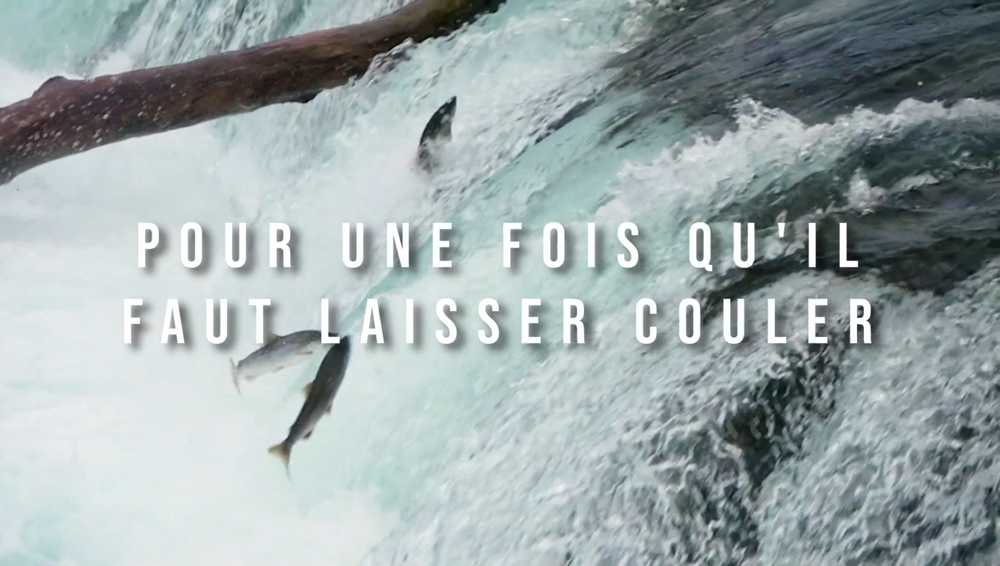
These videos are previews of remixed extracts from the documentary entitled “Pour une fois qu’il faut laisser couler”, which will be released shortly.

The 2-minute portrait and landscape modules presented here, in French and English, plunge you into the life of the Atlantic salmon in the Allier and Sélune rivers and present 2 major innovative and far-reaching actions that France has taken to restore access to the upstream areas of rivers and streams, the historic breeding grounds of the Atlantic salmon.

Discover these videos :

The New Poutès, the dam that opens for wild salmon 
watch the French version / watch the English version

Allier River : An obstacle course for salmon
watch the French version / watch the English version

France: The largest dam removal project in the world, 2017-2022
watch the French version / watch the English version


All the videos can also be viewed on our new YouTube channel: “Rivières Vivantes – Laisser Couler”: https://www.youtube.com/channel/UCjokCmOpXMcgD4ag3UY3ctg

Note :

  • France is the European leader in the restoration of ecological continuity, particularly through the removal of small and large transverse structures. Since 1997, it has built up recognised expertise through innovative policies and major international projects. At a time when the decline in populations of migratory fish and fish at the head of river basins, such as trout, is alarming, we need to pursue innovative actions that provide the most effective response to the challenges of biodiversity.
  • To publicise France’s experience, you will soon be able to watch the full documentary produced by ERN – SOS Loire Vivante as part of the OFB’s Mobbiodiv call for projects. The 3-part film, told from the point of view of our association, traces the history of the major events and projects that have marked the restoration of free movement of rivers in France from 1997 to the present day.
    “For once it’s time to let things flow
    part 1/3: Reopening river routes to large migratory species
    part 2/3: Reconnecting small and medium-sized rivers
    part 3/3: Rethinking and reconfiguring major blocking structures

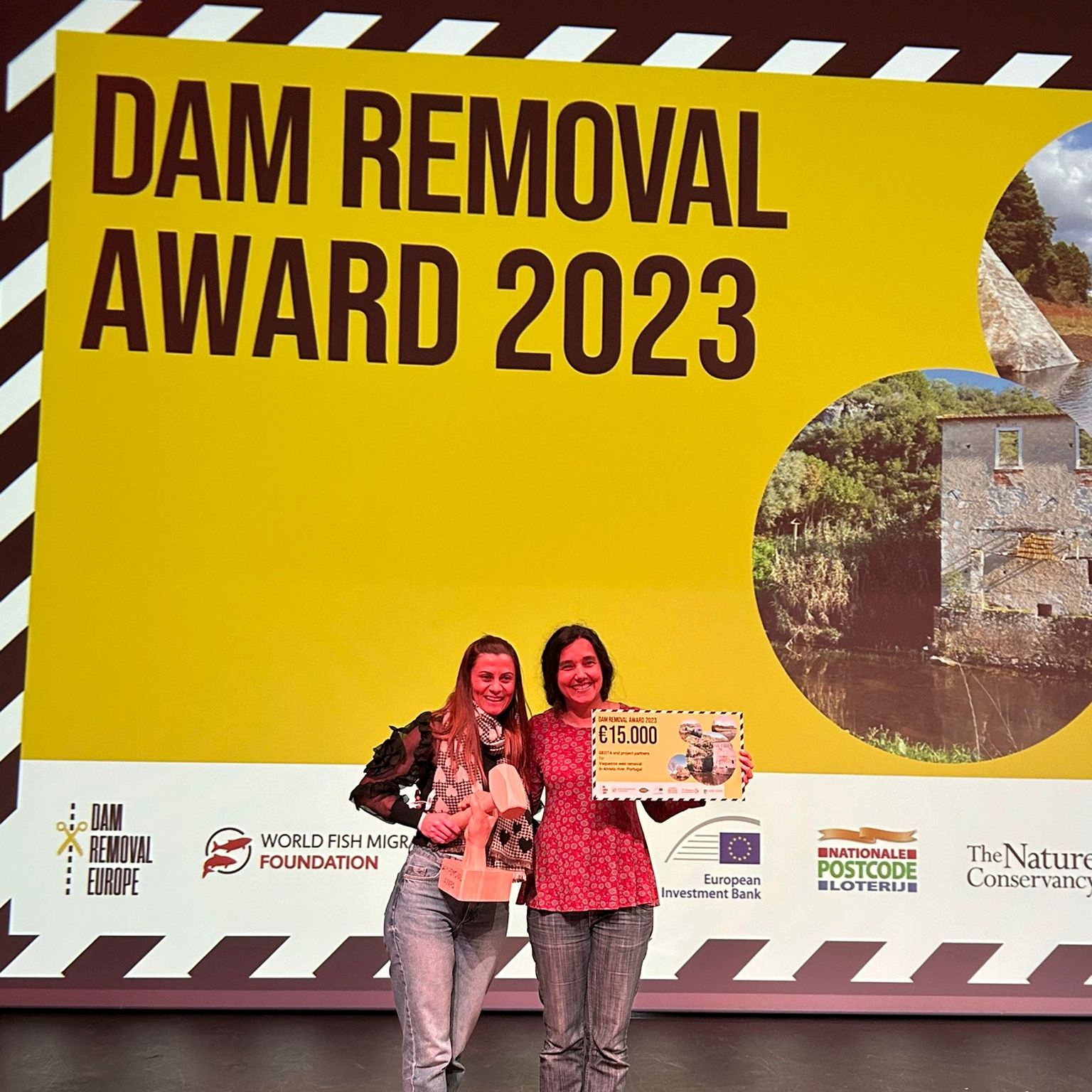
The Dam Removal Award 2023 returns to Portugal

The Free Flow conference organised by the World Fish Migration Foundation in Groningen has just come to an end. The 2024 winner of the Dam Removal Award was announced. 3 projects were finalists and the jury and public vote, taken in equal parts, awarded the prize to GEOTA in Portugal for the removal of the Vaqueiros dam on the Alviela river. Congratulations to them, they have won a cheque for €15,000. Congratulations also go to the other nominees, including the Fédération de pêche 64 for the removal of the Urrutienea dam on the Nivelle (5m high), where the results were immediate, with salmon re-colonising the upper reaches of the river. This is already a great victory.

More info on french case : https://www.ern.org/fr/urrutienea-finaliste-du-prix-europeen-pour-la-suppression-des-barrages-2023-les-votes-sont-ouverts/

Find out more about the winning project :https://damremoval.eu/dam-removal-award-2023-winner/

© DRE

Coming soon: Advocacy videos for ecological continuity

With the support of the OFB as part of the Mobbiodiv call for projects, ERN will shortly be publishing a documentary on the restoration of ecological continuity in France from 1997 to the present day. Entitled “Pour une fois qu’il faut laisser couler”, the 3-part film traces the history of the major events and projects that have marked the restoration of the free movement of rivers in France. It is told from the point of view of our association. English version will aslo be available

Short modules will soon be available on the web.

part 1/3: Reopening river routes to large migratory species
part 2/3: Reconnecting small and medium-sized rivers
part 3/3: Rethinking and reconfiguring major blocking structures

At the end of 2023, the Water and Biodiversity Ministry published a video on ecological continuity, answering questions on the subject and deconstructing preconceived ideas.

Watch the video (in french) Le Vrai / Faux de la continuité écologique des cours d’eau

The removal of the Urrutienea dam in France, finalist in the European prize for the removal of dams 2023, votes are open

The removal of the Urrutienea dam on the River Nivelle in France has been selected to compete for the European prize for the removal of dams.

3 projects have been shortlisted: “Removal of the Urrutienea dam on the River Nivelle in France”, “Removal of the Garlogie dam in Scotland” and “Removal of the Vaqueiros weir in Portugal”. You can now vote for your favourite. Voting is open until 22 March at 11:59. Vote now! Dam Removal Award Nominees 2023 – Dam Removal Europe 

Focus on the project on the Nivelle, the other projects can be found on the DRE website.

At the heart of a cross-border landscape between Spain and France, the Nivelle is a river rich in biodiversity and is a major centre of interest for this tourist region in summer. The 5-metre-high dam had been out of action for 10 years! An impassable barrier for migratory fish, in particular salmon, eels and other emblematic species (freshwater pearl mussels, Pyrenean Desman, European otters, white-clawed crayfish and others). The fishing federation, which initiated the project, bought the site in order to dismantle it completely. On the Spanish side, their partners had already worked on removing the obstacles, and they knew that this dam was the last completely impassable dam on the Nivelle.

Their main obstacle was to convince the local authorities that economic development (hydroelectricity) could not be achieved at the expense of local biodiversity. All in all, it took 20 years to break the deadlock!

Just two months after completion of the work, the results are extraordinary. The first Atlantic salmon spawning grounds located 6 km upstream of the dam were observed in Spain – for the first time in several centuries!

The work carried out in parallel since 2020 to conserve and restore the freshwater pearl mussel on the Nivelle has also been decisive. This species, the only one genetically unique in the Pyrenees, lives in symbiosis with salmon. These actions include reproduction to boost the natural population, which was threatened with extinction within the next 10 years. Removing the dam was therefore essential to restoring the habitat and reclaiming the whole of the upstream catchment.

Numerous partners were involved in the project: scientific research bodies (INRAE), associations (AAPPMA Nivelle, CEN Nouvelle Aquitaine, MIGRADOUR), the Government of Navarre, the vocational college (which houses the facilities for the ex-situ pearl mussel rearing project), and foundations (Fondation française des pêcheurs, Fondation Arcadia – Open Rivers Programme).


The Dam Removal Award is organised by Dam Removal Europe, the World Fish Migration Foundation, the European Investment Bank, and The Nature Conservancy, supported by the Dutch Postcode Lottery, Forest Peace Foundation and ABN AMRO Bank. The most inspiring project will be awarded a special trophy and 15.000 Euros towards the team’s next removal project, and the winner will be revealed during the upcoming Free Flow Conference in Groningen, The Netherlands. 


A special Montpezat rivernews has just been published!

Our latest Rivernews december / january 2024  is devoted entirely to the Montpezat hydroelectric complex and provides an update on the volumes stored and transferred in 2023. Allg figures are to be confirmed during January 2024 and will be updated if necessary on our dedicated webpages.

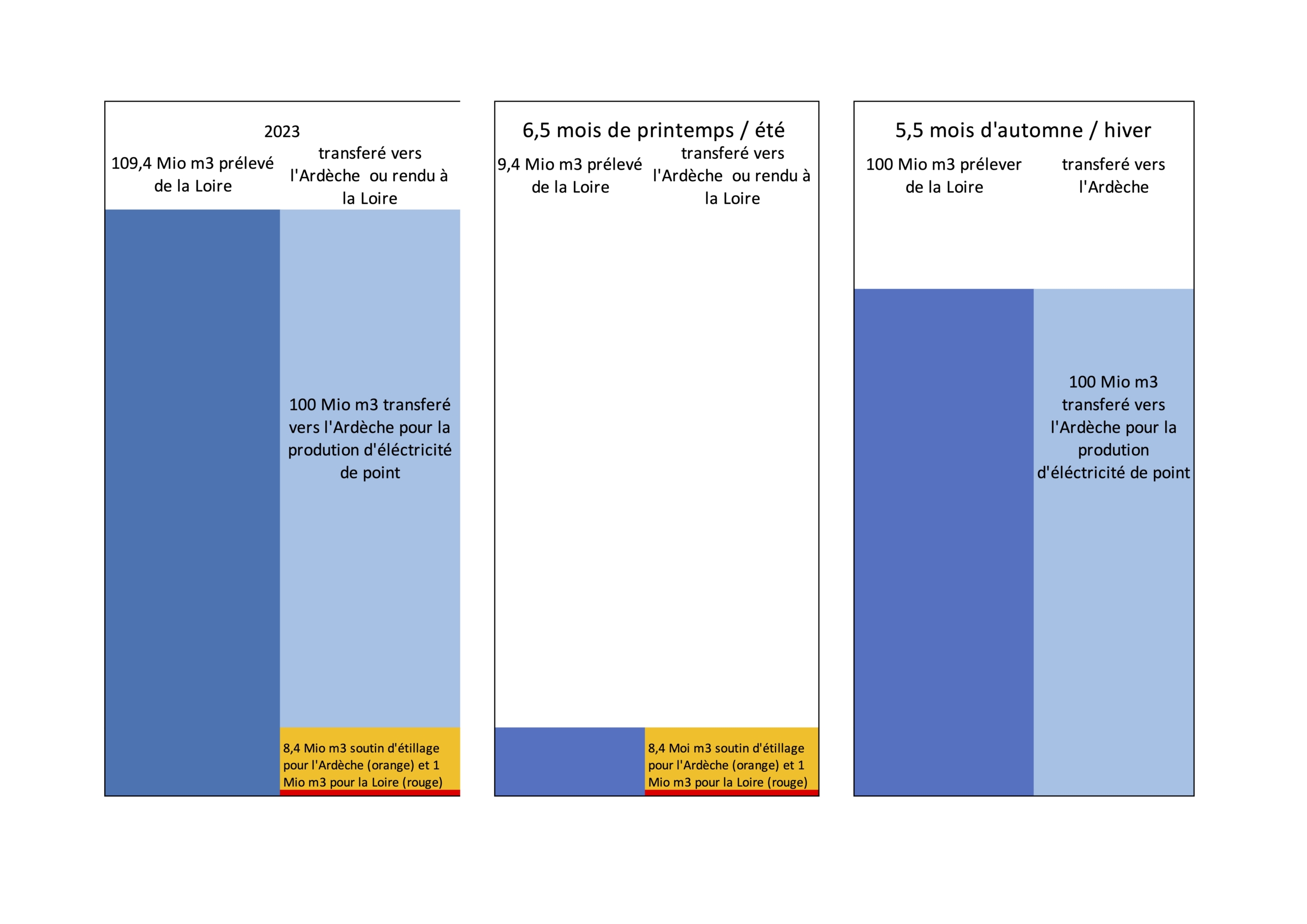
In 2023, 108.4 million m3 were transferred to the Ardèche (compared with 220 million m3 in the “best” years). Most of this, 100 Mio m3, was taken from the Loire in autumn and transferred in winter for peak electricity production. The significant drop in rainfall in autumn/winter resulted in a 50% reduction in winter turbines compared with the past. In spring, 9.4 Moi m3 were stored in the reservoirs on the Loire side and used to support the low-water levels of the Ardèche (8.4 Moi m3) and the Loire (1 Moi m3), in line with the low-water support objectives. The year 2023 had got off to a bad start, however, and it seemed impossible to fill the reservoirs at the La Palisse, Gage and Issarlès dams, but the weather came to the complex’s rescue in the last few weeks, just before the summer period, which means that the Issarlès lake must remain open to tourists.

See also our other articles:

  • Raising the La Palisse dam: good idea or bad idea?
  • Immersion at the Citizens’ March for equitable water sharing between the Loire and Ardèche rivers
  • Children send us a message: Some of the winners of the 2022-2023 edition of Rivière d’Images et Fleuves de Mots, environmental education project

Read our newsletter (in french only)


Figures for 2023
Volumes stored and transferred to the Ardèche or returned to the Loire

Free Flow Conference 2024: Full programme out now!

The World Fish Migration Foundation and the Institute of Fisheries Management, invite you to a 3-day conference about the protection and restoration of Free-Flowing Rivers in Europe.

Gathering policy makers, river managers, ecologists, researchers, students, and industry, this international event expects +400 delegates from all over Europe and the rest of the world.

View the full programme 

When & Where: April 15-17, 2024 in Groningen, the Netherlands

Official website: https://freeflowconference.eu 

Registrations are open until April 1, 2024. Register here!