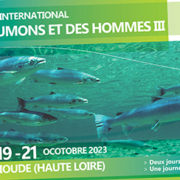
Save the date : international colloquium “Des Saumons et des Hommes 3 ” 19-21 October 2023 – Brioude (France)
Ten years after the last meeting, SOS Loire Vivante – ERN is organising a new conference on the Loire salmon. This is an opportunity to take stock of the situation of the Atlantic salmon in the Loire and elsewhere. National and international experts will try to understand the reasons for the decline despite restoration efforts and whether our actions are still in line with current and future challenges.
Is it due to climate change or to phenomena at sea or in the river? During the health check and the presentation of the results of restoration actions, we will compare the case of the Loire with other highly migratory river basins such as the Rhine, the Elbe, the Adour, the Garonne, the Sélune, etc,
Are you interested in this event?
Sign up to receive all the news in the coming months
Sélune dams removals in video (12 min)
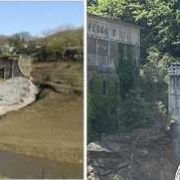
The Sélune has been free since last autumn. After the dismantling of the two large dams, the path is free for sediment and migratory fish for almost 100 km.
In a 12-minute video (in French and English) with spectacular images, you can follow the steps of the renaturalisation:
Video in french https://vimeo.com/549070141
Video in english https://vimeo.com/546711100
Open letter: Counting on new hydropower to accelerate Renewable Energy deployment in Europe is irresponsible
ERN and more than 100 NGOs write to EU negotiators asking them to protect Europe’s rivers from new hydropower deployment in the revised Renewable Energy directive.
Already in 2020, 150 NGOs signed a manifesto asking EU decision-makers to stop new hydropower development in Europe.
Read the WWF press release:
Ahead of the nextpolitical trilogue on the revision of the Renewable Energy Directive, more than 100 NGOs are sending an open letter to co-legislators from the European Parliament, European Commission and Council Presidency, asking them to exclude new hydropower from go-to areas as well as to include sustainability criteria recognizing that hydropower has direct impacts on freshwater ecosystems which must be mitigated.
Because hydropower potential has been so exploited already in Europe, new hydropower would only make a small contribution to the energy transition, while causing immense damage to our waterways. According to WWF’s Living Planet Report 2022, freshwater species populations have seen the greatest overall global decline (83%), and within this species group, on average, monitored migratory fish populations have declined by 93% in Europe, making our continent the most affected.
Contact
Florian Cassier
Climate Communications Officer
fcassier@wwf.eu
+32 479 33 92 11
Open letter : Do not weaken legislation for the protection of aquatic environments
The new law concerning “the acceleration of the production of renewable energies” has seen the appearance in the Senate of amendments in favour of the development of micro-hydroelectricity to the detriment of water resources, biodiversity and, above all, the general interest. They were not in the project initially submitted. Fortunately, the Assembly did not retain these proposals and focused on large hydroelectricity under concession. Nevertheless, in order to prevent these anachronistic amendments from coming back during the final drafting of the texts and in the future, we wished to alert the members of parliament in a letter to the dangers and the truncated, even misleading, arguments propagated on the subject of small hydroelectricity. Read the letter (in french)
Participate in the European dam removal report by indicating obstacles removed in your area in 2022
Since 2020, Dam Removal Europe (DRE) has been reported the number of obstacles removed* from rivers in Europe, results that were also highlighted in 2021 by The Guardian.
From the beginning of this year and until 1 March, DRE is launching its 2022 data collection campaign, to share the final report in May 2023.
This collect is essential to evaluate the implementation advancement of EU policies and to analyze the progress of this river restoration measure in each country. Participate in this data collection and answer the survey by indicating the obstacles removed in 2022: https://damremoval.eu/news/tell-us-about-your-dam-removal/ .
*Fish passes and bypass rivers are not considered.
More infos : Foivos Mouchlianitis foivos@fishmigration.org
Access to previous reports:
France : Lets co-create a Big Jump 2023 event a long the Loire river and its tributarys
Free swimming in the Loire or its tributaries is banned in many places, sometimes for good reasons but rarely explained why, sometimes banned for no reason at all and often to avoid liability in the event of a problem or accident.
Nevertheless, in the summer, more and more people go to the river banks and many of them cool off by wading or swimming in the river. This is why the prohibition signs are not respected, tolerated by the authorities. But for those who have never learned to swim in rivers, it can be dangerous. In the future, more and more people will flock to the beaches, thanks to the general improvement of (bathing) water quality and the desire to live more naturally in a very artificial world.
On 9 July 2023, the date of the annual BIG JUMP Rendez vous, SOS Loire wants to organise the first Loire Big Jump. In addition to swimming in the river, there are many other forms of action that could take place along the Loire, the Allier and other tributaries. The aim is to raise awareness, learn how to swim in the river, understand what is forbidden and reconcile people with their rivers.
On 13 and 20 December, we are organising a first open videoconference on these themes. After presenting the idea of a Loire Big Jump, we will propose a long sequence of general debate and a round of “Questions and Answers” (in french only). If you wish to participate > register
Rhine River : Fish passes in Rhinau and Marckolsheim: the work has really entered the active phase
Officially launched on 8 October 2021 by Mrs. Bérangère Abba, Secretary of State to the Minister of Ecological Transition, in charge of Biodiversity, the first shovels began to be dug in Rhinau and Marckolsheim this autumn 2022.
A great technical challenge awaits EDF. These fish passes will be the largest ever built in France and in Europe. The work will be carried out simultaneously on both sites, with commissioning scheduled for 2025 for Rhinau and 2026 for Marckolsheim. This is a great step forward and in line with the timetable announced at the last conference of ministers in Amsterdam in February 2020.
But a bigger challenge still awaits EDF on the Rhine: solving and developing the Vogelgrün dam, the last real obstacle before Basel. In this context the Salmon Comeback coalition will again ask the ICPR to set up an interdisciplinary working group dedicated to Vogelgrün in order to study additional alternative solutions to those studied in the past, which proved to be extremely complex and expensive.
More information and video presentation of the project: : https://www.edf.fr/hydraulique-alsace-vosges/passes-a-poissons-rhinau-marckolsheim/le-projet-en-bref.

Rhinau works © EDF