Tag Archive for: Loire

Montpezat – Drought: SOS LV alert


Photo de la Loire à Brives Charensac

The River Loire at Brives Charensac, with an estimated flow rate of 2.0–2.5 m³/s at midday on 19 September 2026, a few days after the start of the gradual reduction in low-water support.
It will fall further…


Face à des débits inférieurs au minimum réglementaire sur la Loire à Chadrac (43), près du Puy-en-Velay, SOS Loire Vivante interpelle officiellement le Préfet de la Haute‑Loire.

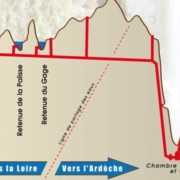
Le 15 septembre, EDF a repris le turbinage à Montpezat et dérive encore plus d’eau du haut bassin de la Loire vers l’Ardèche. A cette date, et jusqu’au 15 juin 2027, s’arrête l’obligation du maintien du débit minimal de la Loire au Pont de La Borie à 1m3/s. A savoir que durant une partie de  l’été la Loire a profité  d’un soutien d’étiage de environ  0,4 –  0,5m3/s en provenance des barrages de la Palisse et du Gage.

Le niveau de la  jeune Loire, affaibli et en stress hydrique, va donc encore baisser et des précipitations ne sont pas en vue. Pour exemple, à Brives Charensac le débit de la Loire se réduira de 30 – 35 %.

Nos demandes urgentes :

–   Appliquer au plus vite le décalage/prolongation de la période d’étiage jusqu’au 15 octobre au moins (option validée par les SAGE Loire Amont et Ardèche) afin de garantir au moins le débit minimal biologique de 0,8m3/s  au Pont de La Borie ce qui correspond à environ 1 Million m3 pour 30 jours. Au regard des réserves stockées cela  est possible sans mettre en question le soutien d’étiage coté Ardèche. La perte de production d’électricité ne dépassera pas 0,5 % de la production annuelle.

– Relance formelle des échanges inter‑SAGE (Groupe de travail) pour repenser le futur fonctionnement du ‘Nouveau Montpezat’ en intégrant les nouveaux enjeux dans le contexte du changement climatique. L’actuelle concession expire fin 2028.

La gestion durable de la ressource en eau impose d’anticiper les évolutions à venir plutôt que de les subir. » La qualité des milieux aquatiques ne peut pas être la variable d’ajustement.

> Lire la Lettre adressée au Préfet
> les articles des journaux et un reportage FR3 Auvergne suite à notre conférence de presse du 17 septembre seront en ligne sur notre site dès publication.

> Mieux connaitre Montpezat

A look back at the exchange and training days on the voluntary protection of private natural areas

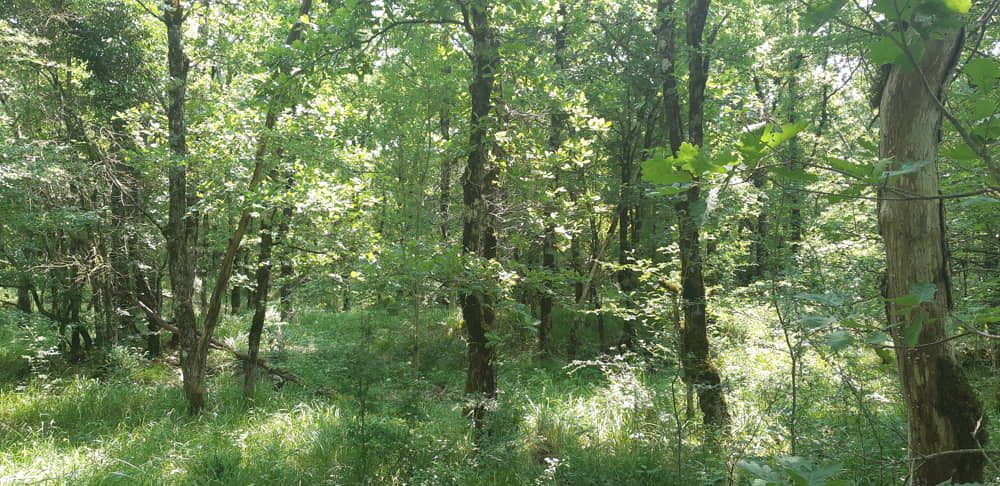
Since 1989, the association SOS Loire vivante – ERN has successfully protected the Upper Loire Valley between Mont Gerbier de Jonc and Le-Puy-en-Velay, 60 km of gorges and valleys, the wildest in the entire Loire region. Its civic and activist victories have enabled its preservation, but in a context of agricultural decline and a desire to pass on the land, a new approach complementary to regulatory protection must be initiated to ensure long-term protection.

By including landowners in the process, SOS Loire Vivante – ERN aims to create the ” Collective Protection of the Upper Wild Loire Valley,“ a project that will rely on voluntary commitments from each landowner across a valley or large area, using, in particular, Environmental Real Obligations (ORE) [1], as the ”voluntary nature reserve” tool no longer exists.

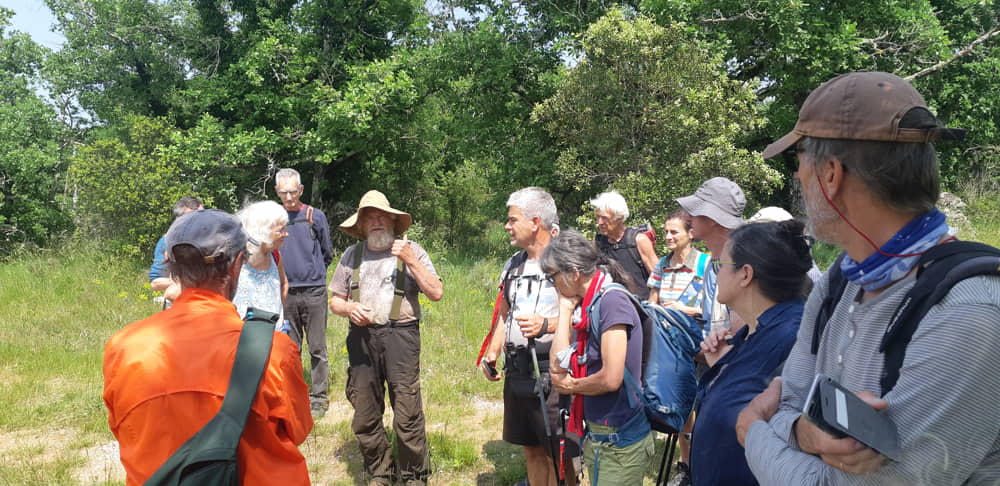
In order to strengthen the sharing of experiences between landowners in other basins, SOS Loire Vivante – ERN, with around twenty members, visited the Vis Valley in early June to study the case of the Lo Ranquas “voluntary reserve,” a 250-hectare site that is particularly interesting due to its size and the presence of golden eagles. The program included a visit to the reserve with a presentation of the management choices implemented over the past 40 years and a round table discussion with SOS Loire Vivante-ERN, the president of Euronatur, the Horizons Séranne association, and the owners of Ranquas, highlighting the similarities and differences between the situation in the Upper Loire Valley and the Vis Valley in terms of the means for ensuring the long-term sustainability of the ecological management of the sites.

It emerged that Real Environmental Obligations (ORE) are a key tool for ecosystem conservation and sustainable property management. However, in the context of coherent management of large areas and/or with several owners, the associations considered complementary tools, in particular the possibility of creating an endowment fund. This fund would provide additional protection for the areas by offering owners more options and support, such as donations and bequests, and organizing fundraising to ensure the management of the sites. The fund could also play a role in the co-contractualization of OREs and guidance towards appropriate management structures. In the medium term, the coordination of the network of landowners would enable new owners to join a global and regional project. Finally, the fund would make it possible to promote large entities that are collectively and voluntarily protected, whether on the Vis, in the Haute Loire, or elsewhere.

These are very promising discussions, which will naturally be followed up:

More information on the two territories involved in the experiment: Review of the exchange and training days on the voluntary protection of private natural areas

Horizons Séranne | Gîte L’ Aire de la Séranne – Home

Haute Vallée de la Loire – Un lieu à découvrir


[1] The ORE is a voluntary land-based environmental protection mechanism that is unique in that it is contractual and can be invoked by any landowner. Codified in Article L. 132-3 of the Environmental Code and included in a contract signed by a notary, it commits the owner of a property (including in the event of a change of ownership) to implement environmental management and protection measures for a period of up to 99 years.


Reserve naturelle du Ranquas ©Corinne Ronot – SOS Loire Vivante


Christian, propriétaire et fondateur de l’association Horizon Séranne, explique les outils de gestion et suivi mis en place ©Corinne Ronot – SOS Loire Vivante