
Successful restoration work on the Branugues, Batitan weir removal
The Branugues stream restoration project, which was carried out alongside the removal of the Batitan weir, has been successfully completed. This project by the SMDMCA , supported by ERN and Cantal Fish Federation and funded by the Open Rivers Programme was carried out between September and October 2026 and has restored ecological connectivity in the upper reaches of the Cère catchment in France.
The ecological challenges
The Batitan weir had long been an obstacle to the free movement of fish, particularly the brown trout (Salmo trutta), an iconic species in the area. Located just 800 metres downstream of the confluence with the Cère, this weir blocked access to 87 per cent of the Branugues stream, an area recognised as a prime spawning ground.
Progress of the works
Work began in mid-September 2026 with the setting up of the site and the implementation of environmental protection measures, notably the installation of a settling basin to prevent water pollution from sediment. The weir was demolished in four days, followed by the restoration of the riverbed and banks. Rock blocks had to be installed to stabilise the areas close to residential properties and to recreate a variety of habitats.
In total, 12 km of watercourses have been reopened (including 9 km directly upstream of the weir), thereby increasing the amount of suitable habitat for fish fauna. The natural flow and habitat diversity have been restored, improving water quality and spawning conditions for trout and other species.
Next steps
Post-works monitoring is scheduled to begin in December 2026, with the planting of live cuttings to strengthen the riparian vegetation, followed by photographic and fish stock monitoring in spring 2027 to assess the long-term positive impact of this restoration.
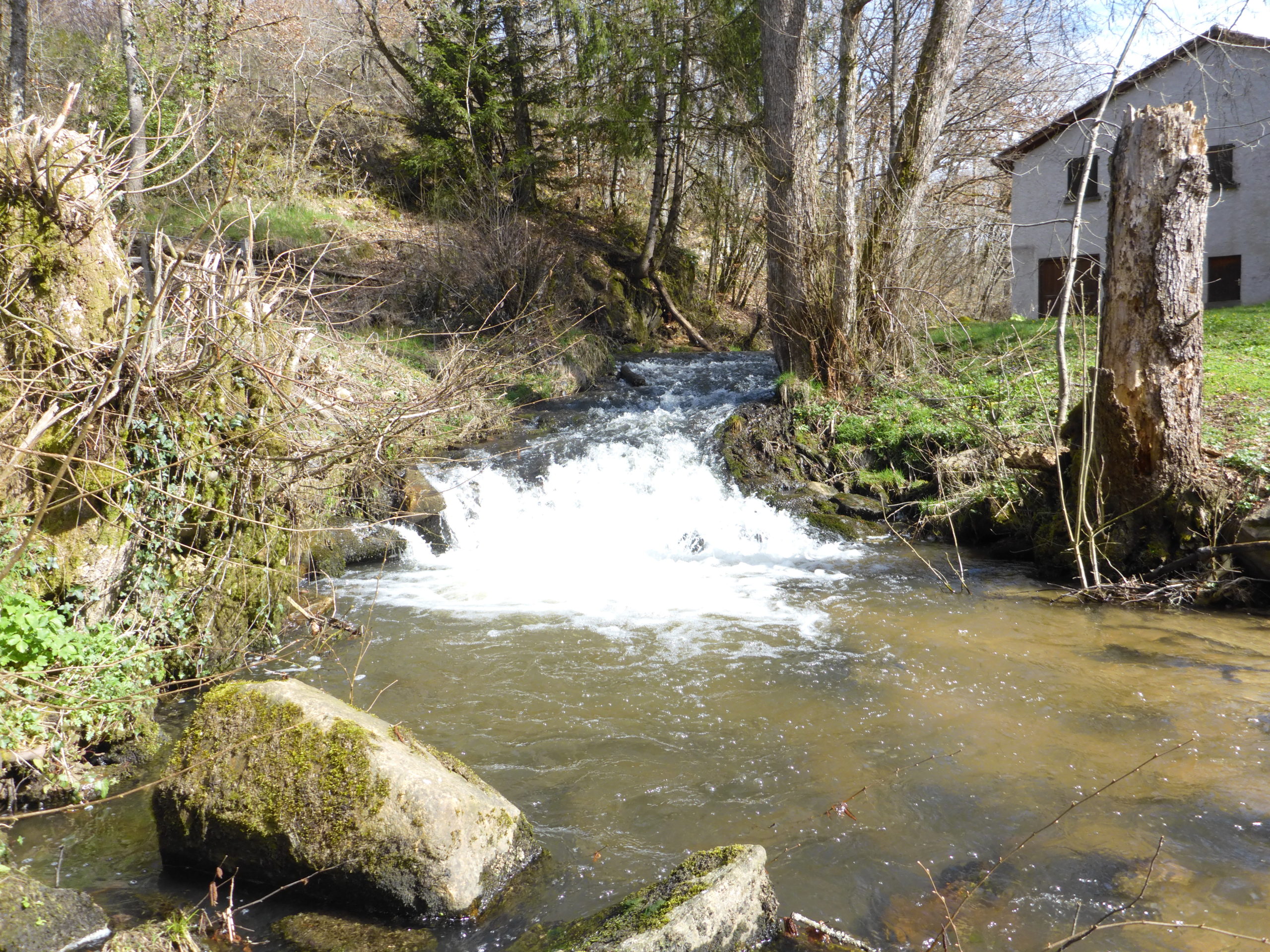
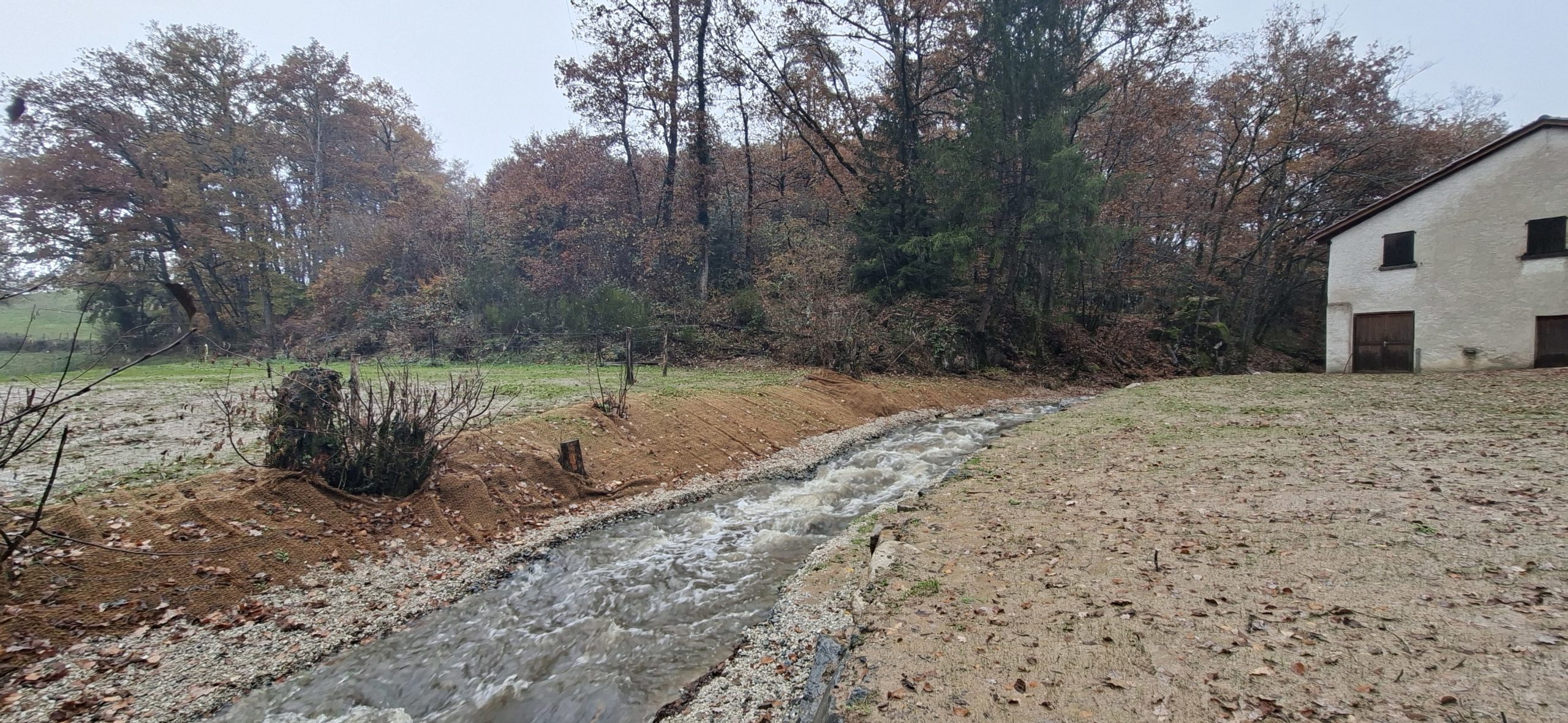
Batitan before and after removal © Hydrétudes & ERN




Leave a Reply
Want to join the discussion?Feel free to contribute!