
Dam removal report is out : Record year for dam removals in Europe as report warns of safety risks of ageing barriers
487 dams and weirs to be removed in 15 European countries by 2023
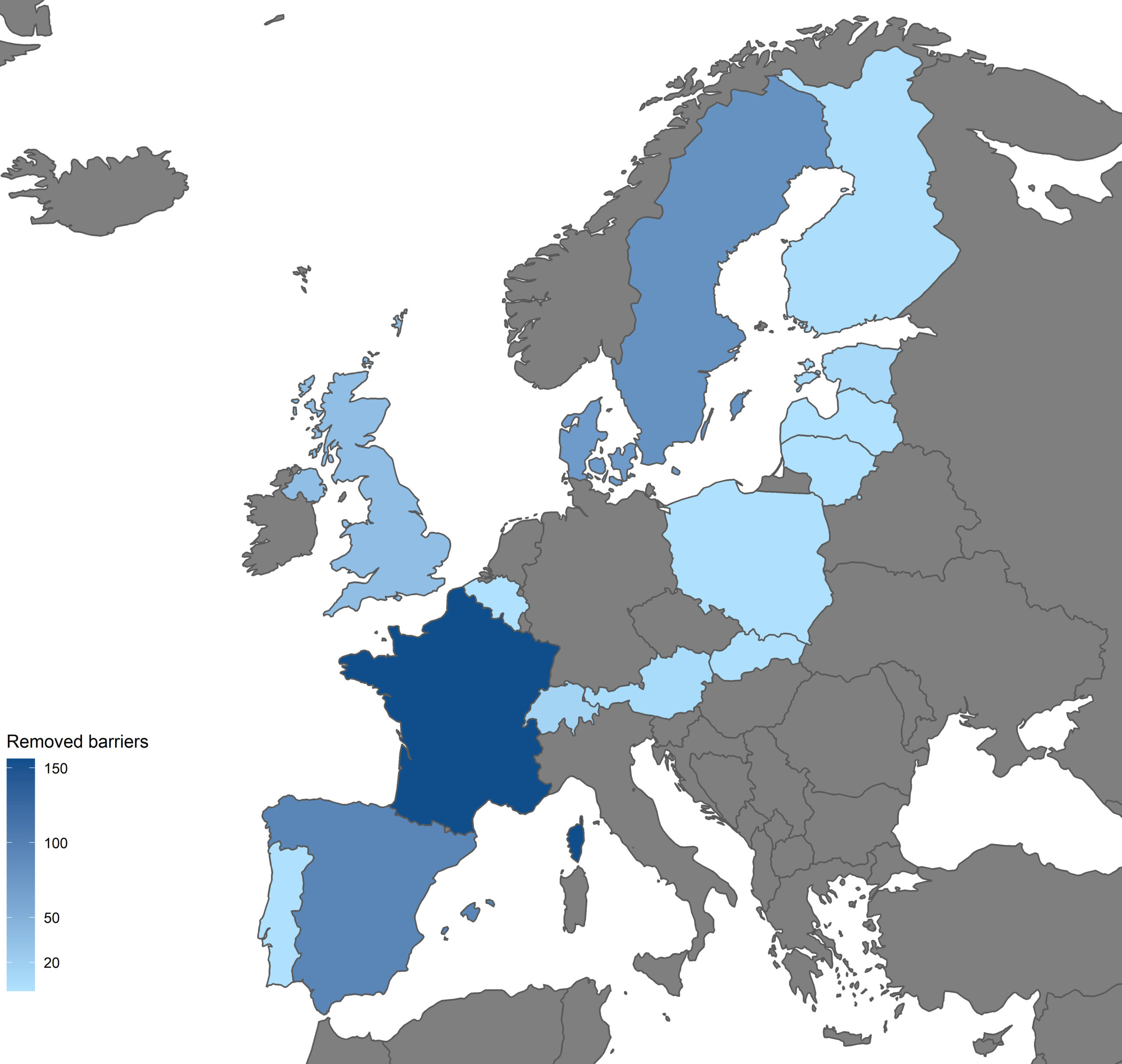 Dam Removal Europe published its report on progress in removing river barriers in Europe in 2023 on 15 April. 487 barriers were removed in 15 European countries in 2023, an increase of 50% on last year’s figure. These initiatives have enabled more than 4,300 kilometres of river to be reconnected. France is back at the top of the league table, with more than 150 listed structures to be removed by 2023.
Even though the number of obstacles has reached a record high again this year, this is also due to improved reporting to the DRE. In addition to the growing number of structures and countries freeing up their waterways, the report also highlights the safety risks posed by ageing structures, reporting 129 deaths in recent years.
France has been removing obstacles from its rivers for many years, and we welcome the fact that the idea of freeing up rivers is gaining ground in other European countries. France’s river restoration policy is an example elsewhere in Europe and remains inspiring. But in other countries too, a policy to restore free rivers is taking shape. In Estonia, for example, the Supreme Court handed down a landmark ruling on 15 January 2024, setting a precedent for the removal of dams in the country. The judge designated the Ministry of the Environment as the competent authority to reconcile heritage and environmental interests.
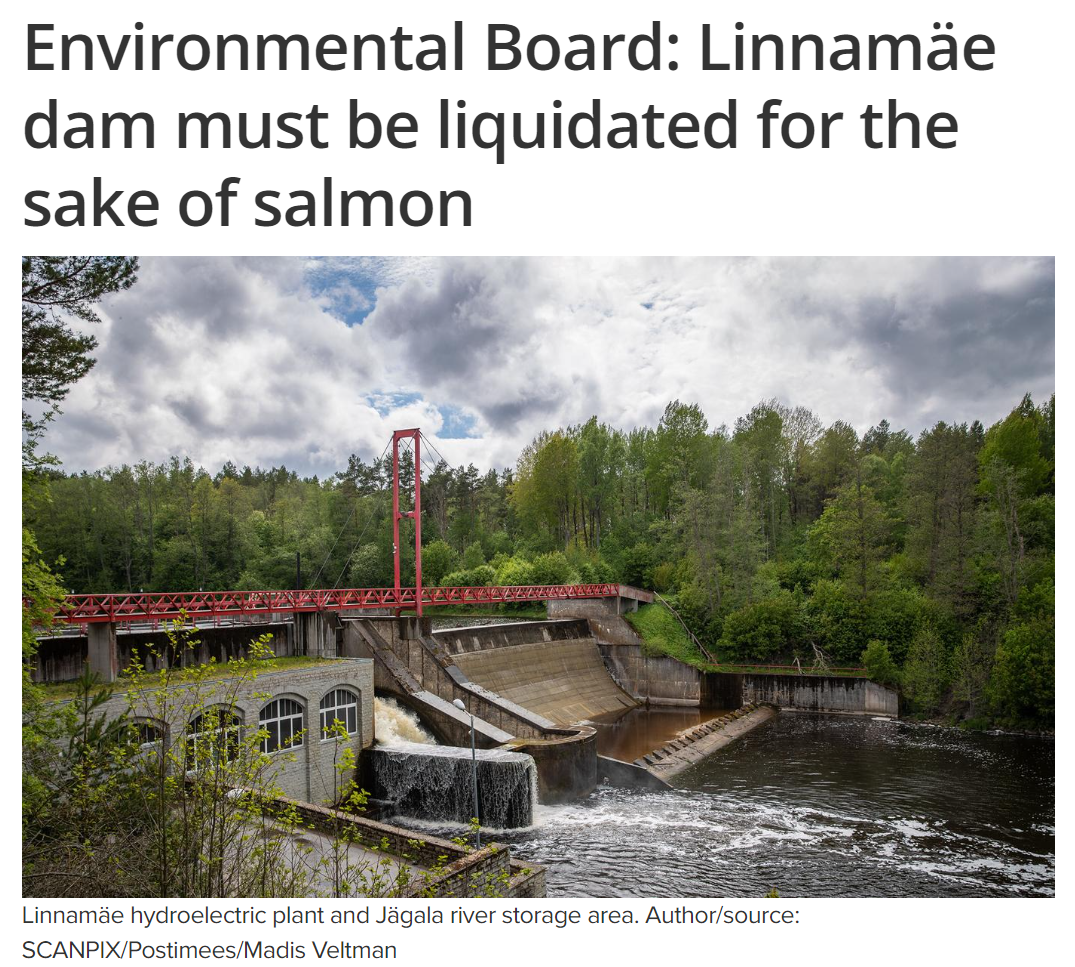
A few years earlier, the NGO Jägala Kalateed had embarked on a project to restore the river Jägala as a Natura 2000 area, with a strong focus on salmon. But the Ministry of Culture and the Ministry of the Environment had been unable to agree on how to deal with the issue of ageing dams. On the one hand, dams are part of our cultural heritage and, on the other, they pose a threat to rivers. After more than two years of petitions and legal proceedings, the Supreme Court has announced its final decision: where cultural and environmental interests conflict, supreme authority lies with environmental rules (including the derogation clause in the Habitats Directive). Thanks to this decision, on 8 April 2024, the Estonian Environmental Office decided to officially cancel the permit to use water from the Linnamäe hydroelectric power station, Estonia’s largest hydroelectric dam, for the benefit of salmonids. This announcement will open the door to the largest dam removal in Estonia.
* Map of European countries reporting dam removals in 2023. The colour gradient corresponds to the number of removals per country.
DRE report : https://ern-sosloirevivante.org/wp-content/uploads/2024/04/Web-version_DRE-Report-2023.pdf
Find out more about the case of Estonia : https://damremoval.eu/supreme-court-estonia/




Ecological continuity – or – eco-fraud and ecocide?
Quel rafraîchissement de voir une étude aussi lucide et complète sur le véritable problème auquel nous sommes confrontés – l’écocide – déguisée en continuité écologique et en renaturation. http://www.hydrauxois.org/2025/06/adresse-aux-deputes-sur-le-bon-etat.html
Nous avons avancé ces mêmes arguments depuis maintenant dix ans, depuis que la démolition du barrage du Chat Cros à Evaux les Bains a été d’abord proposée, et lorsque notre rivière était encore un cours d’eau de catégorie A, grouillant de poissons et d’espèces sauvages associées à un environnement sain. En vain.
Aujourd’hui, six ans après la démolition du barrage à un coût énorme pour les finances publiques par une entreprise qui n’était même pas française (!), la rivière est morte. Pas de poissons, pas de pêcheurs, pas de hérons ou de martin-pêcheurs, pas de familles se baignant dans l’eau lors des chaudes journées d’été. Juste un conduit pour une augmentation massive de la pollution agricole qui avait été avancée comme justification de la démolition du barrage en premier lieu !
Oh – et sans oublier la dernière catastrophe écologique, environmental, social et economique locale – le méthaniseur industriel à St Julien la Genete, avec ses effluents se déversant dans la rivière.
Les dernières recherches montrent qu’il y a eu une explosion de 24 000 exploitations agricoles industrielles en Europe dans le même laps de temps que le faux programme d’écologie continue: des super-pollueurs qui exercent également d’énormes pressions sur les ressources en eau et ses infrastructures historiques. La France est à la tête de cette tendance. Une coïncidence ?
Leon Tondel, Proprietor, Moulin du Chat Cros, St Julien la Genete, 23110 Evaux les Bains. France.