
Removal on the Laussonne river
Removal of the Darne weir on the Laussonne River (Loire watershed), Haute-Loire, France, 2025
The Project
Near the city of Le Puy en Velay, in Haute-Loire, France, the Darne dam is an old water intake built in 1806 on the Laussonne river to feed a mill. The Laussonne is a watercourse of 1st piscicultural category, classified in list 2, the Darne weir is classified as a priority “Grenelle” barrier to be removed.
A refuge for biodiversity, access to the headwaters of the river is vital for the survival of species sensitive to warming waters in the context of climate change. The Explore 2070 study states that certain freshwater species, such as brown trout and grayling, will only be able to survive in these areas by 2050.
The structure to be removed is located around 150 m from the confluence, and the work will reconnect 44 km of river to the Loire. The Laussonne restoration program also includes the removal of two other structures further upstream, and the restoration of wetlands.
Given the local peri-urban context, the works include the restoration of riverbanks using bioengineering techniques and local vegetation, with the aim of stabilizing and improving riverbank functionality and benefiting biodiversity.
The dam was partly destroyed by the flood of 31 March 2024, requiring the topography and studies to be completely redone. New flood occurs in October 2024 and the study once again had to adapt to the morphological changes on the site.
At a glance
- Location : Haute Loire (43), France
- River : Laussonne
- Focal species : Grayling (Thymallus thymallus), Brown trout (Salmo trutta)
- Natura 2000 site: FR 8301081, ouvrage grenelle
- Project by : EPAGE Loire -Lignon
The Darne weir, before and after Construction
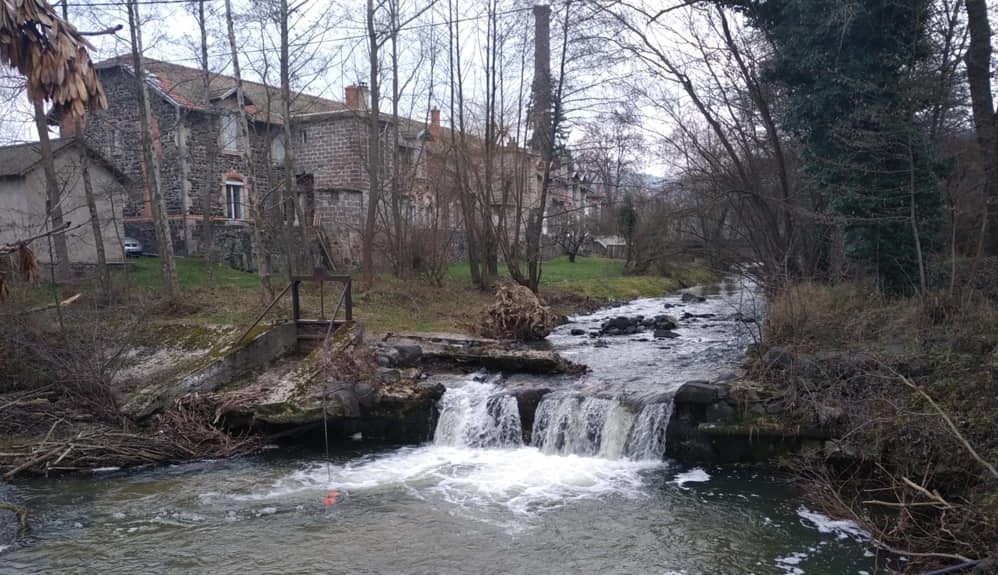
Seuil de la Darne 2022 – CR Epage Loire Lignon
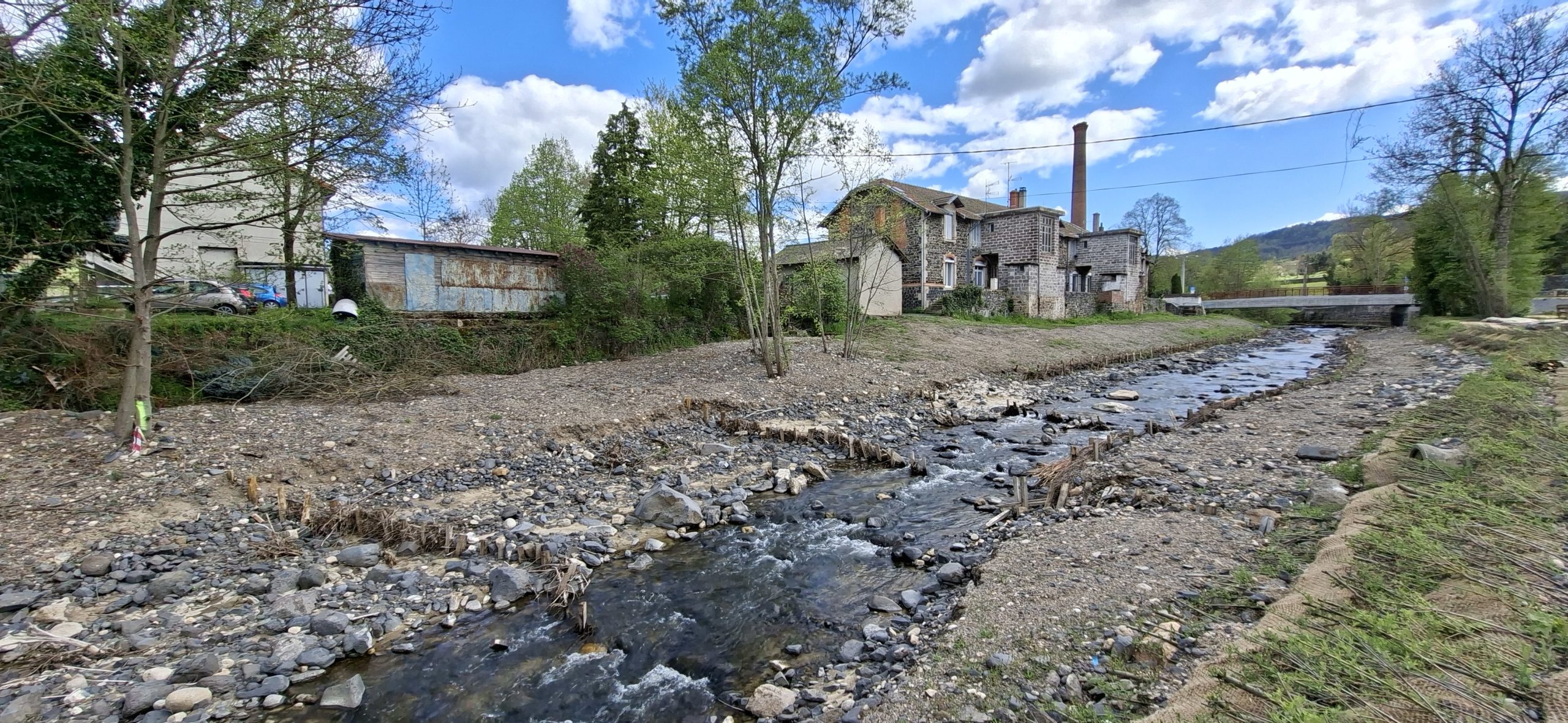
Seuil de la Darne après travaux 2025, CR : Corinne Ronot -ERN